
Zacks Industry Outlook Vulcan Materials and Eagle Materials
Source: zacks.com
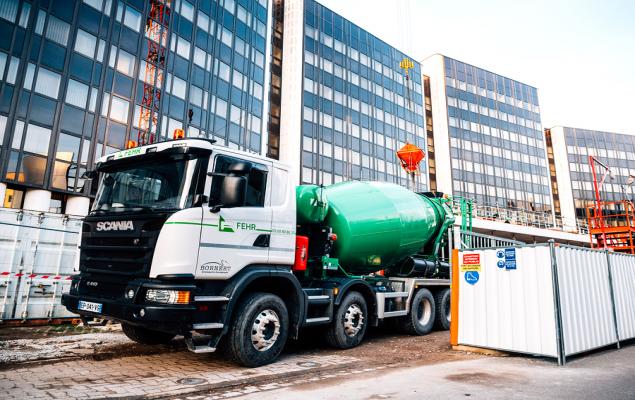
The Zacks Concrete & Aggregates industry ranks #222, in the bottom 10% of more than 250 industries, as subdued housing demand, elevated mortgage rates and energy, diesel and freight costs weigh on the outlook. Since July 2026, aggregate 2026 and 2027 earnings estimates fell to $2.20 per share from $2.60 and $2.63 from $2.66, respectively; industry stocks lost 20.2% over the past year versus a 5.5% decline for the construction sector and a 15.5% gain for the S&P 500. Infrastructure spending and data-center, manufacturing and LNG projects provide demand support, but do not erase near-term pressures.
Analysis
The key issue is conversion, not announced project demand: infrastructure allocations and data-center plans only support earnings when they become awarded work, shipments, and pricing. That creates a timing mismatch—fixed quarry and plant costs can weigh on utilization before the project pipeline reaches materials suppliers. Permitting constraints may ultimately protect incumbent pricing, but cannot offset near-term volume shortfalls or diesel, energy, and freight inflation automatically.
The mix favors aggregates-heavy exposure when projects advance: aggregates are bulky and locally sourced, so scarce permitted capacity can support regional pricing and make new entrants difficult. Vulcan Materials appears more directly exposed to that mechanism; Eagle Materials has a different cement/building-products mix, with potential benefit from cement supply tightness but greater sensitivity to energy costs and housing-linked products. This is a relative exposure hypothesis, not a claim that either company has superior margins. Martin Marietta is a relevant peer for checking whether strength is broad across aggregates or company-specific.
Near term, weak estimate revisions and the industry’s poor relative performance argue against treating the lower multiple as a standalone bargain. Over 1–3 months, earnings calls and shipment/pricing disclosures should test whether infrastructure and large-project demand is offsetting residential weakness. Over 6–18 months, actual project starts and permitted-capacity scarcity matter more than funding headlines. The contrarian risk to a bearish read is that delayed public work and power-related construction could create a tighter local supply-demand balance than aggregate industry estimates imply; the downside is that project delays leave utilization and costs misaligned.
AllMind Terminal
AI-powered research, real-time alerts, and portfolio analytics for institutional investors.
Request TrialMarket Sentiment
Overall Sentiment
moderately negative
Sentiment Score
-0.38
Ticker Sentiment
Key Decisions for Investors
- Do not buy the industry solely on its relative multiple discount. Track VMC and EXP next quarter for shipped volumes, realized pricing, unit costs, and management’s split of infrastructure/heavy nonresidential versus residential demand; absent improving evidence, no broad sector trade.
- Consider a measured VMC-over-EXP relative-value position only if VMC confirms aggregates pricing and shipment resilience while EXP’s near-term cement/building-products volumes or costs disappoint. Keep the position small: EXP’s longer-term cement-supply argument could reverse the relative trade. Falsify on sustained EXP pricing/volume improvement or VMC pricing below cost inflation.
- Treat data-center and infrastructure announcements as watch items, not earnings catalysts, until project awards, construction starts, and local shipment data confirm conversion. Reassess if public-work awards slip or power/utility constraints delay site development.
- Use fuel, diesel, and freight trends alongside weather-affected shipment volumes as near-term risk monitors. A renewed cost rise without price realization, or repeated guidance/estimate cuts, would argue against adding exposure; improving unit-price spreads and utilization would support revisiting the sector.
More News
- US stock market hits all-time high as investors bet big on AI
- Oman evacuates injured crew from attacked tanker in Strait of Hormuz
- Oil rises as concerns over Houthi attacks on Saudi Arabia eclipse supply recovery
- Singapore's Temasek warns of the ‘biggest risk’ facing markets right now
- Australia top court rules against coal mine expansion, citing climate harm
- Diesel Price Surge Hits Farmers, Raising Food Inflation Risk