
BLUETTI, BSW-Solar, die Shelly Group und Flatpeak bringen auf der IFA 2026 Branchenvertreter zusammen, um die Zukunft einer intelligenteren Energieversorgung zu gestalten
Source: PR Newswire
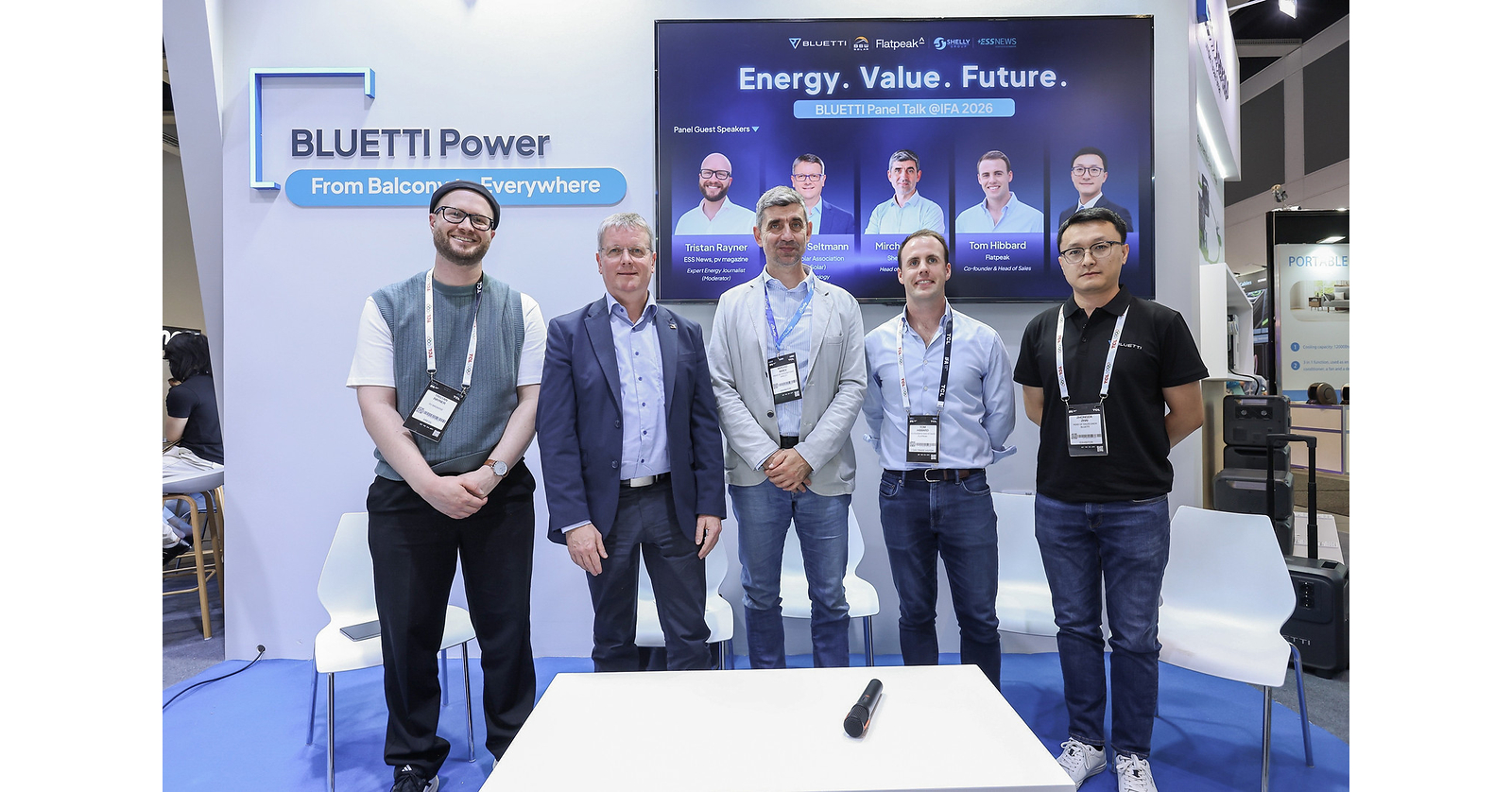
BLUETTI used IFA 2026 to convene industry experts from BSW-Solar, Shelly Group, Flatpeak and pv magazine to discuss how home solar, storage and smart-home devices—enabled by real-time data and AI—could make household energy management more automated and responsive to price signals. Speakers emphasized the need for open integration standards and reliable data exchange to support broader adoption, and cited BLUETTI’s reach of 3.5M users in 120+ countries. The article is largely forward-looking and presents no new financial figures, implying limited near-term market impact.
Analysis
The investable shift here is not more panels or batteries; it is who owns the control layer. If households increasingly optimize around real-time prices, the margin pool moves toward software, interoperability, and tariff orchestration, while commodity hardware becomes easier to compare-shop and harder to defend on price. That is a subtle headwind for standalone inverter/storage vendors and a tailwind for home-energy-management platforms and smart-switching ecosystems.
Near term, this is mostly a sentiment theme with little direct earnings relevance. The first real catalyst is whether European regulators and utilities standardize plug-in PV, data sharing, and dynamic tariffs enough to reduce installation friction over the next 1-3 months; without that, adoption stays niche. Over 6-18 months, broader dynamic pricing would flatten residential peaks and likely force solar/storage bundles to rely more on software attach rates than hardware ASPs, while utilities can partially offset volumetric erosion by monetizing flexibility.
The contrarian miss is that open standards can commoditize the stack before the market expands. Consumer inertia, installer complexity, and cybersecurity concerns can slow conversion far more than industry panels suggest, so the market may be overpaying for a near-term TAM inflection. The clean falsifier is a lack of policy follow-through or any sign that demand response remains optional rather than embedded in tariffs; absent that, this is not yet a broad clean-energy rerate.
AllMind Terminal
AI-powered research, real-time alerts, and portfolio analytics for institutional investors.
Request TrialMarket Sentiment
Overall Sentiment
neutral
Sentiment Score
0.10
Key Decisions for Investors
- No immediate position: treat this as a watch item, not a catalyst trade. Reassess only if EU tariff standardization or plug-in PV rules become concrete within 1-3 months; otherwise avoid paying up for the theme.
- Relative value idea: long ENPH / short SEDG on any sector rally over the next 3-6 months. The thesis is that control-stack monetization and software attach rates matter more than hardware unit growth; target 10-15% spread, stop if ENPH margin guidance weakens or SEDG order trends reaccelerate.
- If you want cleaner exposure to the integration layer, accumulate a small position in smart-home / energy-control beneficiaries rather than pure solar hardware. The best risk/reward is in the layer that schedules loads and storage, not in panels or standalone batteries.
- Set an alert on dynamic tariff adoption and residential demand-response penetration. If utilities start paying meaningfully for flexibility, that is the point to add to home-energy management winners; if not, fade any rally in the distributed-energy basket.
More News
- Putin reportedly suggests summit with Trump and Xi to decide fate of Ukraine
- Ukraine launches over 1,000 drones at Russia, setting oil facilities ablaze
- China's CXMT sees shares drop over 6% as investors look past chipmaker's profit turnaround
- Trump defends Russian sanctions relief, lashes out at Zelenskyy
- China's economic growth quickens to 4.6% as exports surge, stimulus rolls out
- China’s Coal Output Drops as Concerns Build Over Winter Supply
From AllMind Research
- Anthropic IPO Preview: Valuation, Timing, and What to Watch
- Shein After the IPO: Venue, Valuation, and What Must Be Proved
- What AI Research Tools Should a Small Hedge Fund Buy First?
- State of Public Markets, June 2026: Higher for Longer Meets the AI Supercycle
- AI Research Tools With Exact Source Citations