
South Korea Doubles AI Chip Budget: 4 ETFs to Ride the Wave
Source: zacks.com
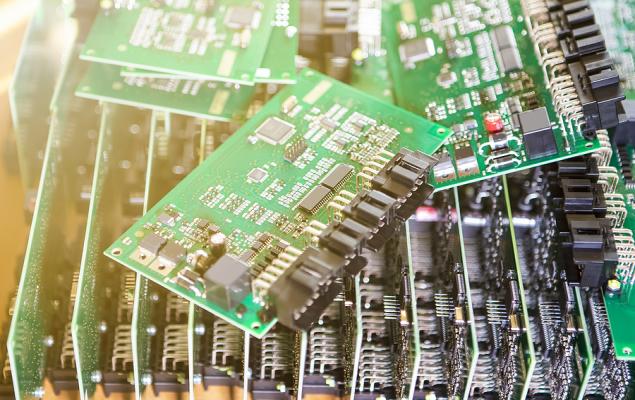
South Korea’s 2027 budget allocates 21.3 trillion won to semiconductors, physical AI and AI data centers—nearly double the 2026 funding—with a further 2.1 trillion won for chip-plant electricity and water infrastructure. The announcement comes amid strong sector momentum: October semiconductor exports rose 93.7% year over year to a record $115.3 billion, while SK Hynix holds about 50% of the global HBM market. The article presents EWY, SMH, KSMH and SOXX as ETF options for exposure to potential beneficiaries; it reports no new market reaction to the budget announcement.
Analysis
The investable signal is less the headline budget size than whether appropriations become orders for domestic equipment, packaging and power infrastructure. Public funding can de-risk projects and crowd in private capex, but it is unlikely by itself to move global HBM demand materially against hyperscaler spending. That distinction makes the pledge a sentiment catalyst now, not yet an earnings catalyst.
Near term (days), the announcement may reinforce crowded Korean memory exposure; after the sharp share gains cited in the article, incremental upside depends on upward revisions to shipments, pricing and margins—not another policy headline. Over 1–3 months, track enacted allocations, project timing, HBM qualification/customer mix and capex guidance. Over 6–18 months, added capacity could strengthen Korea’s supply-chain position, but also increase the risk that supply catches demand and weakens memory pricing. Power and water constraints, execution delays, or a pullback in AI infrastructure spending could interrupt the thesis.
For exposure, EWY is a more liquid implementation than the narrowly focused KSMH, but its concentration means it is not a diversified hedge against memory-cycle risk; KSMH’s reported minimal trading volume makes it unsuitable for meaningful institutional sizing absent verified liquidity. SMH and SOXX offer broader semiconductor exposure, so the Korean fiscal impulse is diluted. The contrarian risk is that investors capitalize the policy announcement before it creates incremental earnings, while overlooking cyclicality and the possibility of capacity-driven price pressure. No valuation or consensus data are supplied, so avoid treating recent performance as proof of further upside.
AllMind Terminal
AI-powered research, real-time alerts, and portfolio analytics for institutional investors.
Request TrialMarket Sentiment
Overall Sentiment
mildly positive
Sentiment Score
0.35
Ticker Sentiment
Key Decisions for Investors
- Do not chase the headline. Keep Korean semiconductor exposure at benchmark or smaller sizing until budget execution and company order/guidance data confirm incremental demand.
- If adding tactically, prefer liquid EWY over KSMH for Korea exposure; verify current spreads, market depth and fund holdings before sizing. Use SMH or SOXX only for a broader semiconductor thesis, not as a clean Korea-budget proxy.
- Monitor SK hynix and Samsung HBM shipment/pricing commentary, customer qualification, Korean budget disbursement and supplier capex plans over the next 1–3 months. Upgrade the thesis only if these translate into revised earnings expectations.
- Falsify the bullish view if HBM pricing or shipment guidance weakens, project disbursements slip, or AI infrastructure spending is cut; reassess exposure if new capacity begins outpacing demand.
More News
- AMD stock jumps 7% on earnings as data center revenue nearly doubles
- AI Inference Startup Fal Raises Capital at $16 Billion Valuation
- AMD rides data center riches to ‘largest and most profitable’ quarter in history
- AMD’s OpenAI, Meta chip deals trigger $1 billion quarterly charge
- AMD forecasts quarterly revenue above estimates as data-center revenue hits record
- AMD Forecast Exceeds Estimates as AI Chip Demand Soars