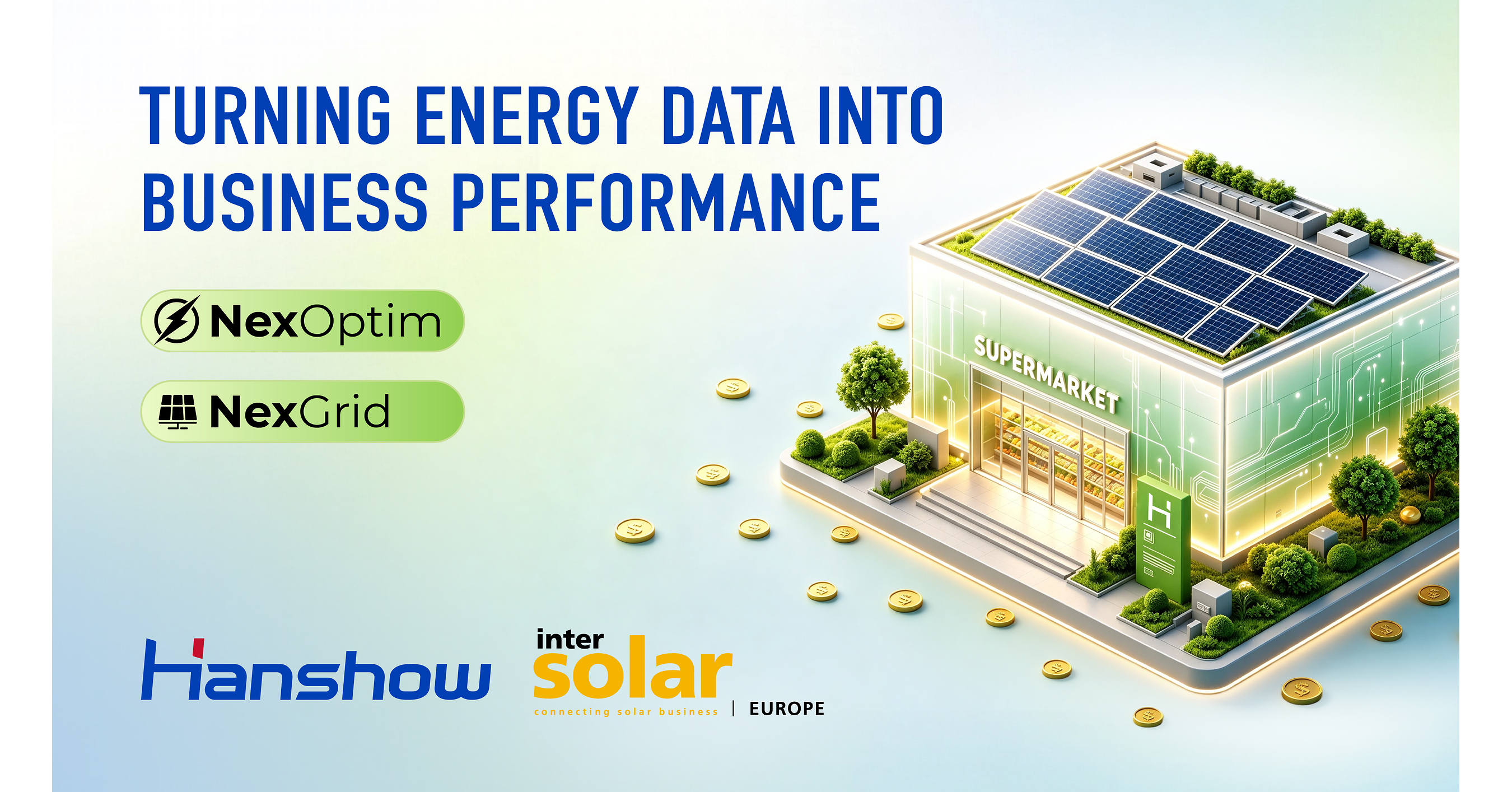
Hanshow Energy a présenté à Intersolar Europe 2026 (23-25 juin, Munich) ses solutions de gestion énergétique intégrée (photovoltaïque + stockage batteries + recharge VE + pilotage data) visant à réduire les coûts et améliorer l’efficacité énergétique. L’offre s’appuie notamment sur NexGrid (supervision/optimisation centralisée) et NexOptim (gestion intelligente d’équipements avec supervision temps réel, contrôle à distance et maintenance prédictive via IoT). Le message s’inscrit dans un contexte de hausse des coûts de l’énergie et de volatilité de l’approvisionnement, sans annonce chiffrée susceptible de déplacer significativement les marchés.
The economic center of gravity here is not solar panels or batteries per se, but control software that can monetize flexibility. That favors incumbents with distribution, service, and installed-base data — Schneider Electric, ABB, Siemens, Eaton — because they can bundle energy management into broader capex/maintenance budgets, while stand-alone hardware vendors remain exposed to price competition and uneven project timing.
A second-order effect is that wider adoption of behind-the-meter optimization can flatten local peak demand and reduce volatility in day-ahead spreads, which is good for end-users but less good for merchant peakers and some grid-balancing revenues. The biggest near-term beneficiary is battery/storage economics: every incremental hour of arbitrage or demand-shaving improves project IRR, but only if interconnection and tariff structures let customers actually realize the savings.
The contrarian risk is that this is mostly conference-driven narrative, not a booking inflection. Adoption is usually gated by procurement cycles, integration pain, and service execution, so the market may be overpricing the speed of conversion by 1-3 quarters. What would falsify the bullish read is a lack of order acceleration or backlog commentary in upcoming earnings from the industrial electrification names; if C&I power prices normalize or policy support for flexibility weakens, the thesis stretches out to 6-18 months rather than breaking out now.
AI-powered research, real-time alerts, and portfolio analytics for institutional investors.
Overall Sentiment
neutral
Sentiment Score
0.10
