
India’s Over $50 Billion Manufacturing Bet to Pay Off by 2030, Dixon Says
Source: Bloomberg
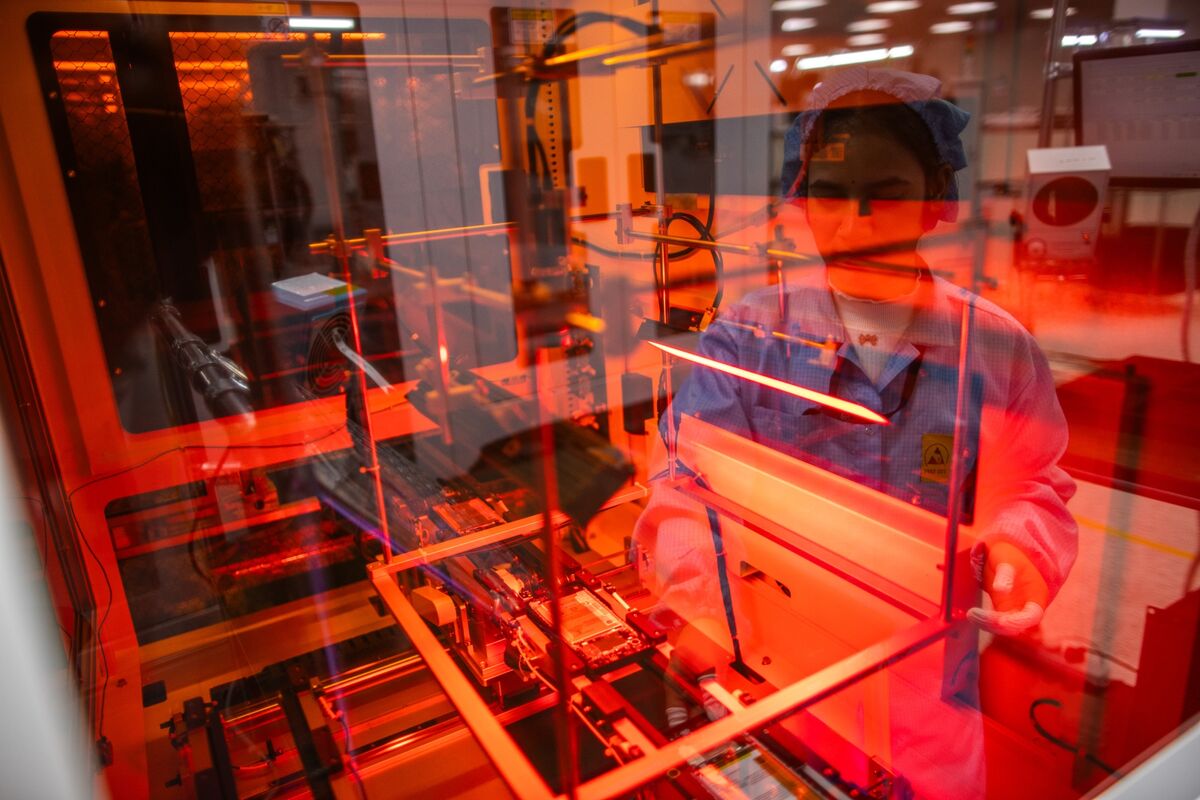
India's more than $50 billion manufacturing-subsidy push is expected by a top manufacturer to begin paying off by 2030, although the country is still viewed primarily as a product-assembly hub rather than a deeply integrated manufacturing base. The initiative includes efforts to expand domestic chip production and strengthen India’s position in global supply chains, but its economic benefits remain a longer-term prospect.
Analysis
The investable implication is less a broad India-beta trade than a multi-year rerating opportunity in domestic capital-goods, electronics-manufacturing-services and defense supply chains whose order books can convert policy support into utilization. L&T, Bharat Electronics (BEL), CG Power and Kaynes Technology offer differentiated exposure to localization, grid/electrification and strategic procurement; their key earnings lever is fixed-cost absorption rather than near-term subsidy receipts. The first-order beneficiaries may already carry elevated expectations, while component vendors, industrial automation providers and logistics/warehouse operators can see a delayed 12-36 month demand uplift as local value-add moves beyond final assembly.
The critical risk is that incentives create capacity faster than local component ecosystems and export demand, leaving low utilization and subsidy-dependent margins. Electronics assemblers such as Dixon Technologies face particular risk that global customers retain high-value design, semiconductor and precision-component work offshore, limiting sustainable ROCE despite headline revenue growth. A stronger rupee, weaker US/EU consumer demand, or delayed tariff protection would pressure export economics; falsification of the constructive case would be two consecutive quarters of weaker capex/order inflow, falling utilization, or management guidance that pushes out margin expansion.
Contrarianly, the market may be underestimating the fiscal constraint: infrastructure and production incentives compete with social spending and could be narrowed if tax collections soften. Conversely, the underappreciated upside is defense and power-equipment localization, where procurement is domestically anchored and demand is less exposed to global consumer cycles. That makes BEL and L&T better risk-adjusted expressions than high-multiple consumer-electronics assemblers over the next 6-18 months.
AllMind Terminal
AI-powered research, real-time alerts, and portfolio analytics for institutional investors.
Request TrialMarket Sentiment
Overall Sentiment
mildly positive
Sentiment Score
0.15
Key Decisions for Investors
- Prefer a 6-18 month India industrial basket: long L&T and BEL versus INDA. The thesis is order-book and utilization conversion rather than subsidy headlines; reassess if combined order inflow growth falls below mid-teens or margins fail to expand over two reporting periods.
- Watch for an entry in CG Power or Siemens India after results confirm transmission/distribution order acceleration and stable working capital. Avoid chasing pre-results momentum: these names require sustained execution to justify premium multiples.
- Pair trade for a 3-9 month horizon: long BEL / short Dixon Technologies on relative basis. BEL has more domestically secured demand and lower global consumer-electronics sensitivity; stop out if Dixon demonstrates durable margin expansion alongside rising non-mobile component content.
- Use INDA or EPI only as a diversified 12-month policy exposure, not as a pure manufacturing trade; financials and IT dominate index behavior. Add only following evidence of capex acceleration in quarterly corporate order data and industrial-production releases.
- Set an alert around Indian budget updates, incentive disbursement data and export-order trends. A cutback in fiscal support or evidence of assembly-led revenue without higher domestic value-add is a signal to reduce the manufacturing theme rather than add exposure.
More News
- Oil falls on report Asia will import highest volume of crude since start of Iran war
- America’s Asian allies want a Trump-Xi truce — but not at their expense
- Chinese authorities reportedly in possession of F-35 components in Hong Kong
- Meta announces new lightweight virtual reality glasses to one-up Apple’s Vision Pro
- Trump evalúa prohibir exportaciones de diésel de EE.UU.
- ASPI's Cutler on Trump-Xi Summit, Trade Relations