
Cyble und der Cyber Security Council der VAE unterzeichnen Absichtserklärung zur Stärkung der nationalen Fähigkeiten im Bereich der Bedrohungsanalyse
Source: PR Newswire
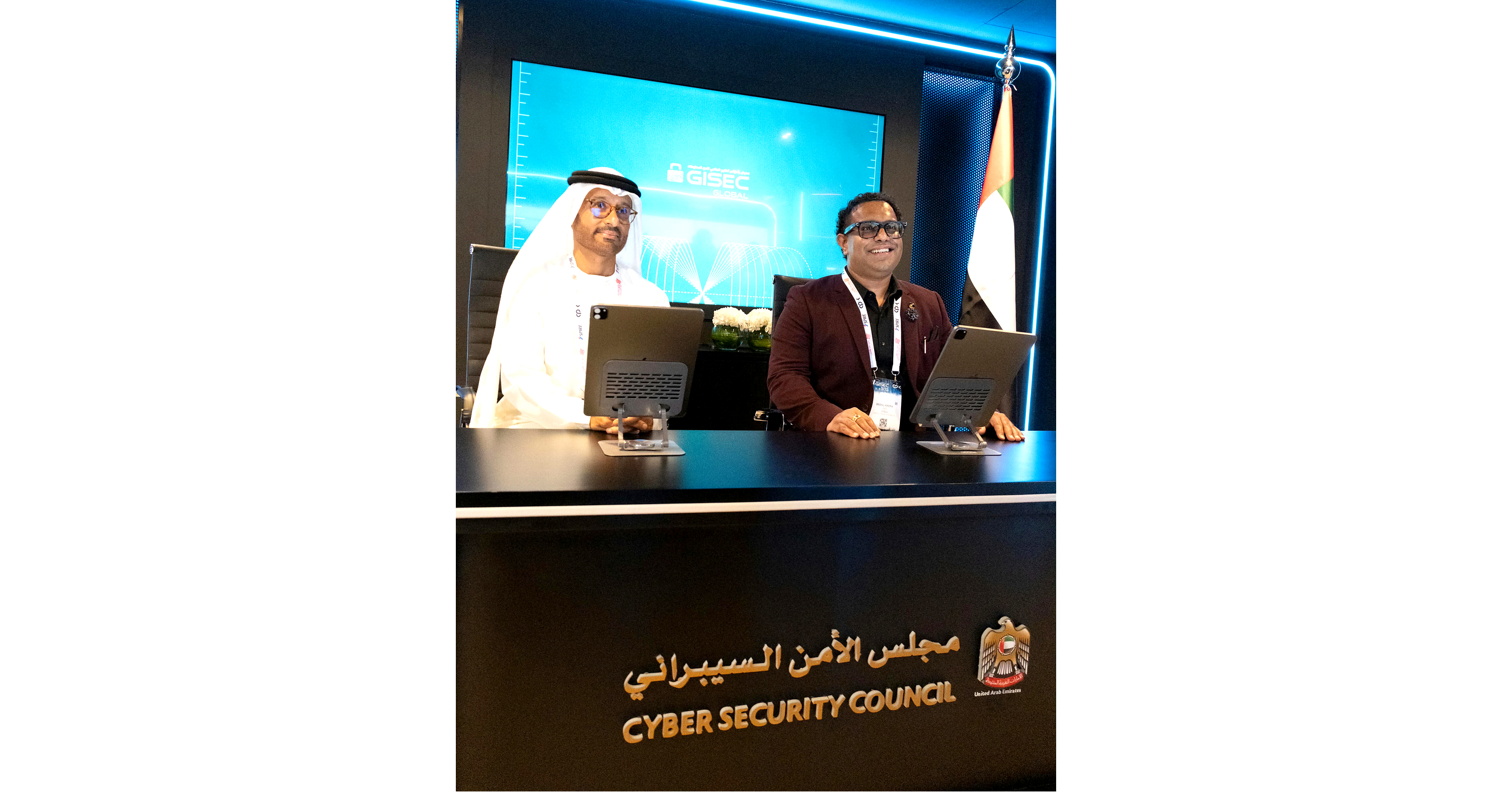
Cyble signed an MOU with the UAE Cyber Security Council to provide threat intelligence, early-warning capabilities and actionable cyber-risk insights supporting government entities and critical infrastructure. Cyble Vision, powered by Blaze AI, will support detection and analysis of ransomware, phishing, fraud and other threats. The non-binding strategic agreement strengthens Cyble's government-sector presence in the Middle East but does not disclose contract value, revenue commitments or implementation timing.
Analysis
This is not yet an investable revenue event: a non-binding government framework does not establish contract value, implementation timing, procurement exclusivity, or recurring software economics. The relevant signal is strategic rather than financial—Gulf sovereign cyber budgets are increasingly oriented toward national threat-intelligence and critical-infrastructure resilience, a category that favors vendors able to meet data-residency, clearance, and local-support requirements. That raises the barrier to entry for global SaaS platforms and may ultimately benefit locally deployable, channel-led providers more than pure cloud-native U.S. vendors.
For public equities, the read-through is modestly positive for Palo Alto Networks (PANW), CrowdStrike (CRWD), Microsoft (MSFT), and Cisco (CSCO), but Cyble’s private status means there is no direct listed beneficiary. PANW has the strongest adjacency through Cortex/XSIAM and broad regional enterprise/government distribution; CRWD has superior endpoint telemetry but faces greater sovereignty and deployment scrutiny in sensitive state workloads. Over 6-18 months, sustained Gulf procurement could support security-platform consolidation and lift international growth expectations, though deal cycles are likely measured in quarters and frequently require systems-integrator participation.
Consensus risk is treating AI-enabled threat intelligence as a standalone budget line. In practice, national customers may bundle it into broader SOC modernization, cloud-security, identity, and managed-services tenders, favoring incumbent platforms and regional integrators rather than the nominal intelligence vendor. The thesis is falsified if UAE procurement remains pilot/MOU-led without funded tenders within 6-12 months, or if sovereign-data rules mandate domestic ownership that excludes foreign software vendors.
AllMind Terminal
AI-powered research, real-time alerts, and portfolio analytics for institutional investors.
Request TrialMarket Sentiment
Overall Sentiment
mildly positive
Sentiment Score
0.38
Key Decisions for Investors
- No direct trade on Cyble: it is private and the announcement lacks contract value, duration, or procurement award status. Set an alert for a funded UAE government tender, named implementation partner, or disclosed annual contract value before assigning revenue impact.
- Maintain PANW as the preferred listed watch-list beneficiary for any Gulf sovereign-SOC spending cycle; consider adding only on a 8-10% sector-driven pullback, with a 6-12 month horizon. Upside requires international billings acceleration or XSIAM/Cortex deal disclosures; exit if next earnings show continued material deceleration in large-platform deal activity.
- Use a relative-value framework rather than a directional cyber-beta purchase: long PANW / short CRWD in equal dollar size if evidence emerges that Gulf deployments prioritize integrated, sovereign-capable SOC architectures. Reassess on CRWD international ARR commentary or any confirmation of regional sovereign-cloud partnerships.
- Monitor regional systems integrators and defense-linked infrastructure suppliers for tender announcements; the more investable second-order exposure may sit with implementation, managed detection, and data-residency providers rather than threat-intelligence software vendors.
More News
- All Iranian airlines to be 'shut down' from Wednesday, Bessent tells CNBC
- Taiwan benchmark Taiex rises to record intraday high as tech stocks advance
- AMD joins the $1 trillion club as chip rally surges - our AI Strategy saw it early
- Jamie Dimon says hyperscaler AI spending could hit $1 trillion next year
- Factbox-Key issues for this week’s Trump-Xi summit in Washington
- Latest Oil Market News and Analysis for Sept. 22