
AirAsia’s Hunt for Cheaper Debt Won’t Be Easy With Oil Near $100
Source: Bloomberg
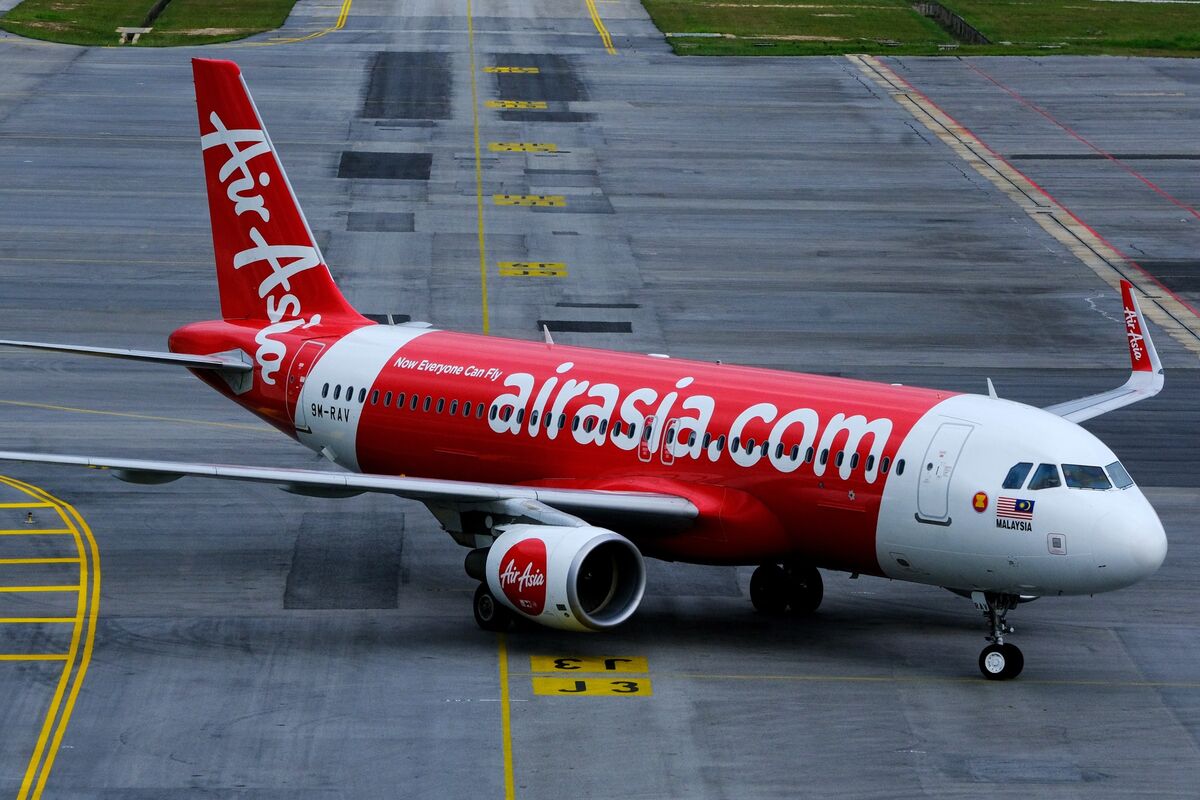
AirAsia Group is seeking cheaper financing as oil approaches $100 per barrel, increasing fuel-cost pressure for the Southeast Asian budget carrier. Co-founder Tony Fernandes said the company does not want additional private-credit borrowing because interest rates are prohibitively expensive, signaling constrained funding options and a preference to limit further debt.
Analysis
The relevant equity transmission is not simply higher fuel expense; it is the interaction between fuel volatility and a constrained refinancing window. A highly leveraged low-cost carrier cannot reliably pass through fuel surcharges without risking load factors and ancillary-revenue conversion, so incremental fuel cost pressure is likely to show up first in liquidity preservation, fleet-growth deferrals and weaker unit-margin guidance. That creates a negative feedback loop: reduced capacity growth limits cash generation needed to improve credit quality, leaving expensive secured or private financing as the marginal source of capital.
Over the next 1-3 months, the key differentiator among Asian airlines will be hedge coverage, dollar debt exposure and aircraft-financing access rather than reported traffic growth. Better-capitalized network carriers such as Singapore Airlines (C6L.SI) can absorb a temporary fuel spike and potentially benefit if financially weaker low-cost competitors slow route additions or discounting. Aircraft lessors and OEM delivery schedules are a second-order watchpoint: deferred deliveries can preserve near-term cash but may create lease-renegotiation pressure and constrain capacity during a later demand upswing.
Consensus may be too focused on whether crude remains near current levels. The more damaging outcome is sustained volatility: a rapid decline in oil after carriers lock hedges can leave low-cost operators uncompetitive on fares, while a sustained increase above current levels tests covenant headroom and access to working capital. A durable easing in oil, a demonstrated reduction in net debt, or refinancing priced materially below private-credit alternatives would falsify the bearish balance-sheet thesis; absent those, this is a credit-risk story rather than a clean directional airline short.
AllMind Terminal
AI-powered research, real-time alerts, and portfolio analytics for institutional investors.
Request TrialMarket Sentiment
Overall Sentiment
mildly negative
Sentiment Score
-0.30
Key Decisions for Investors
- Maintain a relative-quality bias in Asian aviation: long Singapore Airlines (C6L.SI) versus a watchlist short/underweight in Capital A (5099.KL) or AirAsia X (5238.KL) only after confirming hedge books, net debt and near-term maturities. Target a 3-6 month horizon; exit the pair if fuel falls below roughly $85/bbl and weaker carriers secure refinancing without material dilution or higher collateralization.
- Do not initiate a standalone Capital A/AirAsia X short solely on fuel prices. Require evidence of a liquidity catalyst—refinancing delay, materially higher funding cost, delivery deferral, or downward capacity guidance—because short interest and restructuring optionality can dominate fundamentals.
- Use Brent crude as the portfolio hedge rather than airline puts if exposure to Asian travel is material: add limited long Brent/energy exposure on a sustained break above $100/bbl, where airline margin and credit-spread sensitivity should accelerate. Reassess if the move is driven by a short-lived geopolitical disruption rather than physical supply tightness.
- Monitor 6-18 month competitive spillover: capacity restraint by leveraged Southeast Asian low-cost carriers would be constructive for C6L.SI and potentially Malaysia Airports (MAHB.KL) only if route cuts are offset by higher-yield traffic; weaker passenger volumes would instead make airport operators a false beneficiary.
More News
- Tumbling Global Government Bonds Put Yields on Brink of 4%
- Oil falls on report Asia will import highest volume of crude since start of Iran war
- Japan's 10-year bond yield hits 30-year high following sell-off in Treasurys
- US Debt Selloff Spans Most Maturities: Evening Briefing Americas
- Trump evalúa prohibir exportaciones de diésel de EE.UU.
- Markets are rapidly coming around to the reality that the Fed has a lot more work to do