
Pimax Unveils Crystal Pro with Native Foveated Streaming, Sending the GPU's Native Image Wirelessly to the Headset
Source: PR Newswire
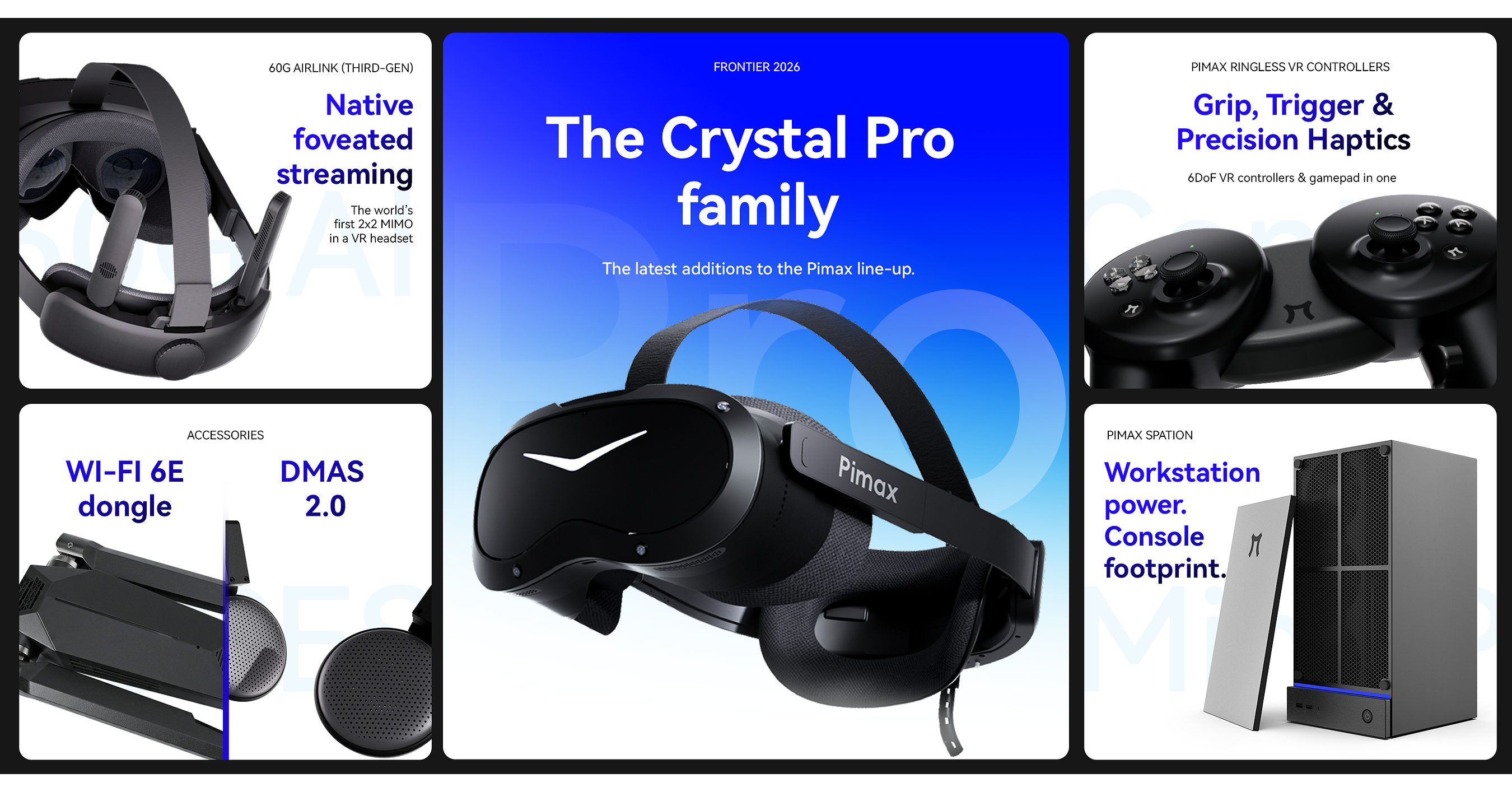
Pimax unveiled Crystal Pro, a wireless PC VR headset priced at $1,399, or $1,899 bundled with its optional 60GHz AirLink kit ($599 separately). Pimax says the eye-tracked 2x2 MIMO link can deliver up to 6 Gbps with under 2ms of added latency; the headset also features 2,880 × 2,880 pixels per eye and refresh rates up to 120Hz. The company also introduced Ringless VR Controllers and the Spation mini-PC, but has not yet announced their prices or shipping dates.
Analysis
The investable signal is modest: Pimax is testing whether premium PC-VR users will pay for lower-latency wireless streaming, but this launch does not yet establish demand, shipments, or a scalable new GPU revenue pool. For AMD, the Spation configuration explicitly pairs its Ryzen 7 9800X3D with either an AMD GPU or an NVIDIA GPU; for NVIDIA, the RTX 5070 Ti is the alternative. That is limited product-level validation for both vendors, not evidence of a meaningful change to either company’s earnings trajectory. If Spation sells, AMD could capture CPU value across configurations while GPU economics are split with NVIDIA; the mix and volumes are unknown.
The more consequential mechanism is indirect: if eye-tracked foveated streaming works reliably, it could make high-end PC rendering more attractive versus standalone VR, supporting premium GPU demand at the margin. But Pimax’s throughput and latency claims are company claims, and the $599 AirLink add-on, external battery, and separate PC requirements create adoption friction. Pimax’s $1 reservations and unannounced shipping dates are weak demand evidence. Meta and Valve are relevant ecosystem competitors, but this announcement alone does not establish a competitive displacement.
Near term, likely immaterial to AMD/NVIDIA fundamentals. Over 1–3 months, watch shipping dates, independent latency/reliability tests, and actual Spation pricing and configurations. Over 6–18 months, repeated adoption of wireless PC-VR could support premium GPU use, but the addressable market and Pimax’s manufacturing scale remain unverified. The thesis weakens if launch slips, reviews find connection instability, or the PC-VR ecosystem remains niche.
AllMind Terminal
AI-powered research, real-time alerts, and portfolio analytics for institutional investors.
Request TrialMarket Sentiment
Overall Sentiment
mildly positive
Sentiment Score
0.20
Ticker Sentiment
Key Decisions for Investors
- No standalone AMD or NVIDIA trade on this announcement: the product is a niche launch with no disclosed order volume, shipment schedule, or revenue contribution.
- Treat the listed configurations as a small channel-validation datapoint, not an earnings catalyst. Reassess only after Spation pricing, shipped units, and AMD-versus-NVIDIA GPU mix are disclosed.
- Set an alert for independent Crystal Pro testing and confirmed shipping. Evidence of stable wireless performance and sustained demand would strengthen the longer-term premium-GPU thesis; launch delays or materially weaker real-world performance would falsify it.
- Do not infer broad VR share losses for Meta or Valve from the launch. Monitor competing product announcements and PC-VR adoption data before considering a relative-value position.
More News
- Nvidia Is on the Verge of a $6 Trillion Market Value
- What Marvell's rosy long-term guidance means for our AI chip stocks
- DeepSeek considers doubling latest funding round to up to $15 billion, sources say
- Meta Muse gives AMD a boost as AI momentum shifts to personal agents
- SpaceX seeks $40 billion to buy Nvidia chips, FT reports
- Mistral unveils new AI model it says rivals best open systems from China