
I Will Keep Rating RH A Sell - As Long As Inflation And Interest Rates Are High
Source: seekingalpha.com
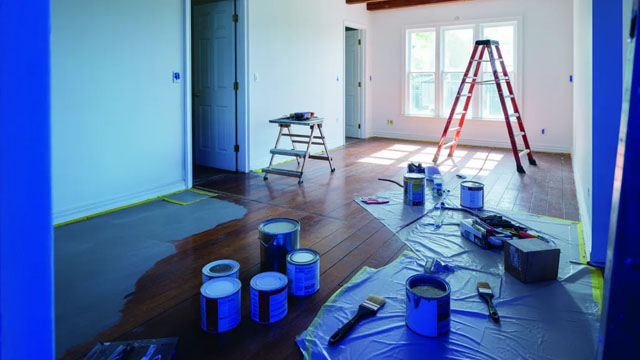
RH is rated a sell because its recent net-income improvement was driven by nonrecurring items—a $67 million tariff refund and $20 million Aspen LLC restructuring—rather than sustainable operating gains. The company faces weak real sales growth and macro headwinds while trading at roughly 20x GAAP forward earnings and a PEG ratio above 4, valuations viewed as unjustified by its organic-growth outlook.
Analysis
The key issue is earnings-quality deterioration rather than merely slow demand: stripping non-recurring benefits leaves RH dependent on gross-margin recovery and renewed high-end housing turnover to support its multiple. That is a difficult setup when affluent consumers can defer large-ticket furniture purchases and RH's fixed gallery, design, and occupancy costs create negative operating leverage on soft comparable demand. In the next 1-3 months, the market is likely to focus on order trends and margin guidance; any failure to translate promotional activity into sustained demand would force forward EPS revisions lower.
A relative-value expression is more attractive than a standalone retail short. WSM has a broader multi-brand architecture, more recurring/digital customer engagement, and less dependence on the RH gallery rollout narrative; it should hold earnings better if premium home-furnishing demand remains uneven. The contrarian risk is that RH's affluent customer base reaccelerates faster than broader discretionary spending as mortgage-rate expectations improve, while even modest revenue stabilization can produce substantial EPS upside because of its operating leverage. The bearish thesis is falsified by two consecutive quarters of improving demand without incremental discounting, coupled with maintained or higher operating-margin guidance.
Over 6-18 months, RH also faces a capital-allocation test: expansion investments and inventory commitments must generate returns above its funding cost, not simply extend the brand narrative. If management must fund growth while free-cash-flow conversion remains weak, equity valuation can compress independently of an eventual housing recovery. Conversely, a material decline in long-term rates and a rebound in luxury existing-home transactions would be the clearest macro catalyst to cover shorts.
AllMind Terminal
AI-powered research, real-time alerts, and portfolio analytics for institutional investors.
Request TrialMarket Sentiment
Overall Sentiment
strongly negative
Sentiment Score
-0.58
Ticker Sentiment
Key Decisions for Investors
- Initiate a 1-3 month pair trade: short RH / long WSM in equal dollar amounts. The thesis targets relative earnings-estimate downside at RH from weak demand and margin deleverage; reassess if RH reports two quarters of demand acceleration with stable-to-higher margin guidance.
- Do not add to an outright RH short immediately following a sharp risk-off move; use post-earnings or rate-driven rallies to establish exposure. A 15-20% relative move against the pair, absent a fundamental revision to WSM, is a practical risk limit.
- Monitor RH's next guidance for order growth, gross margin, inventory, and free-cash-flow conversion rather than reported net income. A recovery driven principally by further one-time items or tax-related benefits should not be treated as a change in underlying earnings power.
- Set a macro cover alert around a sustained decline in long-end Treasury yields and improving luxury housing turnover data. Those conditions could unlock RH's operating leverage before reported furniture-sales data visibly inflects.
More News
- Nasdaq Nears Correction as Amazon, Alphabet, Intel Disappoint Wall Street
- Wall Street Punishes Tech Stocks on Earnings Misses
- Reddit stock plunges 30% after weak outlook, heads for worst day ever
- Binance’s $6.3 Billion Cyber Heist Shows Crypto Vulnerabilities
- Intel’s stock crashes, knocking $12B from government’s stake
- Chevron speeds ahead in Venezuela while Exxon urges caution with a ‘little pinch of salt’