
Nasdaq Nears Correction as Amazon, Alphabet, Intel Disappoint Wall Street
Source: Bloomberg
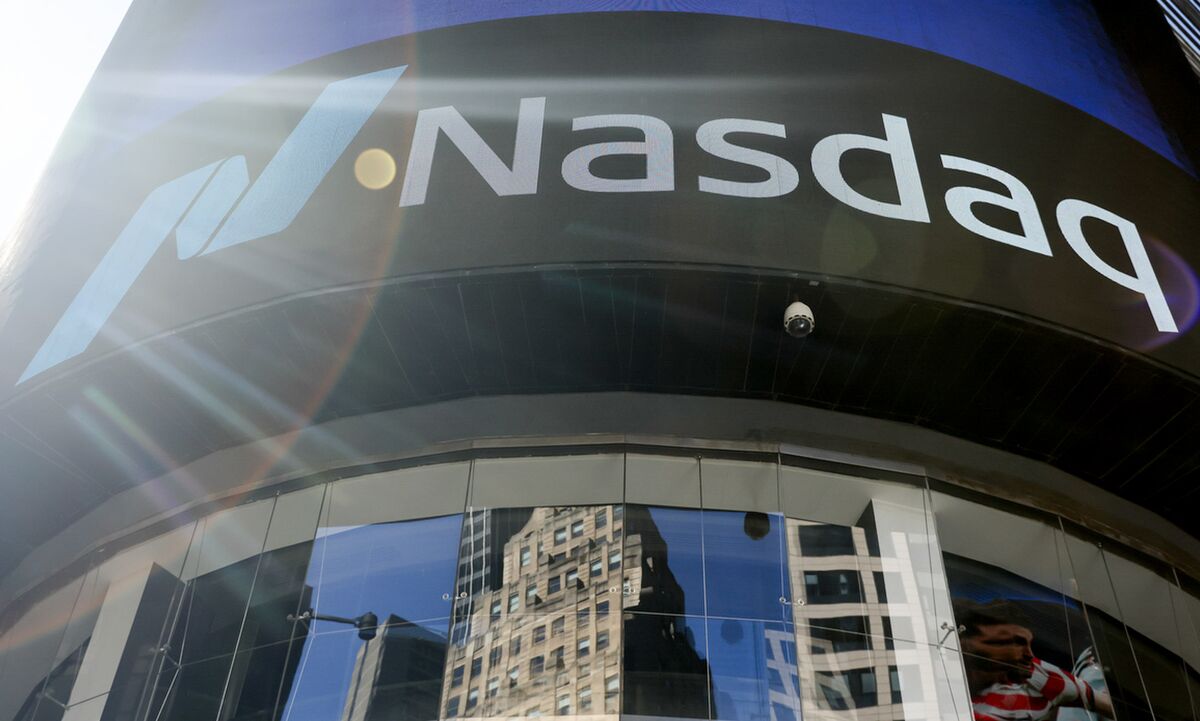
The Nasdaq fell 2.9% on Friday, leaving it about 10% below its peak, as disappointing technology results intensified scrutiny of AI spending. Intel plunged 29% after its outlook missed estimates; Alphabet lost about $500 billion in market capitalization the previous day, and Amazon sold off after reporting higher-than-anticipated capital spending and its slowest core e-commerce growth in three years. Investors are questioning whether the roughly $750 billion being spent collectively on AI this year will generate adequate returns.
Analysis
The key transmission is not simply “tech weakness,” but a higher hurdle rate on investment: if core cash engines decelerate while AI infrastructure spending remains elevated, investors can mark down both near-term free cash flow and the terminal return assumed for that spending. That creates a feedback loop—lower equity multiples raise the cost of funding expansion, while any capex restraint can expose suppliers and data-center capacity plans to demand volatility. The risk is greatest where the investment case depends on future AI monetization rather than already visible revenue; the article does not establish which companies have crossed that threshold.
Near term (days), crowded positioning and earnings revisions can amplify moves, but after sharp repricing, initiating outright shorts in AMZN, GOOG or INTC risks a violent relief rally. Over 1–3 months, focus on earnings calls and guidance: capex trajectory, cloud/AI revenue conversion, and whether core business growth stabilizes. Over 6–18 months, sustained spending without demonstrable incremental returns could pressure returns on invested capital and prompt delayed projects across the data-center supply chain.
Contrarian point: one weak reporting cluster is not proof of an AI bubble; spending can precede revenue, and broad de-risking may overshoot. The thesis weakens if companies show durable AI-related revenue acceleration alongside stable core growth and credible returns on incremental investment.
AllMind Terminal
AI-powered research, real-time alerts, and portfolio analytics for institutional investors.
Request TrialMarket Sentiment
Overall Sentiment
strongly negative
Sentiment Score
-0.70
Ticker Sentiment
Key Decisions for Investors
- Reduce marginal exposure to capex-sensitive mega-cap technology rather than mechanically shorting after the gap; reassess after the next guidance cycle. For AMZN and GOOG, require evidence that AI-related revenue or customer demand is converting into incremental cash generation before restoring overweight positions.
- Do not chase INTC lower immediately after the exceptional one-day decline. Treat it as a separate company-specific guidance risk, and wait for evidence on demand, execution, and forward outlook; a stabilization in guidance would invalidate a momentum-short thesis.
- Use a relative-value watchlist, not an automatic trade: consider short AMZN against a less capex-sensitive cash-generative consumer or software exposure only if Amazon’s forward core growth weakens further while spending remains elevated. Verify comparable growth, valuation, and capex data before sizing; exit if growth reaccelerates or spending produces improving cash returns.
- Set a 1–3 month falsification test across the group: sustained core-business growth, rising disclosed AI monetization, and stable or improving free-cash-flow outlook would argue that the selloff has overshot. Conversely, higher capex guidance without corresponding revenue or return evidence supports continued underweighting.
More News
- Wall Street Punishes Tech Stocks on Earnings Misses
- Reddit stock plunges 30% after weak outlook, heads for worst day ever
- Why is iShares Semiconductor ETF plunging today?
- Intel plunged 28.6% for its worst drop since 1974 — and the AI sell-off gave the S&P 500 its worst day since June
- Tech sell-off drives US markets down by nearly $1tn after subpar earnings reports
- Intel’s stock crashes, knocking $12B from government’s stake