
ACLS Invests $35M in Korea To Expand Its Manufacturing Infrastructure
Source: zacks.com
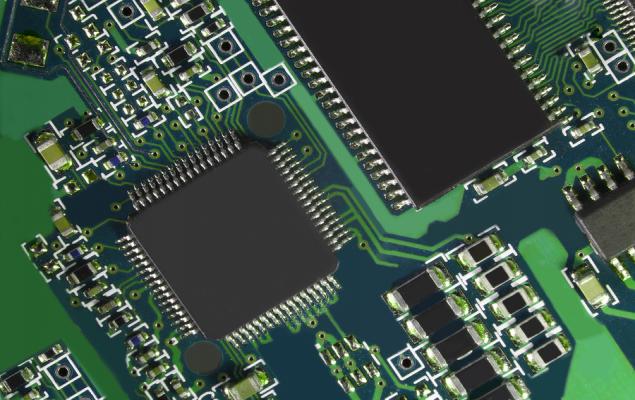
Axcelis Technologies plans to invest $35 million in a 200,000-square-foot ion-implantation manufacturing facility in Pyeongtaek, South Korea, expanding capacity near Asian semiconductor customers as Korea grew to 26% of Q2 revenue from 13% a year earlier. The expansion follows a 36.1% year-over-year increase in Q2 systems bookings to $130.9 million and is supported by $577 million of cash and marketable securities. However, systems backlog fell 21.6% year over year to $451.6 million and non-GAAP operating margin declined 300bps to 14.7%, leaving the investment’s returns dependent on a sustained recovery in memory and power-chip equipment demand.
Analysis
The Korean build is strategically more relevant as a service-and-qualification asset than as incremental capacity: localized applications support can reduce tool-install and uptime friction for memory and power-device customers, where qualification cycles determine vendor share. That creates a plausible 6-18 month share-gain pathway for ACLS versus larger process-equipment incumbents, but it does not itself solve the core earnings issue: a roughly flat order base cannot absorb fixed-cost growth or restore operating leverage.
The pending VECO combination is the key second-order variable. If closed cleanly, the combined platform can cross-sell implantation into Veeco's power-semiconductor and compound-semiconductor customer base, while procurement and field-service consolidation could eventually offset margin dilution. Conversely, integration expense, customer overlap, or delayed regulatory clearance would leave ACLS funding a new facility while carrying elevated execution costs; the market is likely to discount synergy claims until pro forma margin targets and deal-close timing are independently specified.
Near term, this is not a clean catalyst for ACLS: capex announcements are generally neutral-to-negative for free-cash-flow optics before utilization rises. The more investable read-through is selective strength in Korean memory and power-device capital spending, modestly supportive for AMAT and LRCX because their broader product sets monetize wafer-fab intensity immediately. A contrarian long ACLS case requires orders to accelerate materially above revenue for at least two quarters; without that, the stock risks remaining a cyclical value trap despite improving end-market narratives.
AllMind Terminal
AI-powered research, real-time alerts, and portfolio analytics for institutional investors.
Request TrialMarket Sentiment
Overall Sentiment
mixed
Sentiment Score
0.12
Ticker Sentiment
Key Decisions for Investors
- Maintain no new directional ACLS position ahead of the next two earnings reports; upgrade to a tactical long only if book-to-bill exceeds 1.15x and systems backlog rises sequentially, with gross-margin guidance above 44%. Those conditions would validate operating leverage rather than merely localized infrastructure spending.
- For 1-3 month semiconductor-capex exposure, favor long LRCX or AMAT versus ACLS: broader memory and AI wafer-fab content provides cleaner earnings sensitivity. Reassess the relative trade if Korean memory capex is cut or either company guides to decelerating China/DRAM demand.
- Place an event-driven alert on VECO/ACLS merger milestones. Consider a small long ACLS position only after regulatory clearance and disclosed synergy, financing, and pro forma margin details; failed clearance or incremental deal-cost guidance is a thesis failure and favors avoiding both names.
- Do not infer a trade from the facility alone. Monitor quarterly Korean revenue concentration, service/aftermarket mix, and cash conversion; rising regional sales without backlog growth or margin recovery would indicate customer-support spending is defensive rather than evidence of share capture.
More News
- Oil extends losses as Saudi Arabia reportedly offers ship-to-ship crude transfers after pipeline hit
- Japan’s corporate leaders sound alarm over weak yen — even dollar-earners are voicing concerns
- 'Hostile act': Trump threatens EU with tariffs over Canada associate-membership proposal
- Fed hikes again - an AI-Picked insurer is still cashing in
- US military claims Strait of Hormuz remains open amid ongoing blockade
- Oil prices extend losses as fears of Middle East supply disruptions ease
From AllMind Research
- Anthropic IPO Preview: Valuation, Timing, and What to Watch
- Shein After the IPO: Venue, Valuation, and What Must Be Proved
- What AI Research Tools Should a Small Hedge Fund Buy First?
- What Is an AI Investment Research Platform?
- What Exactly Does Post-Training in LLMs and Finance-Focused AI Actually Mean for Asset Managers?