
M31 and Ambiq Collaborate on TSMC N12e® Foundation IP to Address Demanding SoC Power and Area Targets
Source: PR Newswire
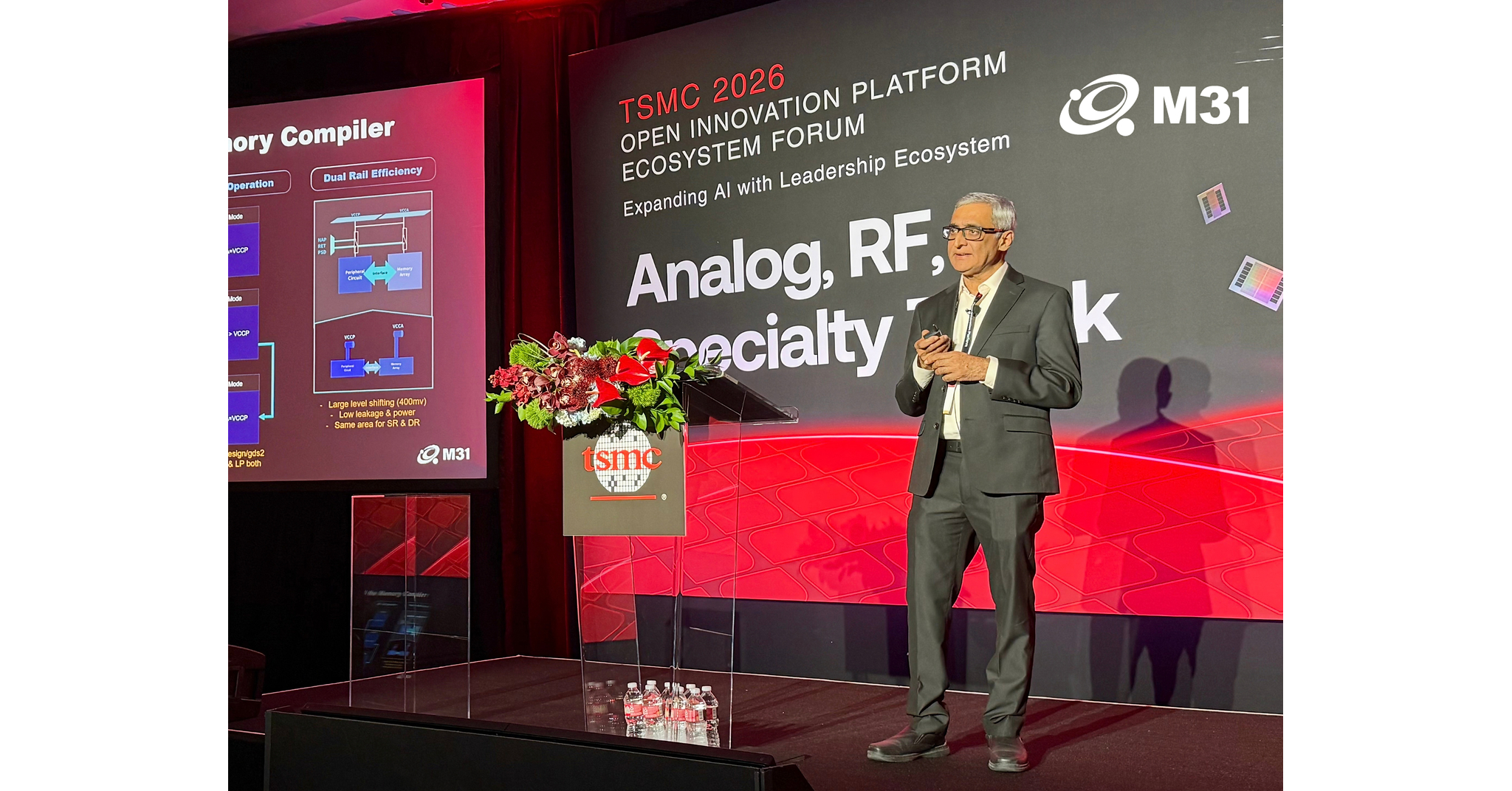
M31 Technology and Ambiq introduced a joint ultra-low-power Foundation IP solution on TSMC's N12e process for always-on edge AI, AIoT and wearable devices. The standard-cell library delivers approximately 50% leakage-power savings, while the dual-rail SPSRAM compiler can operate near 500 MHz in low-power mode with retention leakage at roughly 1.05-1.1x total bit-cell retention leakage. The collaboration is intended to reduce power consumption, die area and design-cycle time for Ambiq's next-generation flagship platform and other edge-computing customers.
Analysis
The commercial significance is less the IP announcement itself than whether it lowers Ambiq's energy-per-inference enough to expand its addressable market from niche wearables into higher-volume always-on sensor endpoints. Memory leakage and SRAM area are disproportionately important in duty-cycled edge designs; even modest die-area reduction can improve gross margin through smaller die and better wafer output, while an architecture-level power advantage can support higher ASPs. The near-term financial contribution is likely immaterial until a named production program, tape-out cadence, or revised revenue outlook confirms that the design work converts into shipments.
TSM gains primarily through ecosystem stickiness rather than meaningful incremental wafer revenue: validated low-power IP reduces customer migration risk and can make N12e more durable for mature-node edge-AI designs. The more relevant competitive pressure falls on edge silicon vendors relying on less differentiated MCU/SoC platforms, including STM (STM), NXP (NXPI), Renesas (RNECY), and Nordic Semiconductor (NOD.OL), if Ambiq can demonstrate a system-level battery-life advantage rather than block-level PPA claims. Conversely, a weaker-than-expected edge-AI device upgrade cycle would leave the IP as engineering validation without material volume leverage.
Consensus should resist extrapolating the stated leakage improvement into company-level margin or revenue estimates. The key falsifier is end-product data: if Ambiq's next platform does not show a measurable battery-life, die-size, or performance-per-watt advantage versus competing MCUs/SoCs, customers will not pay for the differentiation. Over the next 1-3 months, watch for a production-design win, foundry qualification expansion, or customer launch; over 6-18 months, wafer-volume evidence and gross-margin progression determine whether this becomes investable rather than promotional ecosystem news.
AllMind Terminal
AI-powered research, real-time alerts, and portfolio analytics for institutional investors.
Request TrialMarket Sentiment
Overall Sentiment
moderately positive
Sentiment Score
0.42
Ticker Sentiment
Key Decisions for Investors
- No standalone AMBQ position solely on this release; place on catalyst watch for a named OEM design win or next-platform launch within 1-3 months. Upgrade only if management quantifies production timing, unit volumes, or a gross-margin/ASP benefit; absent that, the risk/reward is dominated by unverified engineering claims.
- Maintain TSM as the cleaner liquid exposure to edge-AI ecosystem adoption, but do not add on this item alone. Consider adding on a broader semiconductor pullback if TSM holds advanced-packaging and mature-node utilization guidance; this collaboration is a modest positive for N12e customer retention, not an earnings catalyst.
- Monitor a potential relative-value short in STM or NXPI only after independent benchmarks demonstrate a material Ambiq battery-life advantage and OEM adoption. The thesis is falsified if competing vendors match system-level power at comparable cost, or if edge-AI demand remains concentrated in phones and data-center-adjacent devices rather than battery-powered endpoints.
- For AMBQ holders, use the next earnings call as the decision point: retain exposure only if management ties the platform to a tape-out/customer schedule and provides a credible conversion path within 6-18 months. A guidance raise or disclosed production customer is the upside catalyst; continued R&D emphasis without commercialization warrants reducing exposure.
More News
- EXCLUSIVE: Nvidia Keeps AI Profits, TSMC May Want a Bigger Cut
- Astera Labs vs. Marvell Technology: Which Tech Stock Is a Better Buy in 2026?
- Taiwan Semiconductor: AI Hiccups Lately, But Strong Growth Persists
- Here's My Top Low-Risk, High-Potential-Reward Stock That's Thriving in the Artificial Intelligence (AI) Boom
- Trump Versus Xi: How Their High-Stakes Summits Compare
- SEBI Allows Portfolio Managers to Invest Overseas, Short Equity Options
From AllMind Research
- Anthropic IPO Preview: Valuation, Timing, and What to Watch
- Shein After the IPO: Venue, Valuation, and What Must Be Proved
- What AI Research Tools Should a Small Hedge Fund Buy First?
- AllMind Discusses Ontario's AI Economy with Minister Stephen Crawford and Supply Ontario CEO James Wallace
- AI Research Tools for SEDAR+, UK and ASX Filings