
25 Years Later, Eagleview's Disaster Response Program Continues To Scale to Respond to Increasing Climate Disasters
Source: PR Newswire
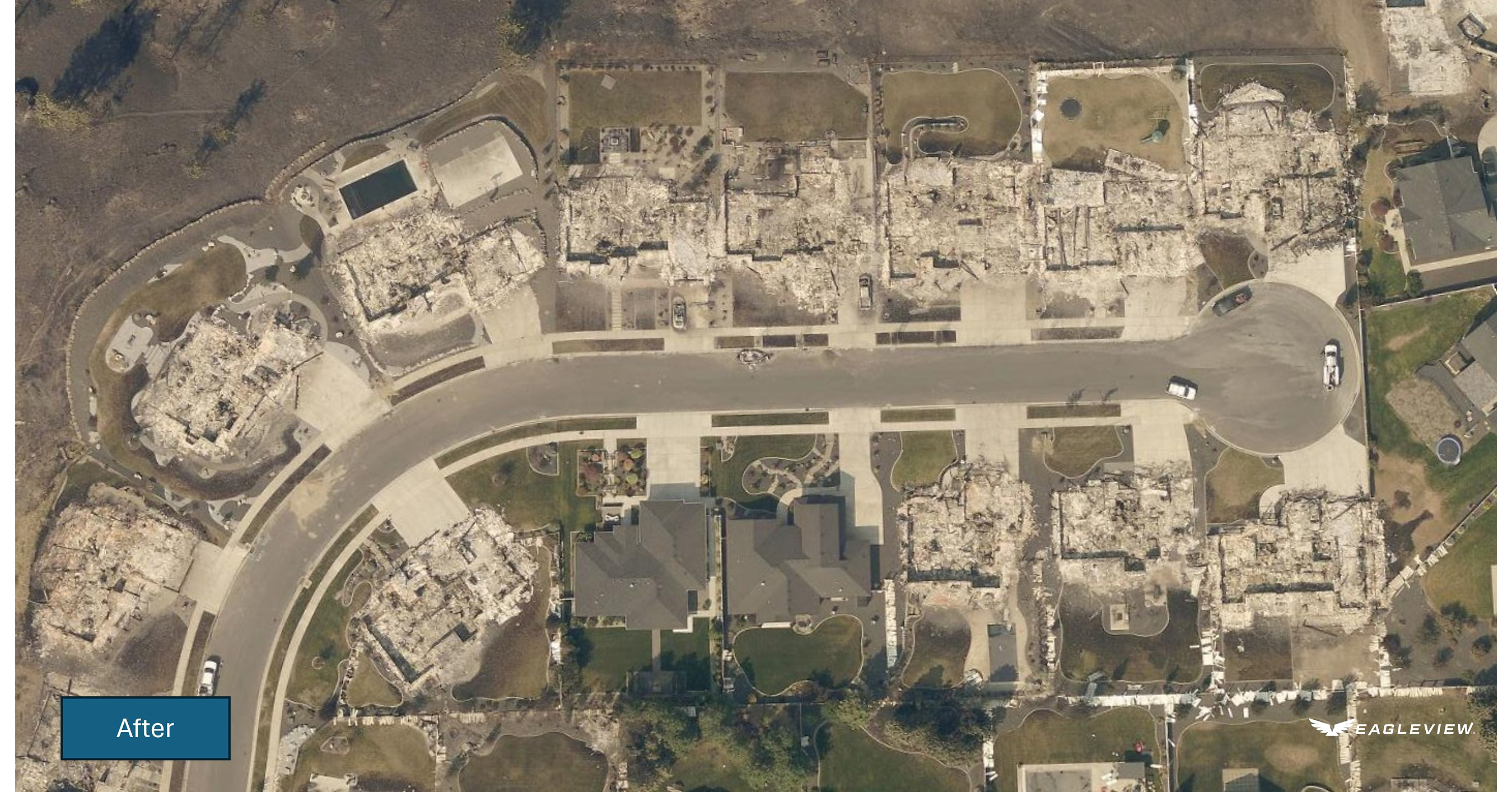
Eagleview marked the 25th anniversary of its Disaster Response Program, which has evolved from aerial imaging after the September 11, 2001 attacks into a year-round operation supporting disaster recovery. Since December 2025, the program has responded to 17 severe weather events across 10 states; Eagleview says it operates more than 100 aircraft and maintains extensive baseline imagery coverage across the U.S. and Canada. NOAA data cited in the release show 17–28 major U.S. climate disasters annually in 2023–2025, versus a long-term average of about nine.
Analysis
The economic value is operational, not a hedge against catastrophe losses: faster, more verifiable property assessments may lower inspection friction and improve claims triage, but could also bring valid damage claims to light sooner. That creates a near-term two-way effect for insurers—potentially lower handling costs, but no reason to assume lower insured losses or claims severity. Public entities and infrastructure owners may likewise benefit from faster damage assessment; imagery providers benefit only if emergency use converts into durable paid demand rather than episodic, promotional visibility.
The harder-to-replicate asset may be the combination of pre-event coverage, geospatial accuracy, and ability to mobilize aircraft—not imagery alone. However, concurrent events and poor flying conditions can constrain response precisely when demand spikes. Satellite imagery and other geospatial providers are substitutes, while existing customer workflows and data verification standards may limit rapid switching.
Near term, this anniversary announcement is not a material standalone catalyst: it provides no pricing, contract, revenue, or incremental-margin evidence. Over 1–3 months, watch for disclosed customer wins or procurement commitments. Over 6–18 months, recurring adoption and demonstrable reductions in inspection time or cost would support a stronger commercial thesis. Contrarian point: more disasters do not automatically mean proportionate growth for imagery vendors; disaster counts are not addressable-property counts, and severe events can raise insurers’ losses far more than imagery can reduce operating expense. No company ticker or public-market exposure is established in the supplied data.
AllMind Terminal
AI-powered research, real-time alerts, and portfolio analytics for institutional investors.
Request TrialMarket Sentiment
Overall Sentiment
mildly positive
Sentiment Score
0.15
Key Decisions for Investors
- No trade on the announcement alone. Treat Eagleview as a private-company operating signal, not a directly investable catalyst; do not infer revenue or margin impact from the response activity cited.
- For listed insurers, do not use imagery adoption as a catastrophe-risk hedge. Revisit only if a carrier reports measurable improvement in claims handling expense, cycle time, or loss adjustment outcomes; separately track catastrophe losses and reserve development.
- Set a 1–3 month alert for customer contracts, procurement awards, or pricing disclosures that establish recurring monetization. Without those, classify the item as corporate positioning rather than evidence of incremental earnings.
- Falsify the longer-term efficiency thesis if customers continue relying on manual verification, competing imagery sources satisfy requirements at lower cost, or concurrent events and weather constraints prevent timely coverage.
More News
- BlackRock, GIC among investors chasing Indian telecom major Jio's IPO as anchor bids top $26 billion
- Nscale, Anthropic Eye $45 Billion Cloud Deal as AI Trade Rebounds
- Gartner analyst behind tech rout: AI returns are not yet large enough to justify neocloud build-out
- Saudi Arabia cancels 2026 ‘Davos in the Desert’ amid Houthi attacks
- Alibaba Backs Chinese Robovan Maker in $400 Million Fundraising
- Walmart’s Flipkart is quietly building a food delivery challenger in India