
Hexaware Collaborates on Project NANDA Fellowship to Build the Future of AI Agents
Source: PR Newswire
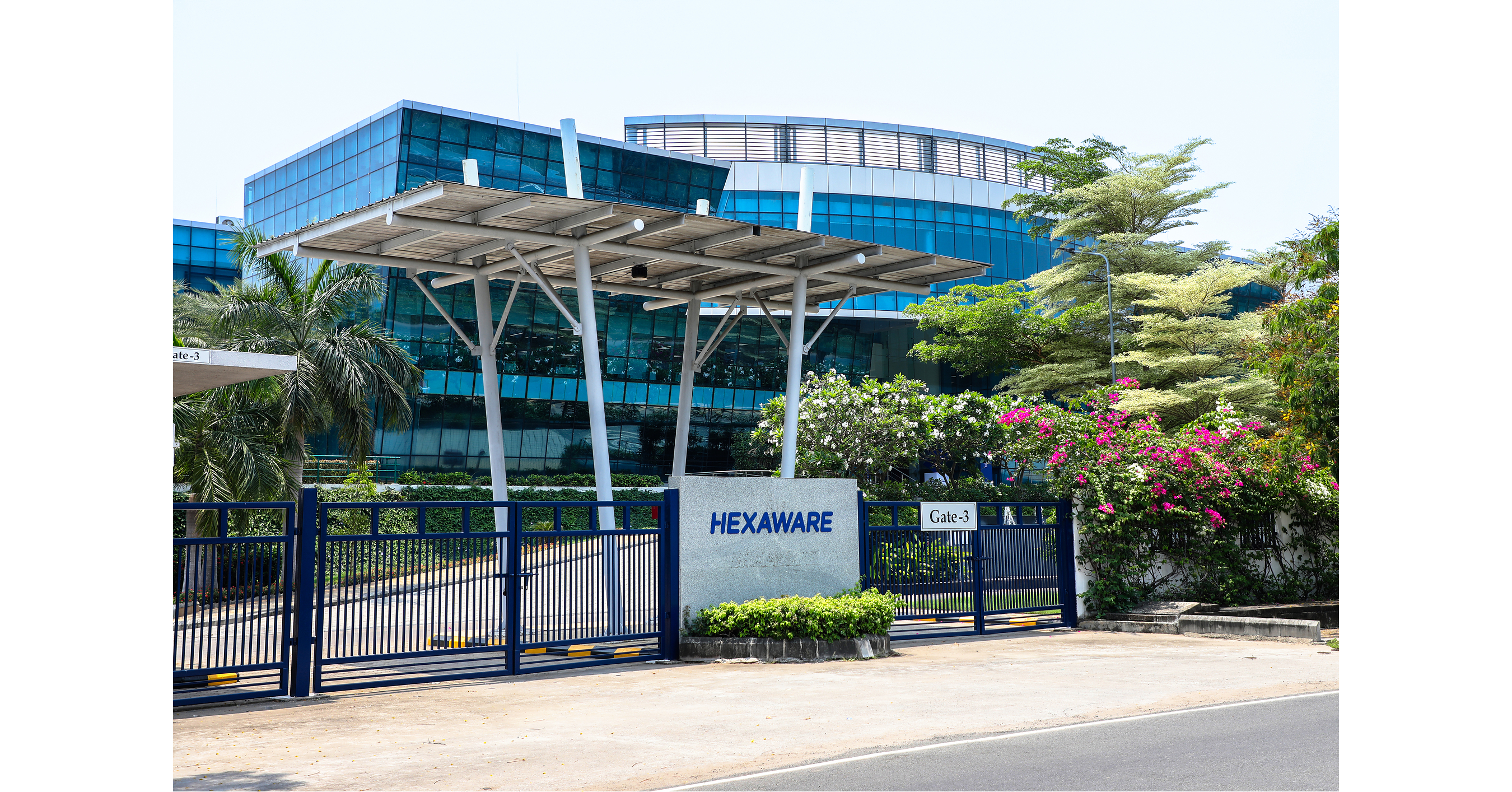
Hexaware launched applications for its Project NANDA Fellowship, an inaugural cohort of more than 10 engineers and external developers working on open-source infrastructure for decentralized AI-agent discovery, identity verification and secure coordination. The program supports Project NANDA, an MIT Media Lab-originated initiative focused on standards for an open agentic web, and complements Hexaware's agentic-AI investment in Zerovity. Priority application review closes September 19, 2026.
Analysis
This is immaterial to Hexaware’s near-term earnings and should not be treated as a monetizable AI-contract signal. The economic value of an open agent-discovery standard will likely accrue first to control points—identity, security, observability, cloud hosting and enterprise workflow orchestration—rather than to firms contributing engineering talent to open-source reference implementations. If interoperability lowers switching costs between model providers and agents, it is modestly negative over time for proprietary end-to-end platforms whose valuations assume closed ecosystem lock-in.
Over the next 1-3 months, the relevant catalyst is developer adoption rather than the fellowship itself: GitHub activity, external contributors, enterprise pilots, integration partners and any governance structure around standards/IP. Over 6-18 months, a credible cross-vendor agent identity and coordination layer could expand demand for zero-trust security and API management, benefiting PANW, CRWD, OKTA and APIM-oriented platforms, while increasing competitive pressure on point-solution agent vendors without distribution or security credibility.
Contrarian view: open standards are often marketed as decentralizing infrastructure but frequently fail to achieve enterprise deployment without a trusted managed layer. Hyperscalers MSFT, AMZN and GOOGL can capture this outcome regardless of which protocol wins because they own identity, compute, developer tooling and procurement channels. The thesis is falsified if Project NANDA fails to attract recognizable enterprise implementers or if agent frameworks converge instead around proprietary protocols from hyperscalers and major model vendors.
AllMind Terminal
AI-powered research, real-time alerts, and portfolio analytics for institutional investors.
Request TrialMarket Sentiment
Overall Sentiment
mildly positive
Sentiment Score
0.35
Key Decisions for Investors
- No standalone trade in Hexaware: treat this as a watch item until management quantifies AI-related bookings, utilization, pricing uplift or named enterprise deployments; fellowship activity alone has no valuation-bearing KPI.
- Maintain a 6-18 month structural preference for PANW and CRWD versus pure-play agent-application vendors: autonomous cross-organizational workflows raise identity, permissions, audit and runtime-security spend. Reassess if enterprise pilots show agents remain contained within single-vendor SaaS environments.
- Use GOOGL, MSFT and AMZN as the liquid expression if open-agent interoperability gains credible developer traction; initiate only following verifiable adoption milestones such as major framework integrations or enterprise consortium participation, not press-release announcements.
- Monitor OKTA for a potential second-order beneficiary, but require evidence that machine/agent identity becomes a paid enterprise category. The risk is hyperscaler-native identity absorbing the spend, which would favor MSFT and AMZN instead.
More News
- China's AI leaders keep quiet despite U.S. 'publicity' on tech risks
- Karin Rådström is steering Daimler Truck in a new direction as the world’s biggest truckmaker faces a growing challenge from China
- U.S. stock futures drift higher with Fed rate hike in focus
- AWS says it can't restore service to Bahrain, UAE facilities 6 months after Iran strikes
- Treasury yields are hovering above a critical threshold. Here's what it means for stocks
- Factbox-How AI leaders and world governments react to ’AI doom’ fears
From AllMind Research
- Anthropic IPO Preview: Valuation, Timing, and What to Watch
- Shein After the IPO: Venue, Valuation, and What Must Be Proved
- What AI Research Tools Should a Small Hedge Fund Buy First?
- AllMind's Data Standardization Methodology: Our Approach to Fundamentals
- What Makes Financial Data Ready for AI Research?