
Top China Tech Stocks to Add to Your Portfolio for Impressive Returns
Source: zacks.com
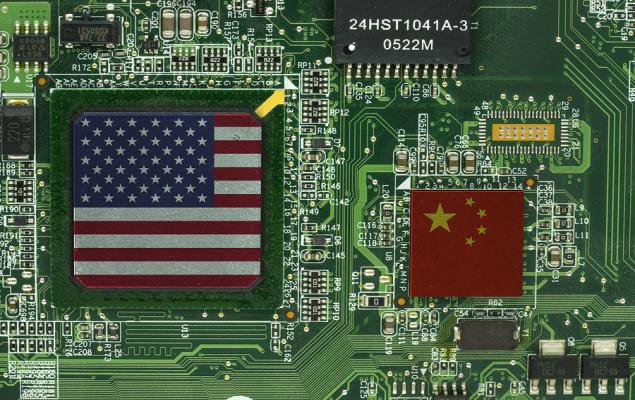
The article presents a constructive but uneven outlook for Chinese technology stocks into 2027, citing an extension of the Busan truce to Jan. 10, 2027, and growth across AI, semiconductors, robotics and energy storage, alongside persistent trade restrictions. It highlights Taiwan Semiconductor’s Q4 revenue outlook of $52.3–$54.3 billion and expected 2026 revenue growth of about 44%, GigaCloud’s Q3 revenue outlook of $375–$400 million, and buyback programs at Autohome, GigaCloud and KE Holdings. The developments support a positive view of the featured stocks, but the article also notes geopolitical uncertainty, export controls and supply constraints.
Analysis
This is not a coherent “China tech” exposure: TSM is a Taiwan foundry, while ATHM and BEKE depend on domestic activity and GCT’s marketplace economics are not directly validated by the geopolitical narrative. The investable signal is dispersion, not a broad basket. AI-chip controls can benefit domestic substitution while also constraining the equipment and advanced-node ecosystem; reported Nvidia orders therefore do not establish realized shipments or durable NVDA share. TSM may capture demand regardless of chip designer, but its capacity ramp and capital intensity make execution and Taiwan-risk pricing central.
Near term, ATHM’s Nov. 4 results are the cleanest company-specific catalyst: verify dealer-pilot expansion, monetization and whether new initiatives move revenue, rather than treating product launches or buybacks as proof of growth. For GCT, the key test is whether third-party GMV growth converts to contribution economics and cash generation; repurchases do not by themselves establish marketplace quality. BEKE’s repurchases may support per-share metrics, but housing turnover and store productivity remain the operating tests.
The contrarian point: a diplomatic truce can reduce near-term risk premium without resolving export-control or supply-chain constraints. The Jan. 10 extension endpoint and Nov. 18 controls are potential volatility catalysts, not assured growth drivers. The promotional article supplies no valuation or consensus baseline, so claims of attractive returns are not established.
AllMind Terminal
AI-powered research, real-time alerts, and portfolio analytics for institutional investors.
Request TrialMarket Sentiment
Overall Sentiment
moderately positive
Sentiment Score
0.38
Ticker Sentiment
Key Decisions for Investors
- Avoid a blanket China-tech long. If seeking semiconductor exposure, prefer a measured TSM position over a broad policy-relief bet; reassess on capacity utilization, gross-margin delivery versus guidance, and any material Taiwan-risk repricing. Do not short NVDA solely on reported China orders or share estimates.
- Treat ATHM as an event watch into Nov. 4, not an automatic buy: add only if results show measurable monetization or engagement converting into revenue and guidance supports it. Falsifier: continued launches without operating traction.
- Keep GCT and BEKE as selective, fundamentals-led watches. For GCT, require third-party GMV growth to translate into cash generation; for BEKE, track housing activity and store/unit economics alongside buybacks. The article does not provide enough valuation or operating detail for a high-conviction entry.
- Use Nov. 9 vessel-fee suspension status, Nov. 18 export-control implementation and the Jan. 10 truce endpoint as portfolio risk checkpoints. A breakdown in talks or broader controls would challenge any geopolitical de-risking trade; confirmed extensions without meaningful restrictions could compress the risk premium.
More News
- US tech stocks tumble as investors fret over AI spending
- AI debt and French bonds face a stress test — why it may not be over
- SK Hynix shares slide after chipmaker scraps Solidigm IPO plans
- 10-year Treasury yield tumbles below 5% to lowest level in nearly a month
- The perfect storm behind the Nasdaq's rout — plus, some of the bright spots in the market
- Markets sell off worldwide as further conflict looms in the Middle East and Elon Musk cuts capex guidance