
AprilAire Announces Breakthrough Advancement in Home Air Filtration with the Launch of TriPure™ Technology
Source: PR Newswire
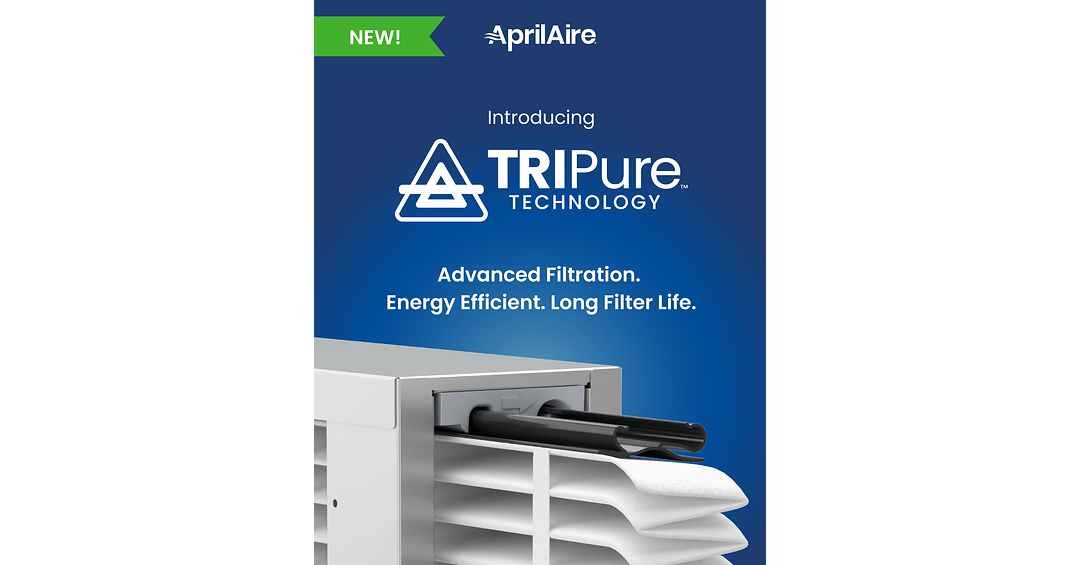
AprilAire introduced TriPure™ Technology for residential HVAC air filters, claiming better filtration and HVAC efficiency. The company says its TriPure filters deliver 20% to 30% better airflow versus leading brands and maintain filter life of up to 6–12 months depending on the model. The announcement is product-focused with no financial guidance, suggesting only limited near-term impact.
Analysis
This is primarily a share-shift story inside a mature replacement market, not a category step-change. If the performance claims hold, the main economic lever is reduced pressure drop plus longer life, which can justify premium pricing and modestly improve channel stickiness with HVAC pros who dislike callback risk. The second-order loser is commodity/private-label filter SKUs at big-box retailers, because a premium branded filter that can credibly claim better airflow attacks the two biggest friction points in the category: comfort and operating cost.
The more interesting downstream effect is on HVAC ecosystem economics. Better airflow can reduce perceived strain on furnaces/air handlers, which may lower service complaints and strengthen installer recommendations for the branded filter bundle; that can matter more than direct consumer advertising. But the reverse risk is also real: if the product genuinely lasts 6-12 months, unit replacement frequency falls, so revenue growth depends on ASP expansion and not volume alone.
Near term, this is mostly a channel-execution check, not a fundamental re-rate catalyst. Over 1-3 months, the key question is whether retailers/distributors give it premium shelf space and whether reviews support the claim set; over 6-18 months, the test is whether HSHL can translate the launch into margin expansion rather than just mix-shift. The thesis is falsified if sell-through data shows no share gain versus house brands, or if lower replacement frequency offsets any premium ASP uplift.
AllMind Terminal
AI-powered research, real-time alerts, and portfolio analytics for institutional investors.
Request TrialMarket Sentiment
Overall Sentiment
mildly positive
Sentiment Score
0.25
Ticker Sentiment
Key Decisions for Investors
- No immediate directional trade in HSHL on the press release alone; wait 30-60 days for channel checks, distributor commentary, and early review data before underwriting any share gain.
- If follow-up data shows premium pricing with stable unit share, consider a tactical long HSHL versus a basket of commodity filter/private-label exposure; target 5-10% relative outperformance over 3-6 months, with the thesis broken if ASPs compress or inventory builds.
- Watch Amazon/retail sell-through and HVAC contractor endorsements as the earliest leading indicators; if reviews flag airflow or fit issues, treat the launch as dead money and fade any post-announcement strength.
- For a cleaner hedge, pair any long HSHL exposure against a broad home-improvement/consumer staples basket rather than a broad market index, since the upside is idiosyncratic and the competitive threat is category-specific.
- Do not express this through options unless there is a confirmed earnings date with disclosed launch contribution; the signal-to-noise on a product PR is too low for premium decay.
More News
- US Diesel Tops Record as Global Crunch Feeds Inflation
- There’s $33 Trillion in Stock Gains Riding on the Future of AI
- AMD hits $1 trillion market cap as stock continues 5-day rally
- What’s the US–China AI ‘hotline’ that Trump plans to pitch to Xi Jinping?
- Stocks Rise as US, China Hail Positive Talks Ahead of Trump-Xi Summit
- Is it a missile? Is it a drone? What’s the Pelican used by Ukraine?
From AllMind Research
- Anthropic IPO Preview: Valuation, Timing, and What to Watch
- Shein After the IPO: Venue, Valuation, and What Must Be Proved
- What AI Research Tools Should a Small Hedge Fund Buy First?
- The $4.7 Trillion Bet: When Does AI Capex Become AI Revenue?
- Equity Research Automation Statistics: A 2026 Evidence Check