
Makao için Zeka Odaklı Güvenlik: CTM ve Huawei, Yapay Zeka Çağı'nda Ağ Güvenliğini Güçlendirmek İçin İşbirliği Yaptı
Source: PR Newswire
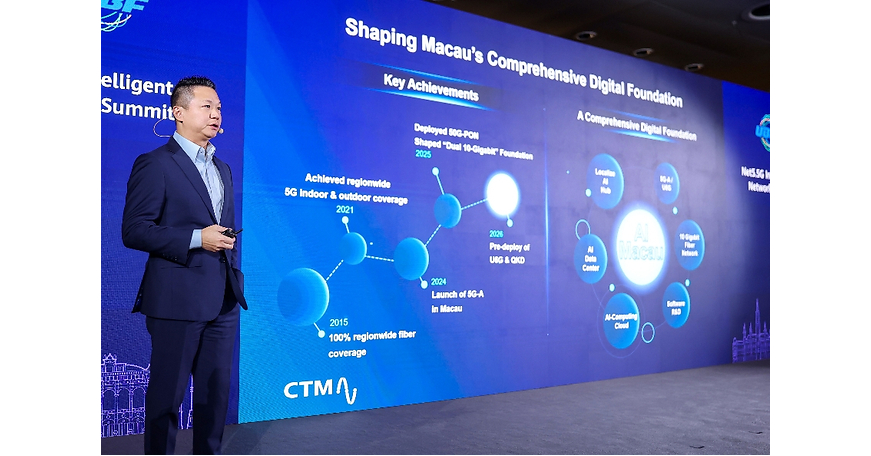
CTM and Huawei are collaborating on AI-enabled network security and a target IP architecture integrating QKD, presented at Network X 2026. CTM plans to combine AI-driven traffic management and telemetry analytics with embedded security, security-as-a-service offerings, and quantum-ready capabilities; the article provides no financial results or quantified deployment figures.
Analysis
Investment read-through: This is a vendor-positioning announcement, not evidence of material contract revenue or improved operator economics. The investable question is whether AI-enabled traffic management and security can raise enterprise-service attachment or defer bandwidth investment enough to outweigh integration and ongoing compute costs. CTM’s claims on cost reduction and new revenue need validation in customer adoption, realized international-capacity savings, and capex/opex disclosure.
Winners and competitive dynamics: Huawei gains a reference deployment narrative for combining network automation with security; that may support its bids where procurement rules permit. The broader opportunity also benefits network-equipment and cybersecurity vendors able to sell interoperable automation and managed-security tools. Conversely, a tightly integrated Huawei stack may increase switching costs and pressure independent security suppliers—but could face a ceiling in markets with restrictions on Huawei equipment. Operators are not automatic winners: they bear implementation and cyber-resilience risk before any service monetization is proven.
Timing and contrarian view: Near-term market impact is likely negligible. Over 1–3 months, watch for named deployments, independently verifiable customer uptake, and quantified savings or security-service revenue. Over 6–18 months, AI-driven network operations may improve utilization, but quantum-key distribution is a longer-dated, capital-intensive proposition; post-quantum cryptography is a potential lower-cost competing path. The promotional framing risks overstating QKD’s commercial urgency and understating migration, interoperability, and operating costs. Falsifiers include no follow-on deployments, no measurable unit-cost improvement, or procurement limits that block Huawei-led expansion.
AllMind Terminal
AI-powered research, real-time alerts, and portfolio analytics for institutional investors.
Request TrialMarket Sentiment
Overall Sentiment
mildly positive
Sentiment Score
0.25
Key Decisions for Investors
- No directional trade on this announcement alone; treat it as a low-impact product-positioning signal, not a near-term earnings catalyst.
- Put Huawei, Nokia, Ericsson, Cisco, and independent cybersecurity vendors on a competitive watchlist; assess actual contract wins and interoperability before expressing a relative-value view.
- Set an alert for quantified CTM disclosures on enterprise security-service adoption, international bandwidth savings, and network capex/opex. Without those data, do not underwrite the claimed economics.
- Track procurement restrictions and post-quantum cryptography standards as key downside/alternative scenarios for any thesis that QKD becomes a scalable operator revenue stream.
More News
- AI rapidly improving, could vastly boost U.S. GDP, Anthropic's Clark tells policymakers
- AI stocks plunge. Inflation heats up. Where we're still finding opportunities
- Nasdaq Index: AI Selloff Deepens as Chips and CoreWeave Break
- ‘How many canaries have we killed in the coal mine?’ — Wall Street debates if the latest AI bubble warnings are another head fake or the real thing
- Bending Spoons wants to revive software castoffs. Berkshire is backing the plan
- Iran-backed Houthis strike Yemen’s Aden: What that means