
Intel, AMD plummet further on Thursday: what's behind the fall?
Source: invezz.com
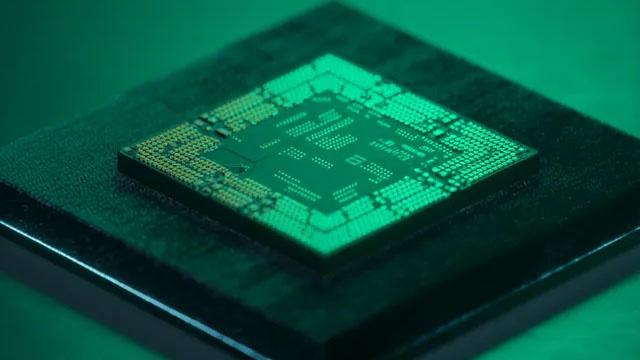
Intel fell 3.84% and AMD declined around 3.77% on Thursday as the semiconductor sell-off continued. Taiwan Semiconductor Manufacturing Co.'s record quarterly results did not lift investor sentiment, underscoring weakness across the sector.
Analysis
A strong result failing to support semiconductor shares points to a market-level de-rating or positioning unwind: near-term earnings beats may not be enough while investors are reducing sector exposure. That makes the sell-off a weak signal about any one company’s fundamentals, but a meaningful warning that the sector’s multiple may be more sensitive to rates, risk appetite and expectations than to current results. AMD’s and Intel’s declines alone do not establish company-specific deterioration; separate their earnings revisions and relative performance from the sector move before adding exposure.
Over days, flows and technical support may dominate. Over 1–3 months, watch whether analyst estimates and forward guidance hold up; persistent estimate cuts would turn a sentiment correction into a fundamental one. Over 6–18 months, competitive execution and investment requirements will matter more than a single quarter, but this report provides no evidence to rank company-specific outcomes. TSM’s inability to lift sentiment is not proof its results were discounted or that demand is weakening. The contrarian possibility is that indiscriminate selling creates an entry point if estimates remain intact; confirmation requires stabilization in relative performance and revisions. No standalone directional trade is justified from this signal alone.
AllMind Terminal
AI-powered research, real-time alerts, and portfolio analytics for institutional investors.
Request TrialMarket Sentiment
Overall Sentiment
mildly negative
Sentiment Score
-0.30
Ticker Sentiment
Key Decisions for Investors
- Avoid buying AMD or Intel solely on the reported decline. First check whether forward earnings estimates are stable and whether each stock is underperforming semiconductor peers; worsening relative performance alongside estimate cuts would argue against a dip-buy.
- Treat TSM’s earnings response as a sector sentiment indicator, not a direct read-through to AMD’s demand or Intel’s outlook. Verify TSM guidance and customer-demand commentary before changing exposure.
- For the next 1–3 months, monitor semiconductor estimate revisions, sector breadth and relative performance. Consider adding sector risk only if selling pressure eases while revisions remain broadly stable; continued estimate cuts would falsify the stabilization thesis.
- No options or single-name pair trade is warranted on this article alone: it gives no valuation, positioning, guidance detail or price levels needed to frame asymmetric risk.
More News
- CoreWeave credit default swaps hit distress levels as investors sour on AI debt
- Suddenly, Wall Street is worried that the U.S. economy is more ‘vulnerable’ than it looks
- TSMC Earnings Beat; Anthropic Says It's Now Profitable
- Giant Taiwanese chipmaker TSMC confirms it’s in talks with Elon Musk to join ‘Terafab’ complex in Texas: ‘The AI market continues to be very strong’
- TSMC chip capacity is ‘fierce’ battleground for AI customers, amid record quarter
- TSMC posts record profit for a sixth straight quarter, beating estimates on AI boom