
Hisense Unveils AI-Powered "Companion Living" at IFA 2026
Source: PR Newswire
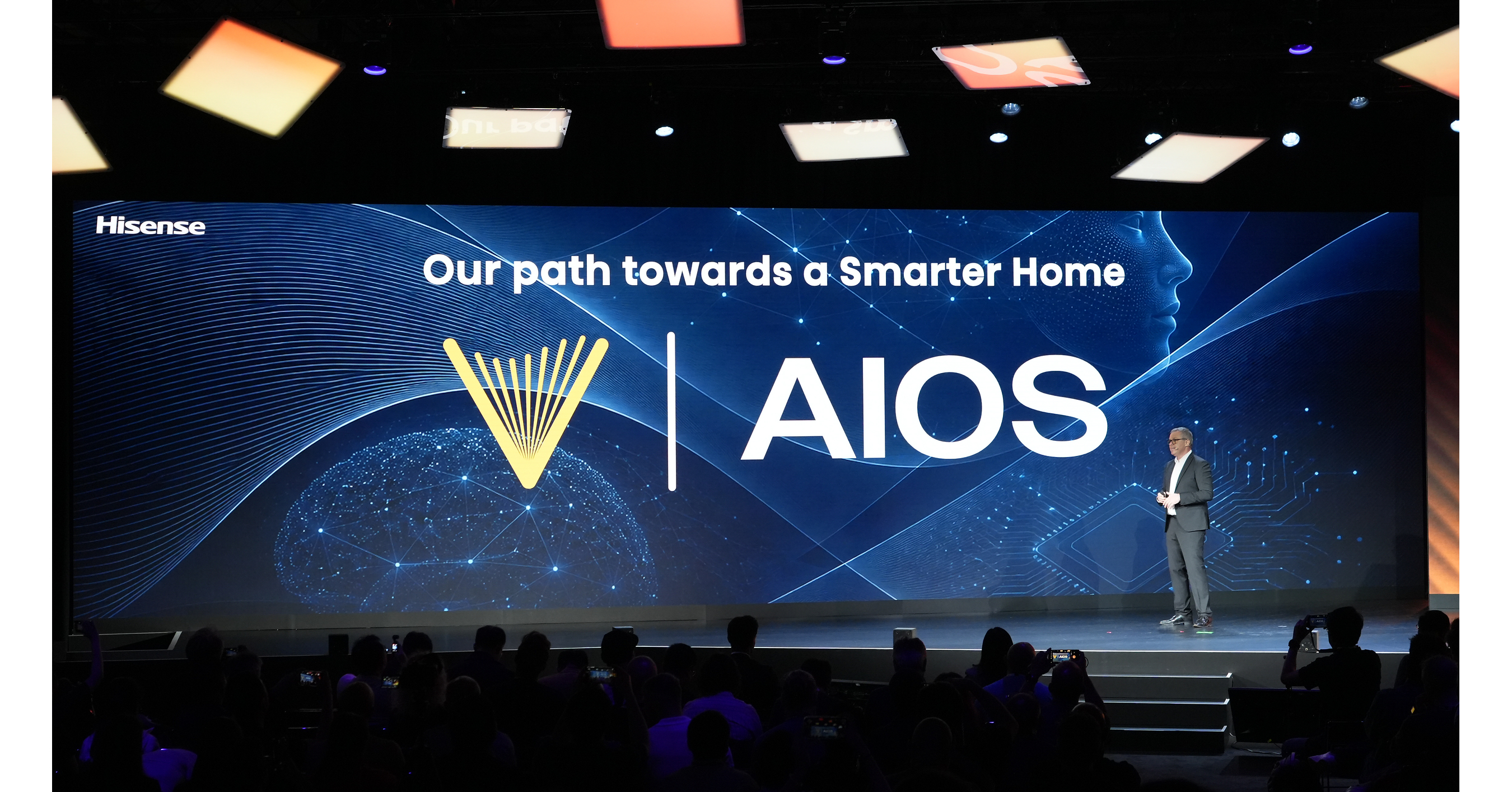
Hisense unveiled its AI-powered “Companion Living” at IFA 2026, centered on V AIOS (next evolution of VIDAA OS) with four AI capabilities: Sense, Think, Communicate and Execute. The AI Companion Suite targets everyday use cases across Cooking, Laundry, and Air & Energy via coordinated appliance control and the UR9 connected-home gateway. The news is primarily a product/innovation launch with limited immediate financial impact, but it signals continued investment in AI-driven consumer electronics.
Analysis
This reads as a low-direct-P&L event for the sector, but a meaningful signal on where consumer hardware is trying to protect pricing power: software and orchestration, not box specs. The economic question is whether AI features in TVs/appliances can lift ASPs and attach rates enough to offset what is usually a brutal hardware-margin curve; in most appliance categories, the answer is only yes if the software layer creates lock-in and recurring service revenue. That makes the biggest winners the component vendors that get incremental content without taking consumer-product risk, while the weakest incumbents are legacy appliance brands that lack an ecosystem and have to match features through higher SG&A.
Near term, the market is likely to treat this as marketing spend, not earnings leverage. Over 1-3 months, the catalyst is whether peers start talking about similar AI functionality in TVs, washers, and HVAC; if they do, the competitive read-through is margin compression for laggards rather than a volume boom for the first mover. Over 6-18 months, the real test is adoption: if these features materially improve churn, warranty rates, or energy savings, then premium home-appliance names can defend gross margin; if not, this becomes another feature arms race with little incremental ROIC.
The contrarian view is that the consensus may be underestimating how little compute is needed for most of these use cases. If the stack stays lightweight, BOM inflation is modest and the true benefit accrues to the few brands that can monetize data and service bundles. Falsifiers are simple: if next-quarter channel data show no ASP uplift, no margin expansion, and no attach-rate improvement, the AI narrative should be discounted as noise rather than an investable catalyst.
AllMind Terminal
AI-powered research, real-time alerts, and portfolio analytics for institutional investors.
Request TrialMarket Sentiment
Overall Sentiment
mildly positive
Sentiment Score
0.20
Key Decisions for Investors
- No immediate directional trade in consumer durables; treat this as a watch item until we see evidence of ASP or margin uplift in WHR/ELUX-style peers over the next 1-2 quarters.
- If you want a thematic basket, prefer a modest long in semiconductor-enablement names (SOXX or QCOM on pullbacks) over appliance OEMs; the cleanest economics are incremental content with limited balance-sheet risk, but the setup is only medium-conviction.
- Use any rally in legacy appliance names such as WHR as an opportunity to fade if AI-feature competition broadens and channel data do not show higher sell-through; thesis fails if gross margin inflects higher for 2 consecutive quarters.
- Set alerts on retailer commentary and Q4 guidance from home-appliance peers: if management starts quantifying mix uplift from connected/AI models, the trade shifts from marketing overhang to margin-defense story.
More News
- AI stocks plunge. Inflation heats up. Where we're still finding opportunities
- Bending Spoons wants to revive software castoffs. Berkshire is backing the plan
- AI rapidly improving, could vastly boost U.S. GDP, Anthropic's Clark tells policymakers
- ‘How many canaries have we killed in the coal mine?’ — Wall Street debates if the latest AI bubble warnings are another head fake or the real thing
- Semiconductor market to remain solid ‘at least through next year,’ South Korea finance minister says
- Nasdaq Index: AI Selloff Deepens as Chips and CoreWeave Break