
CrownPoint Partners Completes More Than $34 Million in Dental Sale-Leaseback Transactions Across Michigan and Ohio
Source: PR Newswire
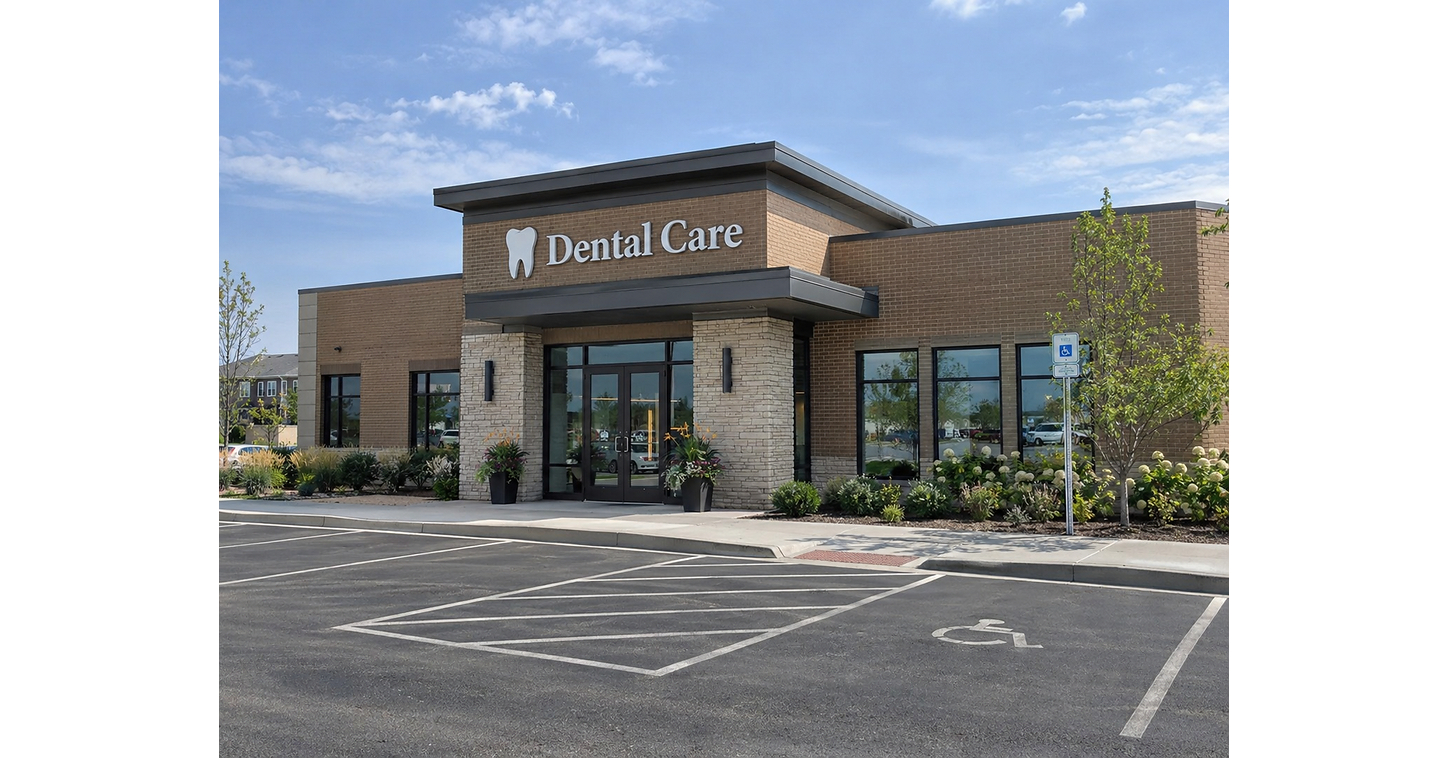
CrownPoint Partners completed more than 27 dental sale-leaseback transactions in Michigan and Ohio year-to-date, totaling over $34 million. Recent properties sold at 97%-100% of asking price, including an Ann Arbor sale at a 6.50% cap rate, with contract-to-close periods ranging from 13 to 58 days. The transactions highlight continued demand for long-term dental net-lease assets, which feature 15-year leases and 2.5% annual rent escalators.
Analysis
This is a localized private-market datapoint rather than a public-equity catalyst, but it modestly supports the view that mission-critical outpatient healthcare real estate retains liquidity despite broader commercial-real-estate financing constraints. Dental offices are operationally embedded assets: tenants face high relocation friction from patient retention, equipment installation, and licensing, which can support lease durability relative to discretionary retail. The key underwriting issue is not real estate quality alone, but operator credit; sale-leaseback proceeds can improve acquisition capacity while simultaneously increasing fixed rent leverage at the DSO level.
For listed net-lease REITs, the read-through is selectively constructive for Healthcare Realty (HR) and Global Medical REIT (GMRE), but neither has material direct dental exposure sufficient to change estimates. More relevant is competitive: private 1031-exchange and high-net-worth buyers accepting low-to-mid-single-digit yields can keep acquisition cap rates compressed, limiting external-growth spreads for public REITs whose unsecured borrowing costs remain materially above asset yields. That dynamic favors internally funded balance sheets and penalizes highly acquisition-dependent platforms.
Over the next 1-3 months, monitor whether comparable Midwest healthcare transactions clear at stable cap rates after accounting for tenant financial statements, lease guarantees, and remaining term. A widening of cap rates by 50bp or more would signal that the reported pricing reflects brokered, best-case assets rather than a broad reopening of the market. Over 6-18 months, dental consolidation could create a bifurcated outcome: scaled DSOs may be better credits, while sponsor-backed roll-ups with aggressive rent obligations become refinancing and covenant risks if same-store practice growth slows.
Contrarian view: rapid execution and near-ask pricing do not establish broad institutional demand; small absolute transaction sizes and all-cash buyers can mask a thin buyer pool. There is no standalone trade from this release without tenant-level coverage ratios, buyer financing terms, and cap-rate comparables across a larger sample.
AllMind Terminal
AI-powered research, real-time alerts, and portfolio analytics for institutional investors.
Request TrialMarket Sentiment
Overall Sentiment
mildly positive
Sentiment Score
0.32
Key Decisions for Investors
- No immediate position on this item; treat it as a watch signal, not confirmation of a healthcare-REIT recovery.
- Maintain a quality bias within net lease: favor O (Realty Income) over higher-leverage, acquisition-dependent peers for the next 6-12 months, as private-buyer cap-rate competition can constrain public REIT investment spreads.
- Set an alert on HR and GMRE quarterly disclosures for healthcare leasing spreads, acquisition cap rates, tenant concentration, and interest coverage. Consider a tactical long only if acquisition yields exceed incremental funding costs by at least 150bp and management reaffirms FFO guidance.
- For private-credit or public credit monitoring, screen sponsor-backed dental/DSO issuers for rent-to-revenue growth and fixed-charge coverage; rising sale-leaseback activity is a potential early warning of increased lease-adjusted leverage, not automatically a sign of operating strength.
More News
- Taiwan benchmark Taiex rises to record intraday high as tech stocks advance
- AMD joins the $1 trillion club as chip rally surges - our AI Strategy saw it early
- +17% in a single session: This AI-picked stock catches a data-center breakout
- Perpetual underdog AMD nips at Nvidia's heels as it joins the $1T club
- Intel surges 12% as CPU stocks rally. Here's what's driving the move
- GRAIL Stock Bounces Back Above $100: Can Galleri Sail Through Its FDA Panel Review?