
Can HSBC's Enhanced U.S. Premier Offering Drive Wealth Growth?
Source: zacks.com
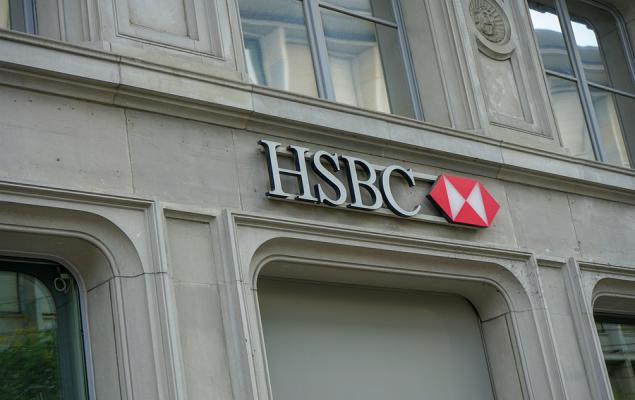
HSBC is expanding its U.S. Premier offering for affluent, internationally mobile customers, adding digital brokerage, cross-border banking, FX, travel and lifestyle services across its 21 U.S. Wealth Centers. The initiative builds on 1H 2026 wealth momentum: wealth balances rose 7% year over year to $1.58 trillion and wealth revenue increased 18% to $5.5 billion, while Hong Kong balances grew 10% to about $0.5 trillion. HSBC also expects roughly $2 billion of annualized savings from structural simplification by end-2026 to help fund priority growth investments.
Analysis
HSBC’s key earnings sensitivity is not incremental U.S. branch presence but conversion of internationally mobile deposits into recurring advisory, FX, lending and brokerage balances. The offering’s fee waivers make it a customer-acquisition expense rather than a near-term revenue catalyst; success should be judged by net new money, cross-border payment volumes, lending penetration and cost-to-income, not enrollment. A sustained mix shift toward wealth fees would lower dependence on rate-sensitive net interest income and could support a multiple re-rating versus Asia-focused bank peers over 6-18 months.
The competitive pressure lands most directly on UBS, Citigroup and Bank of America’s international-affluent franchises, while Schwab and Interactive Brokers face only marginal brokerage substitution because HSBC’s primary advantage is relationship-led cross-border servicing rather than execution pricing. The underappreciated risk is that fee-free FX and transfers attract low-balance transactional users, diluting returns unless relationship managers convert them into invested assets and credit products. U.S. growth investment also competes with the promised efficiency program, making 2027 expense guidance the central credibility test.
NTRS is a cleaner, less rate-sensitive expression of APAC financial-asset growth: higher fund formation and cross-border distribution increase custody, administration and transfer-agent complexity even if market direction is volatile. BGC’s AI narrative remains optionality, not an earnings driver; the relevant proof point is whether electronic workflows displace voice-broker economics without depressing take rates. Consensus may over-credit HSBC for an easily replicated premium-card bundle while under-crediting its differentiated Asian-origin client funnel and balance-sheet capacity to intermediate global liquidity.
AllMind Terminal
AI-powered research, real-time alerts, and portfolio analytics for institutional investors.
Request TrialMarket Sentiment
Overall Sentiment
moderately positive
Sentiment Score
0.42
Ticker Sentiment
Key Decisions for Investors
- Maintain HSBC as a watch-to-buy on a 5-8% pullback over the next 1-3 months rather than chase momentum; initiate only if management reaffirms efficiency delivery while disclosing positive U.S. net new money or wealth-fee growth. Target 10-15% upside over 12 months; exit on a material cost-to-income deterioration or a cut to savings guidance.
- Pair trade over 6-12 months: long NTRS / short KBE in equal beta-adjusted dollars. NTRS offers fee-based APAC servicing exposure with less U.S. deposit-beta and credit-cycle sensitivity; invalidate if organic AUC/A growth slows materially or operating-margin guidance weakens.
- Do not add BGC solely on Fenics AI headlines. Set an alert for two consecutive quarters of Growth Platforms revenue above 20% with stable or improving consolidated margin; that would justify a tactical long, whereas declining broker productivity or take-rate pressure falsifies the operating-leverage thesis.
- Monitor HSBC’s next results for U.S. wealth client acquisition cost, invested-asset conversion and international-payment volumes. Absent these disclosures, treat the initiative as strategically sensible but financially unquantified, with no standalone catalyst for the next quarter.
More News
- Taiwan benchmark Taiex rises to record intraday high as tech stocks advance
- AMD joins the $1 trillion club as chip rally surges - our AI Strategy saw it early
- Here's who we know is going to the Trump-Xi dinner so far
- Perpetual underdog AMD nips at Nvidia's heels as it joins the $1T club
- Intel surges 12% as CPU stocks rally. Here's what's driving the move
- Muse, Meta's extraordinarily privileged AI assistant, has a serious 0-day