
Dmitry Druzhinsky on Why Winning Young Does Not Always Mean Developing Well
Source: PR Newswire
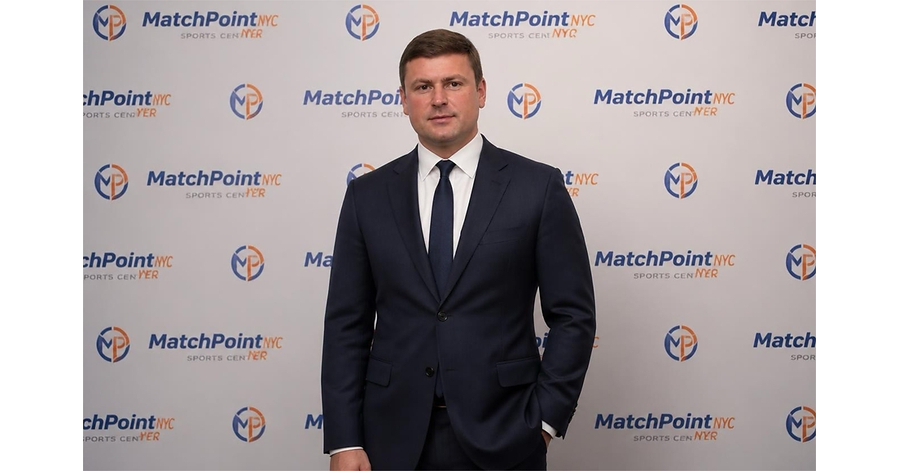
The article outlines Dmitry Druzhinsky’s long-term youth athlete development philosophy at MatchPoint NYC, arguing that tournament wins are only a single data point and do not guarantee future performance as competition intensifies. It emphasizes developing technical skills, tactical intelligence, and mental resilience—even if focusing on weaker areas temporarily makes competition harder. It also highlights an online training program to support continuity when athletes can’t attend in person.
Analysis
This is essentially a brand/positioning statement, not an investable catalyst. The economic read-through is that the highest-value part of youth sports is shifting from one-off tournament bragging rights toward recurring spend on training continuity, injury prevention, and cross-training — but that only matters if a provider can convert philosophy into paid retention. For public markets, the signal is too diffuse to justify a direct trade today; the cash-flow impact is likely immaterial unless the online offering shows measurable subscriber conversion or lower churn over the next 1-2 quarters.
If the thesis has any edge, it is second-order: multisport and development-oriented programs tend to favor broad-line sporting goods, conditioning equipment, recovery products, and digital coaching tools over pure travel-team ecosystems. The losers would be high-churn, winner-take-all tournament businesses and single-skill academies that depend on early specialization; the winners are operators that can monetize year-round engagement. But this is a long-cycle shift, not a days-ahead catalyst, and it would need hard evidence in consumer spend data before we pay for it.
Contrarian view: consensus may overrate any press release that sounds like "better development" as if it were demand growth. In practice, parents like the philosophy but still pay for outcomes; unless the company can show pricing power or broader membership retention, the market should treat this as marketing, not earnings power. The only near-term falsifier would be a disclosed jump in paid online usage or enrollment metrics; absent that, the correct stance is to stay flat and watch back-to-school sporting goods data instead.
AllMind Terminal
AI-powered research, real-time alerts, and portfolio analytics for institutional investors.
Request TrialMarket Sentiment
Overall Sentiment
neutral
Sentiment Score
0.00
Key Decisions for Investors
- No direct public-equity trade: this is a private-company positioning piece with no measurable market impact; stay flat unless there is disclosed subscriber or enrollment data next quarter.
- Watch DKS and ASO only as broad proxies for year-round youth-sports spend; revisit the trade only if back-to-school comps or accessories mix improve by >100 bps on the next print.
- Set an alert for any quantifiable online-program metric (paid conversions, retention, ARPU). If that becomes material, re-underwrite as a higher-margin recurring-revenue story; until then, do not chase the PR.
More News
- Nvidia GPUs are everywhere. Here are the ways companies are accessing them
- India unveils tough curbs on dollar demand to defend rupee
- Bank of America is bullish on these top stocks ahead of earnings
- Stocks were up this week. Here are the names that are now overbought
- As companies pour billions into Earth-based AI infrastructure, Google is taking the data center race off-planet
- Europe’s Indebted Nations Are Starting to Blink at Market Wrath