
Greece Cements €3 Billion Air-Defense System Deal With Israel
Source: Bloomberg
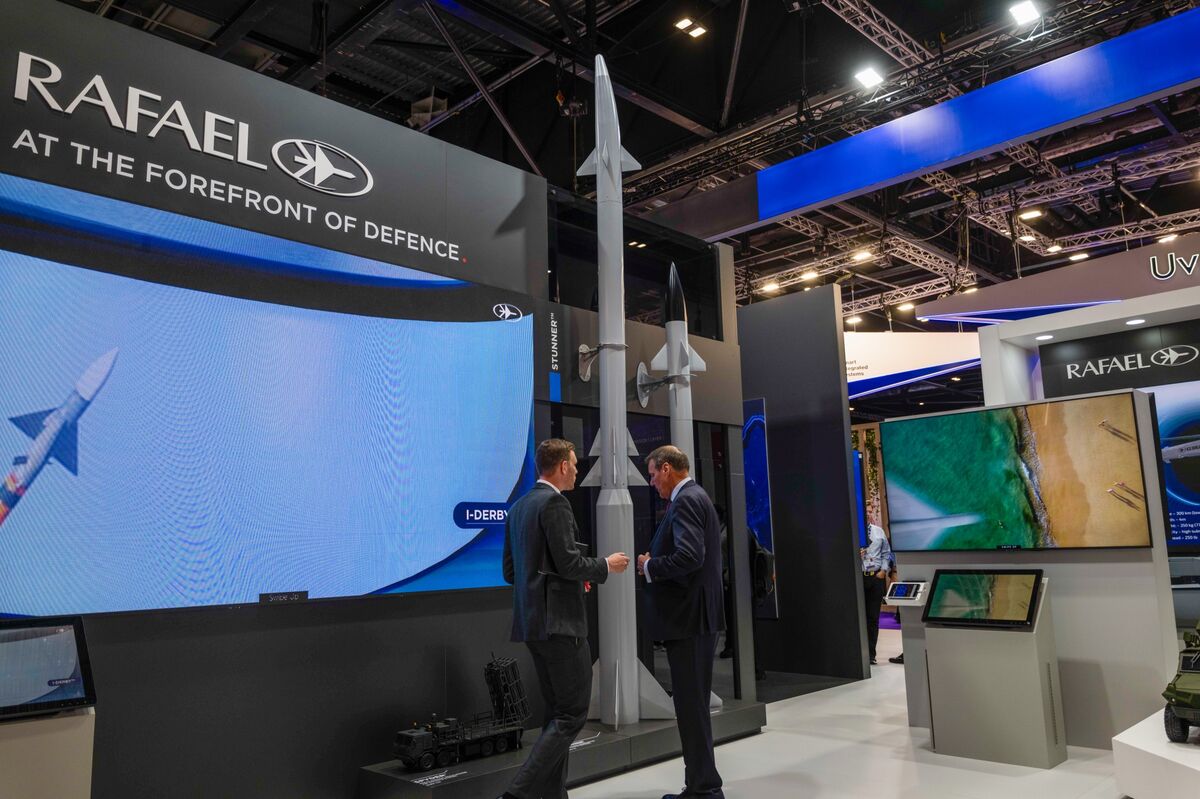
Greece signed a multi-layer air-defense agreement with Israel for €3.0 billion (≈$3.5 billion), known as the “Achilles Shield” deal. The system is based entirely on Israeli-made components, leveraging Israel Defense forces’ operational experience. While primarily defense-sector focused, the size and cross-border nature suggest a moderate potential impact on defense/strategic spending narratives.
Analysis
This is less a one-off contract than a signal that Israeli integrated air-defense remains the fastest-to-field solution set for NATO perimeter states. The near-term market read is for backlog visibility and export credibility, but the real economic value is in follow-on upgrades, ammunition/interceptor replenishment, and sustainment revenue, which typically carry better margins than the initial platform sale. If execution stays clean, the announcement should help Israeli defense exporters negotiate from a position of strength on future European bids.
The second-order losers are the European primes that would prefer to capture this spend domestically. If Israeli systems keep winning on cost/performance and deployment speed, it pressures Hensoldt, Thales, Leonardo, and Rheinmetall to either partner, license, or accept lower share in the air-defense stack; it also shifts value toward sensors, C2 software, and interceptors rather than heavy platform assembly. For U.S. primes, the risk is not immediate displacement but margin dilution if allied buyers increasingly split orders across best-of-breed layers instead of buying integrated U.S.-led packages.
Catalyst path matters: the stock reaction should be modest in days, but the 1-3 month upside is tied to booking cadence, financing clarity, and whether this becomes the first of several Southern/Eastern Europe air-defense awards. The 6-18 month thesis is a higher European rearmament budget and a stronger Israeli export franchise; the main falsifier is a slow procurement cycle, scope reduction, or political pushback favoring EU-local sourcing. The contrarian view is that a €3B headline can overstate near-term earnings impact because revenue recognition will likely be phased and the market may already discount a geopolitical premium into Israeli defense names.
AllMind Terminal
AI-powered research, real-time alerts, and portfolio analytics for institutional investors.
Request TrialMarket Sentiment
Overall Sentiment
neutral
Sentiment Score
0.10
Ticker Sentiment
Key Decisions for Investors
- Buy ISRLF on pullbacks only, with a 3-6 month horizon; treat this as a backlog/credibility trade rather than an immediate P&L inflection. Risk/reward is best if the market underappreciates follow-on sustainment and interceptor replenishment revenue.
- If liquidity allows, pair long ISRLF against short a European defense proxy basket (e.g., HENS3/THLEI/LDO) to express relative-share shift toward Israeli systems in air defense. Thesis breaks if EU-local content rules or political procurement preferences dominate the next tender cycle.
- Set a watch item for additional orders from NATO frontier states over the next 1-3 months; add only if the contract pipeline broadens beyond one customer. If no repeat awards emerge, fade the move as a one-event backlog boost.
- For a cleaner hedge, consider a small long in XAR/ITA only as a portfolio offset if you already have broader defense exposure and want to isolate the Israeli-specific rerating. The key risk is that the sector already discounts elevated geopolitical spending, limiting beta follow-through.
More News
- Brian Sullivan: Why the 'real' price of oil is likely $30-$40 higher than where it is now
- Latest Oil Market News and Analysis for Oct. 16
- Blackstone President Jon Gray Bets Big on AI Boom
- How the Houthis are helping Iran turn Saudi Arabia into a pressure point
- Giant Taiwanese chipmaker TSMC confirms it’s in talks with Elon Musk to join ‘Terafab’ complex in Texas: ‘The AI market continues to be very strong’
- Ukraine to resume strikes on Russian refineries, shattering hopes of an 'energy ceasefire'