
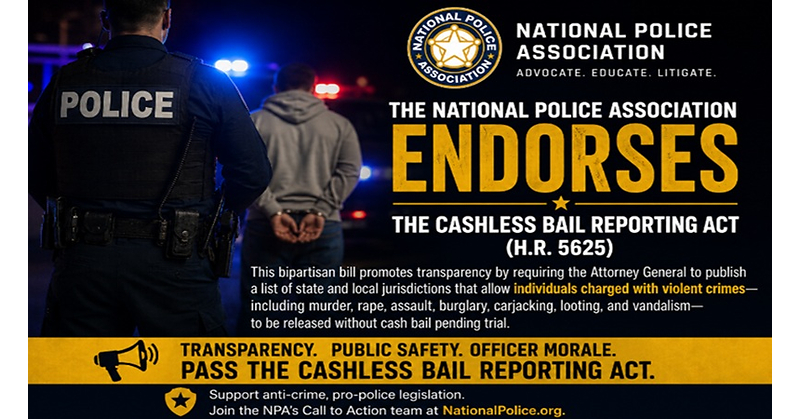
The National Police Association endorsed the Cashless Bail Reporting Act (H.R. 5625), which would require the U.S. Attorney General to publish a list of jurisdictions that permit release without cash bail for “covered” violent public-safety crimes. The bill—introduced by Rep. Mark Harris—has passed the House and been referred to the Senate Judiciary Committee, and it is described as codifying aspects of President Trump’s executive order without overriding state law or restricting federal funding. The article is primarily advocacy-focused and does not present direct financial or market outcomes, implying limited near-term impact.
This is mostly a signaling event, not an earnings event. The bill has no direct operating lever on cash flows, balance-sheet risk, or regulatory burden, so the immediate market impact on DJT should be close to zero unless traders are pricing pure headline momentum around Trump-linked policy validation.
The only tradable mechanism here is narrative reinforcement: law-and-order positioning can support DJT as a political optionality vehicle, but that effect is usually short-lived and crowded. Over 1-3 months, the more relevant catalyst is whether the Senate advances the bill or whether crime/public-safety messaging becomes a larger campaign theme; absent that, this reads like press-release noise that can fade after the first media cycle.
Second-order, if the issue gains traction, the cleaner beneficiaries are not DJT but public-safety proxies such as GEO and CXW, which have more direct sensitivity to tougher pretrial-detention politics. The contrarian view is that the market may overestimate how much a transparency-only bill changes voter behavior or local policy; without funding hooks or preemption, this is unlikely to alter state-level practice in a way that matters economically.
AI-powered research, real-time alerts, and portfolio analytics for institutional investors.
Overall Sentiment
neutral
Sentiment Score
-0.05
Ticker Sentiment
