
U.S. Sec. of State Marco Rubio at NYSE with UNGA in Focus: NYSE Content Update
Source: PR Newswire
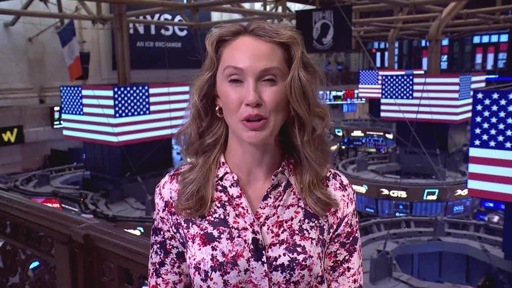
ICE Brent crude traded near $101 per barrel as the U.S. and Iran exchanged threats to continue Middle East attacks, elevating geopolitical and energy-market risk. The U.S. 10-year Treasury yield remained close to 5% after the Federal Reserve raised interest rates last week, maintaining pressure from restrictive financial conditions. Separately, AI healthcare startup Forus recently raised $150 million in Series C funding at a $3 billion valuation.
Analysis
The actionable signal is the combination of a geopolitical oil-risk premium and a restrictive long-rate regime, not the event calendar. Sustained triple-digit Brent with the 10-year near 5% creates a two-sided squeeze: energy-intensive manufacturers face gross-margin pressure while duration-sensitive equities face a higher discount rate. The next several sessions are likely dominated by headline-driven crude volatility; over 1-3 months, the key question is whether higher fuel costs feed inflation expectations and delay the easing path, which would favor cash-generative energy over leveraged growth.
ECL is relatively insulated versus most industrial peers because water, hygiene and process-treatment contracts are mission-critical and often include pass-through mechanisms, but its valuation can still de-rate if real yields rise further. Its more relevant second-order setup is relative: customers in food, hospitality, healthcare and heavy industry may defer discretionary efficiency projects if energy and financing costs erode budgets. A sustained rise in oil-derived chemical inputs without commensurate pricing recovery would be the first earnings-level warning; monitor organic-sales guidance, gross-margin commentary and working-capital conversion rather than treating Climate Week visibility as a catalyst.
Consensus may be too quick to treat higher oil as unambiguously bullish for broad energy equities. At elevated yields, high-beta E&Ps can underperform if crude strength is interpreted as a demand tax and recession risk rather than a durable supply shock. The cleaner near-term expression is quality energy cash flow versus long-duration or energy-input-exposed cyclicals; this thesis is falsified by a rapid de-escalation that pushes Brent below $90, or by a Treasury rally that takes the 10-year materially below 4.5% without an accompanying growth scare.
AllMind Terminal
AI-powered research, real-time alerts, and portfolio analytics for institutional investors.
Request TrialMarket Sentiment
Overall Sentiment
mildly negative
Sentiment Score
-0.20
Ticker Sentiment
Key Decisions for Investors
- For a 1-3 month macro hedge, favor long XLE versus short XLY in equal-dollar notional: energy retains direct commodity sensitivity while discretionary margins and consumer purchasing power are vulnerable to fuel-cost pass-through. Target a 5-8% relative move; stop if Brent closes below $90 for one week or the 10-year falls below 4.5%.
- Avoid adding broad long-duration growth exposure until the rates/oil correlation breaks. If maintaining AI exposure, prefer profitable infrastructure leaders over venture-linked or unprofitable healthcare-AI proxies; the private funding headline provides no public-market read-through or valuation anchor.
- Keep ECL on a watchlist rather than initiating on this news. Consider a long ECL / short XLI relative position only after confirmation that quarterly organic growth and gross margin hold despite higher input costs; exit on guidance to material margin compression or evidence of customer project deferrals.
- For immediate geopolitical optionality, use defined-risk Brent or USO call spreads rather than outright E&P beta, with 1-2 month expiry. The trade requires confirmation that physical-market tightness, not only headlines, is sustaining the premium; unwind if conflict rhetoric de-escalates or inventory data weaken.
More News
- All Iranian airlines to be 'shut down' from Wednesday, Bessent tells CNBC
- Taiwan benchmark Taiex rises to record intraday high as tech stocks advance
- AMD joins the $1 trillion club as chip rally surges - our AI Strategy saw it early
- Jamie Dimon says hyperscaler AI spending could hit $1 trillion next year
- Factbox-Key issues for this week’s Trump-Xi summit in Washington
- Latest Oil Market News and Analysis for Sept. 22
From AllMind Research
- Anthropic IPO Preview: Valuation, Timing, and What to Watch
- Shein After the IPO: Venue, Valuation, and What Must Be Proved
- What AI Research Tools Should a Small Hedge Fund Buy First?
- How to Build an Automated Research Process for a Fund
- Weekly Update: AI-Powered Report Editing, Investor Relations, and Enhanced Search