
Ryanair Urges EU to Extend EES Derogation Amid Border Delays
Source: zacks.com
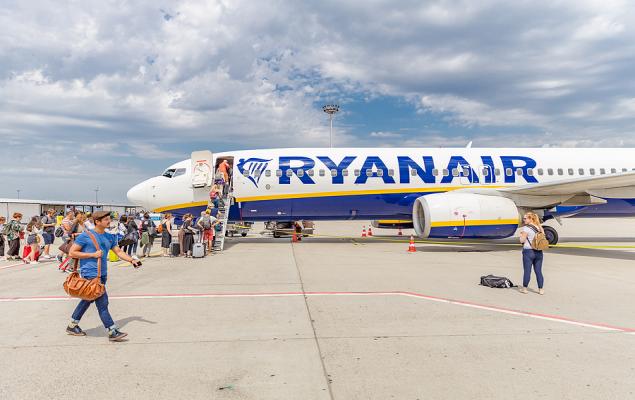
Ryanair urged the EU to extend an exemption from the Entry/Exit System after reporting border-processing delays of up to 2-3 hours at Krakow, Lisbon, Milan and Rome. The EES, fully operational since April 10, 2026, had recorded more than 145 million entries and exits by July, but kiosk failures, staffing shortages and longer processing times risk disrupting passenger experience and flight operations during peak periods. Ryanair shares have fallen 28% over the past year, versus a 12.3% decline for the airline industry.
Analysis
This is a localized airport-throughput issue rather than a broad airline demand signal, but it matters disproportionately to ultra-low-cost carriers because their economics depend on aircraft utilization and tight turnaround schedules. RYAAY can likely pass little of the friction through in fares during competitive periods; the first-order cost is irregular-operations expense and schedule-buffering, while the larger risk is lower utilization if management must protect punctuality with additional ground time. Network airlines with higher yields and more schedule slack—such as IAG and Lufthansa—may be relatively better positioned, though their hub exposure makes passenger-misconnect costs a separate vulnerability.
The 1-3 month catalyst is whether national authorities extend operational flexibility before the next peak travel window. A durable exemption would remove a modest earnings overhang, but a refusal combined with further airport failures could force capacity or scheduling adjustments and invite consensus EBITDAR/earnings downgrades. The key falsifiers are Ryanair’s disclosed punctuality, load factor, unit-cost ex-fuel guidance, and any evidence that airport congestion is causing material compensation, crew, or aircraft-positioning costs; absent deterioration in these metrics, the headline alone does not justify a directional short.
Contrarian point: successful system stabilization is not purely negative for travel. Once queues normalize, digital border records can reduce document-fraud leakage and improve predictability, potentially supporting non-EU inbound travel over 6-18 months. The direct listed beneficiaries of biometric-border spending are not identified in the provided data; EXPD and SHIP have no clean earnings linkage and should not be traded on this development.
AllMind Terminal
AI-powered research, real-time alerts, and portfolio analytics for institutional investors.
Request TrialMarket Sentiment
Overall Sentiment
mildly negative
Sentiment Score
-0.32
Ticker Sentiment
Key Decisions for Investors
- No immediate standalone trade in RYAAY: treat this as an operational KPI watch item, not a demand thesis. Reassess after the next monthly traffic release or management commentary on punctuality and unit-cost guidance.
- If RYAAY underperforms European airline peers by an additional 8-10% without a cut to traffic, yield, or cost guidance, consider a 1-3 month tactical long RYAAY versus short JETS or a liquid European airline proxy; target mean reversion of roughly half the excess move, with a stop on a material full-year cost-guidance increase.
- For existing RYAAY exposure, reduce peak-season operational risk through downside puts spanning the next results date only if implied volatility remains below the prior-year earnings/event range; the relevant downside trigger is a guidance reset tied to utilization or disruption costs.
- Do not use EXPD or SHIP as read-throughs. Their inclusion reflects generic transport coverage rather than a causal exposure to European passenger-border processing.
More News
- Japan’s corporate leaders sound alarm over weak yen — even dollar-earners are voicing concerns
- Congress passes sweeping US sanctions bill targeting Russia
- US official says upcoming spectrum auctions could generate more than $100 billion
- 'Science fiction': Transport companies — the backbone of economy — are sounding alarm on fuel prices
- Investors react to Fed hike and market sell-off: Brace for 'higher for longer' rates
- House Passes Bill Allowing Trump Tariffs on Russian Oil Buyers