
Zhou Jianjun (Huawei): Vytváranie riešenia AIDC v interakcii so sieťou pre maximalizáciu počtu tokenov na watt
Source: PR Newswire
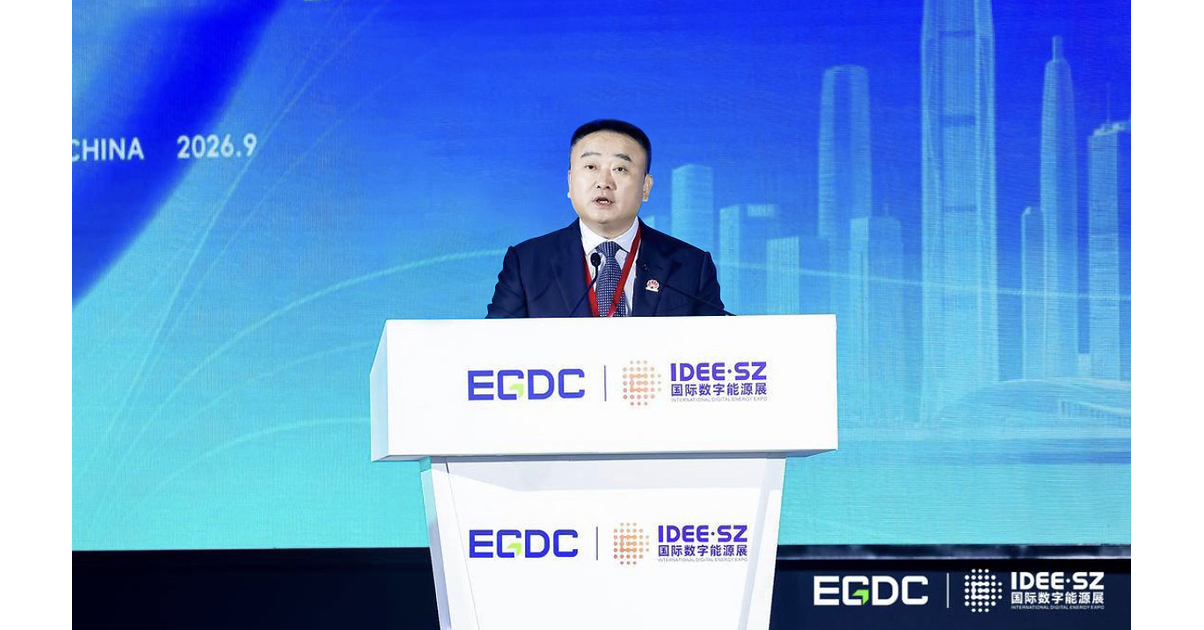
Huawei unveiled a grid-interactive AI data center (AIDC) architecture aimed at maximizing AI tokens generated per watt as campus power requirements scale from megawatts toward hundreds of megawatts and gigawatt levels. The "3+1" design integrates grid-forming power and storage systems, high-density liquid cooling, AI-enabled operations, and prefabricated modular deployment; Huawei cited its 1,000V FusionSolar grid-forming inverter, 1,000V LUTERRA energy-storage platform, and MW-scale liquid cooling capabilities. The announcement reinforces Huawei's positioning in power, cooling and energy-management infrastructure for rapidly expanding AI compute deployments, but provides no financial targets, customer contracts or revenue impact.
Analysis
The investable implication is not a direct Huawei read-through but a further shift in AI infrastructure spend from accelerators toward the electrical stack: medium-voltage gear, UPS/power conversion, liquid cooling, on-site storage and grid-interconnection equipment. At very high rack densities, commissioning delays and grid-connection constraints can carry a higher economic cost than modest differences in server price; this supports pricing power and backlog durability for Vertiv (VRT), Eaton (ETN), Schneider Electric (SU.PA), ABB (ABBN.SW) and Siemens Energy (ENR.DE) over the next 6-18 months. The important second-order effect is that “tokens per watt” optimization may favor integrated power-and-cooling architectures, raising switching costs but potentially pressuring standalone component vendors that lack controls software or turnkey delivery capability.
This specific announcement is a company press release without disclosed orders, customer deployments, efficiency benchmarks, or revenue contribution, so it is not independently actionable in the next few days. The more material competitive risk is regional: Huawei’s integrated offering can deepen localization of Chinese and emerging-market AI data-center supply chains, limiting addressable share for Western electrical-equipment vendors where geopolitical procurement rules matter. Conversely, grid-forming storage requirements expand the addressable market for Sungrow (300274.SZ), CATL (300750.SZ) and Fluence (FLNC), but only if data-center operators are permitted to monetize flexibility or face binding interconnection constraints; absent those conditions, batteries remain a capex burden rather than a high-return necessity.
Consensus is likely overfocused on GPU availability and underweights power-delivery lead times as the gating item for AI capacity. That said, investors should not extrapolate every announced gigawatt-scale campus into near-term equipment revenue: utility approvals, transformer availability, financing and actual inference utilization can defer build-outs by quarters. A reversal signal for the broader thesis would be easing lead times or declining book-to-bill at VRT/ETN, alongside hyperscaler capex guidance shifting from physical capacity expansion toward efficiency-driven optimization.
AllMind Terminal
AI-powered research, real-time alerts, and portfolio analytics for institutional investors.
Request TrialMarket Sentiment
Overall Sentiment
mildly positive
Sentiment Score
0.38
Key Decisions for Investors
- No event-driven position on this release; require disclosed customer wins, deployment scale, independently verified uptime/efficiency data, or evidence of Chinese hyperscaler procurement before assigning a Huawei-driven revenue impact.
- Maintain a 6-18 month overweight bias to ETN and VRT versus broad semiconductors: both monetize the power bottleneck regardless of GPU vendor. Prefer staged entries after earnings-related volatility; invalidate if backlog conversion weakens, book-to-bill falls below 1x, or hyperscaler capex guidance is cut.
- Express the grid-constraint theme through a basket long ETN/VRT/SU.PA versus a short semiconductor-equipment or AI-hardware basket only after confirming that utility interconnection delays are increasing; this is a watch trade, not an immediate recommendation, because relative valuations and China revenue exposure are missing.
- Monitor FLNC, 300274.SZ and 300750.SZ for data-center-specific storage orders rather than treating generic ESS growth as confirmation. The catalyst window is 3-12 months through utility tariffs, grid-code changes and large-campus power procurement; failure to secure contracted capacity would cap the storage upside.
More News
- Bank of Japan raises interest rates to 31-year high, flags concerns over inflation
- Italy to deploy warships to protect shipping through Bab al-Mandeb
- Oil prices fall as Saudi supply hopes outweigh fresh Houthi strikes
- Oil prices fall for 3rd day as supply concerns ease, diplomacy in focus
- Oil Traders Stymied by Iran War Stalemate: Evening Briefing Americas
- Australia’s central bank chief warns inflation risks materialising
From AllMind Research
- Anthropic IPO Preview: Valuation, Timing, and What to Watch
- Shein After the IPO: Venue, Valuation, and What Must Be Proved
- What AI Research Tools Should a Small Hedge Fund Buy First?
- How to Evaluate Consensus Estimates Platforms With AI
- Weekly Update: Adding Live MBO Level 3 Data - Liquidity Heatmap, OFI Charts, and More