
EvCap Investments and Point Acquisitions Acquire North Phoenix Retail Center
Source: PR Newswire
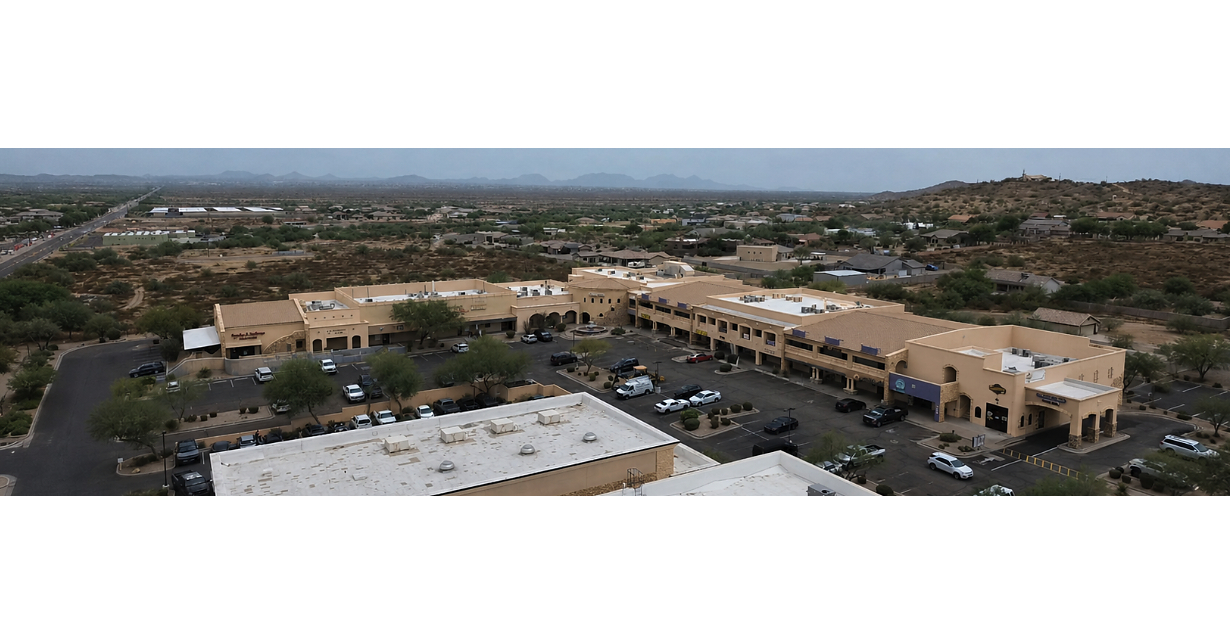
EvCap Investments and Point Acquisitions jointly acquired a 66,000 SF retail center in Phoenix (711 E. Carefree Highway), closing in late May 2026. The property was ~27% vacant at closing, creating an identified value-add opportunity to reposition, stabilize occupancy, and pursue targeted leasing. The thesis cites rising employment and residential development tied to the nearby TSMC semiconductor expansion as a tailwind for retail demand.
Analysis
This is less a standalone catalyst than a read-through on where local economic spillovers are accumulating first: retail occupancy and service spending tend to improve before the large industrial base shows up in public-company earnings. The second-order winner set is broader than the asset itself — nearby grocery, quick-service, fitness, and health/wellness concepts should see better unit economics as household formation and payroll growth around the corridor improve, while legacy secondary retail nodes farther from the growth belt risk slower leasing and higher TI burden.
For TSM, the meaningful effect is not near-term revenue, but ecosystem reinforcement: a denser labor pool, improved vendor density, and a politically useful halo that can reduce friction on future expansions. That matters over 6-18 months if the Arizona buildout stays on schedule, because the market will pay for execution certainty, not the anecdotal addition of one retail center. If the campus ramp slips or hiring cools, the retail-demand thesis weakens quickly because vacancy absorption in value-add centers is highly path-dependent on actual payroll growth, not announcements.
The contrarian takeaway is that the market often overprices the "TSMC halo" before the housing and wage inflows are fully visible. Rising cap rates and higher refurbishment costs can offset a lot of the occupancy upside in small retail deals, so the immediate equity read-through is probably modest. What would falsify the constructive view is any delay in TSMC-related capex, a flattening in Phoenix payroll growth, or evidence that tenant demand is being absorbed by existing centers rather than expanding the total pie.
AllMind Terminal
AI-powered research, real-time alerts, and portfolio analytics for institutional investors.
Request TrialMarket Sentiment
Overall Sentiment
mildly positive
Sentiment Score
0.25
Ticker Sentiment
Key Decisions for Investors
- No direct event-driven trade: treat this as a slow-burn regional demand signal, not a stock-moving catalyst; wait for 1-2 quarters of Phoenix payroll/retail absorption data before taking risk.
- TSM: maintain a modest long bias on weakness, but size it as a structural ecosystem trade rather than an earnings trade; thesis fails if Arizona expansion timing slips or local labor costs rise faster than productivity.
- JYNT: watchlist only. A sustained lift in same-store sales or franchise openings in growth corridors would be the first verifiable sign that the local consumer-demand spillover is monetizing.
- If forced to express the theme, prefer quality Sun Belt retail/landlord exposure over value-add microcap property bets; the public-market way to play this is through operators with balance-sheet flexibility, not one-off repositioning stories.
- Set an alert around any TSM Arizona capex update or hiring guidance change; that is the real catalyst that would convert this from a CRE anecdote into an investable semiconductor ecosystem thesis.
More News
- Why is the Chinese stock market missing the AI rally
- Stock Movers: Intel, Schneider, Skyworks Solutions (Podcast)
- Why AMD's Supply Crunch Could Be Good News for Its Stock
- Should You Buy Taiwan Semiconductor Manufacturing Stock Before Oct. 15? History Is Crystal Clear on Where the Stock Is Headed Next.
- This Forgotten AI Stock Is Up 689% and Nobody's Talking About It
- SpaceX's Secret Weapon Is Hiding in Plain Sight