
U.S. Army Competitively Selects Vulcan Elements to Supply High-Performance Rare Earth Magnets for SkyFoundry Drone Initiative
Source: PR Newswire
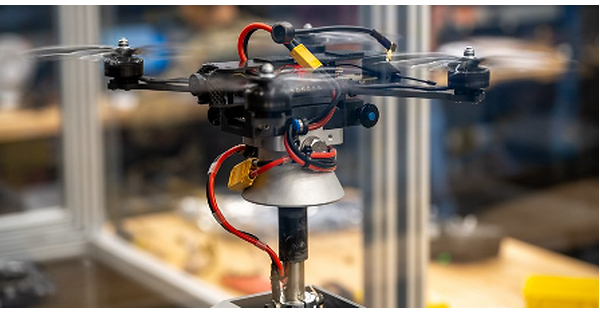
Vulcan Elements was competitively selected by the U.S. Army to supply high-performance neodymium-iron-boron magnets for SkyFoundry, the Army's domestic small-drone initiative targeting production of 1 million drones annually. The award is Vulcan's 10th Department of War contract and validates its fully domestic rare-earth-magnet supply chain. Its 1.1 million-square-foot North Carolina facility, currently under construction, is planned to produce 10,000 metric tons annually and create about 1,000 U.S. manufacturing jobs.
Analysis
The investable read-through is demand-pull for a U.S.-controlled NdFeB value chain, but the private supplier’s win is not automatically bullish for listed upstream producers. MP Materials (MP) gains from stronger evidence that defense buyers will pay for provenance and supply security; however, a successful independent magnet producer also reduces MP’s potential downstream scarcity premium once domestic capacity ramps. The critical missing variable is whether the award includes firm volume, multiyear pricing, and material-sourcing commitments—without those, it is qualification validation rather than a revenue event.
Over the next 1-3 months, this raises the probability of additional Defense Production Act, procurement, and allied-sourcing awards across magnets, separation, and recycling. MP, USA Rare Earth (USAR), Energy Fuels (UUUU), and Neo Performance Materials (NEO.TO) are the most relevant public proxies, though their economics differ materially: MP has the clearest integrated U.S. path, while UUUU and USAR remain more dependent on execution, permitting, and financing. Defense-drone primes including AeroVironment (AVAV), Kratos (KTOS), and Red Cat (RCAT) could see modest supply-chain de-risking, but magnet cost is unlikely to be the near-term determinant of their margins.
The contrarian view is that the market may overvalue announced domestic magnet capacity relative to feedstock security and qualification yield. NdFeB manufacturing is capital-intensive, and defense-grade performance requires consistent alloy inputs, sintering yield, and customer certification; delays can convert nominal capacity into a cash-burn problem. Over 6-18 months, Chinese export controls or higher NdPr pricing would improve the strategic value of domestic assets but could initially pressure uncontracted manufacturers through working-capital and input-cost exposure.
AllMind Terminal
AI-powered research, real-time alerts, and portfolio analytics for institutional investors.
Request TrialMarket Sentiment
Overall Sentiment
moderately positive
Sentiment Score
0.68
Key Decisions for Investors
- Maintain a 6-12 month watch-list long bias in MP rather than chase small-cap rare-earth names: initiate only on confirmation of incremental U.S. defense/offtake contracts or a pullback that leaves downside to Mountain Pass volumes protected. Thesis is falsified by delayed magnet-ramp milestones, lower NdPr realizations, or evidence that third-party domestic magnet capacity displaces MP’s downstream economics.
- Use a 3-6 month relative-value basket: long MP / short a broad China rare-earth proxy where borrow and liquidity permit, sized modestly. The intended exposure is to widening Western provenance premiums following procurement or export-control escalation; exit if China relaxes export restrictions or U.S. defense awards lack funded volumes.
- Do not underwrite AVAV, KTOS, or RCAT on this development alone. Set an alert for disclosed drone-production awards, funded unit volumes, and component-cost data; only then assess a long defense-drone basket, since platform backlog and production execution dominate any magnet-supply benefit.
- Avoid treating USAR and UUUU as direct beneficiaries until they disclose binding magnet-material offtake, financing, and production timelines. Their upside is high if domestic procurement creates contracted cash flows, but the key risk/reward driver remains project execution rather than this qualification event.
More News
- China's AI chip blitz arms Xi with a message for Trump: 'You can't choke us off'
- Oil falls on report Asia will import highest volume of crude since start of Iran war
- America’s Asian allies want a Trump-Xi truce — but not at their expense
- Meta announces new lightweight virtual reality glasses to one-up Apple’s Vision Pro
- Trump evalúa prohibir exportaciones de diésel de EE.UU.
- ASPI's Cutler on Trump-Xi Summit, Trade Relations