
Standlee and Anderson Hay Announce Formation of Standlee-Anderson™, Creating the Global Leader in Premium Forage
Source: PR Newswire
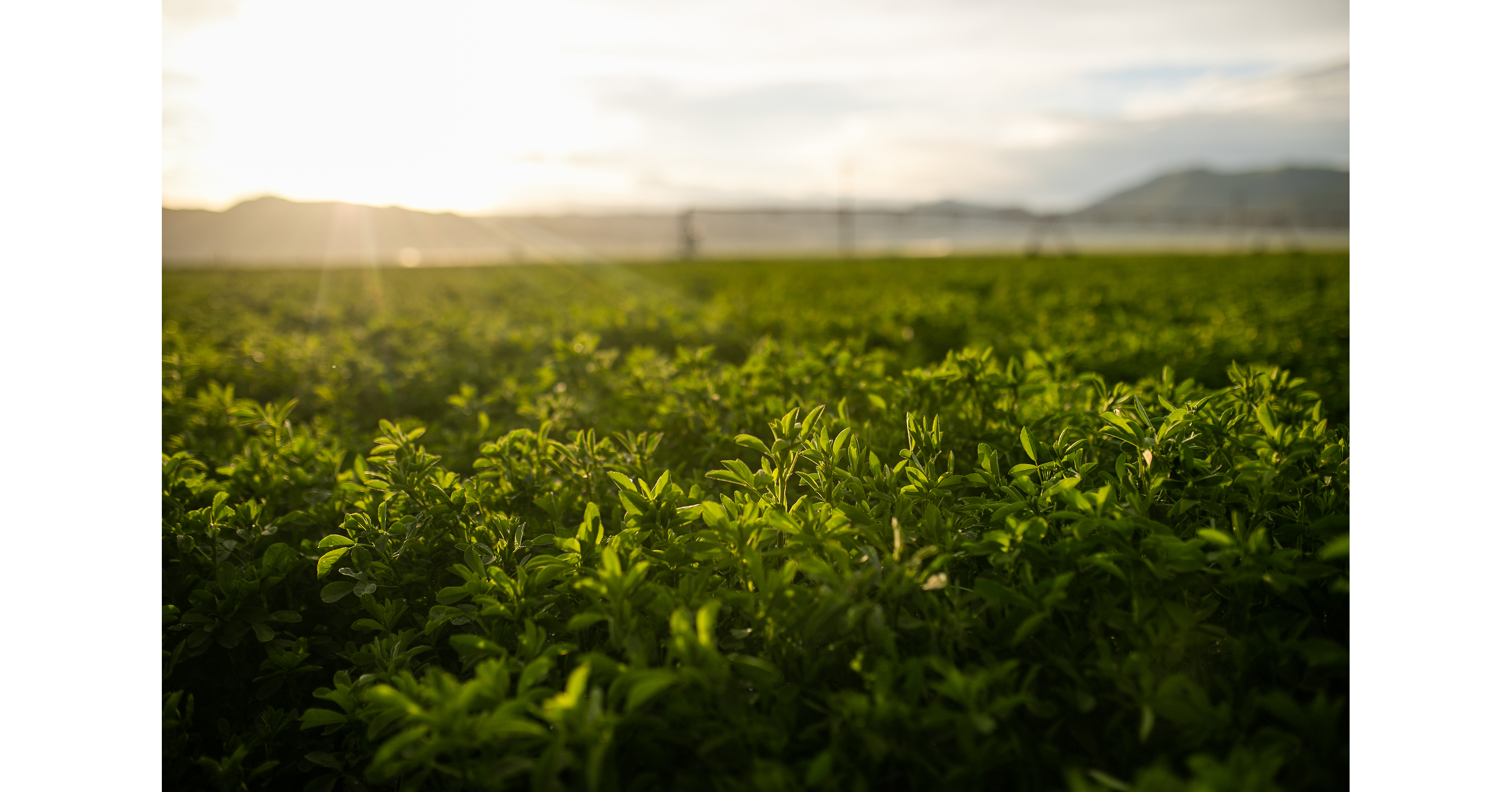
Standlee and Anderson Hay formed Standlee-Anderson, combining their domestic and international premium-forage operations into a new parent company. The company expects the combination to strengthen supply availability, broaden market capabilities, and support investment in innovation, operational excellence, and animal-wellness solutions. Existing brands, customer relationships, and product offerings will continue under the new portfolio structure.
Analysis
This is a private-company consolidation with no direct listed-equity read-through and insufficient disclosed consideration, capacity, customer concentration, or financing terms to estimate economic impact. The near-term market implication is therefore limited; no position is warranted on the announcement itself. The relevant mechanism is greater procurement and distribution scale in a fragmented premium-hay niche, which could improve freight utilization and inventory availability rather than materially alter broad agricultural commodity pricing.
Over 1-3 months, monitor whether the combined business changes export contracting behavior for alfalfa, timothy, and compressed forage. Incremental demand for baling, dehydration, packaging, storage, and western rail/trucking capacity could modestly benefit private suppliers, but the likely public-market proxies are too diversified for this event alone: Deere (DE), AGCO, CNH Industrial (CNH), and Union Pacific (UNP) have immaterial direct sensitivity.
The more consequential 6-18 month issue is whether consolidation allows premium forage pricing to detach from underlying hay-input economics through branded animal-wellness products and more reliable international supply. That could pressure smaller regional forage merchants and raise feed costs for premium equine and specialty-livestock operators, but it is not investable without evidence of meaningful volume share or export-market concentration. The company’s supply-assurance claims should be treated as unverified until acreage, inventory, logistics contracts, and customer-retention data emerge.
Contrarian view: the strategic language may mask a defensive combination against volatile western-water availability, freight costs, and export demand rather than signal durable pricing power. A weak hay crop, reduced livestock/equine discretionary spending, or loss of key growers could turn larger scale into higher fixed-cost and working-capital exposure; those risks matter more than the nominal merger announcement.
AllMind Terminal
AI-powered research, real-time alerts, and portfolio analytics for institutional investors.
Request TrialMarket Sentiment
Overall Sentiment
moderately positive
Sentiment Score
0.45
Key Decisions for Investors
- No immediate trade: do not use DE, AGCO, CNH, UNP, or broad agriculture ETFs as event proxies; the disclosed transaction has no measurable earnings bridge for these public companies.
- Create a 1-3 month diligence alert for USDA western hay acreage/yield data, export volumes to major premium-forage markets, and regional spot-hay pricing. Reassess only if evidence shows the combined entity is materially tightening exportable supply or changing contract pricing.
- Monitor water-stress indicators in Idaho, Oregon, Washington, and California over the next growing season as a second-order risk signal for forage availability. A sustained adverse supply shock could support hay pricing but would be more relevant to private-market exposure than a liquid public-equity trade.
- Treat any future public financing, supplier disclosure, or acquisition by Standlee-Anderson as a catalyst for a more actionable assessment; required missing inputs are revenue, EBITDA, debt structure, acreage under contract, export mix, and post-merger pricing actions.
More News
- Taiwan benchmark Taiex rises to record intraday high as tech stocks advance
- AMD joins the $1 trillion club as chip rally surges - our AI Strategy saw it early
- Factbox-Key issues for this week’s Trump-Xi summit in Washington
- Latest Oil Market News and Analysis for Sept. 22
- Paramount agrees invest $1.5 billion in domestic movies and create a board for editorial independence at CNN, CBS as part of deal for Warner Bros.
- World Leaders Converge on United Nations General Assembly