
Swarm Defense Receives Minimum $25 Million Drone Dominance Order for 4,000 Kiwi Attack Drones
Source: PR Newswire
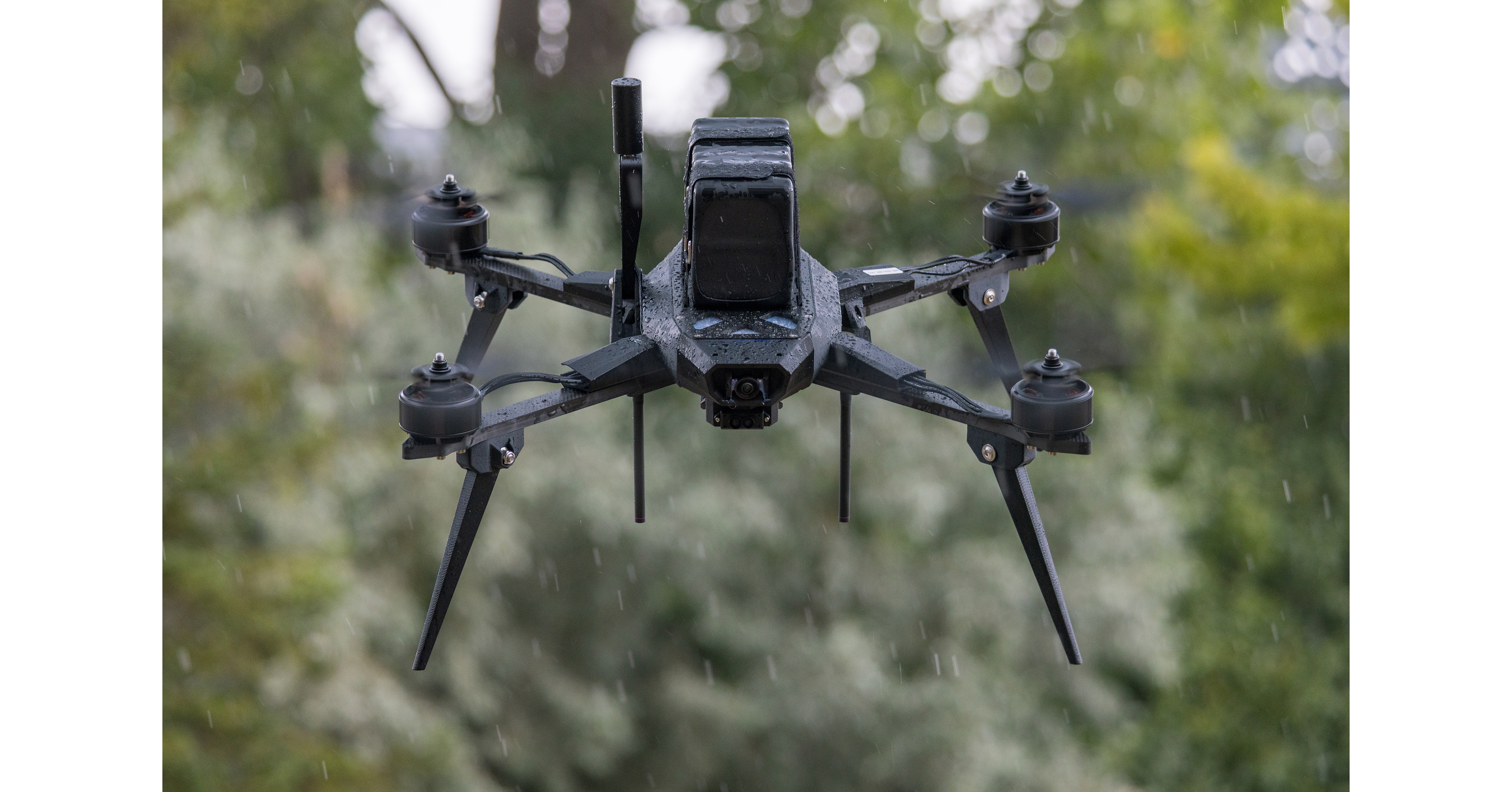
Swarm Defense Technologies received an order for 4,000 Kiwi one-way attack drones under the Drone Dominance Program, marking a significant production-scale milestone for the private defense-drone manufacturer. The company says its Strike Deck software enables one operator to control dozens of aircraft, while Kiwi can also support ISR, communications-relay and precision-drop missions. The order supports demand for low-cost autonomous swarm capabilities, although no contract value, delivery timeline or customer identity was disclosed.
Analysis
The investable read-through is not the private vendor's order itself, but evidence that procurement is shifting from exquisite, operator-intensive unmanned systems toward attritable volume and software-enabled multi-vehicle control. That favors public platforms with funded programs, production capacity, and integration credibility—AVAV, KTOS, and RCAT—while creating longer-duration demand for counter-UAS, electronic warfare, and short-range air defense at RTX, LMT, and NOC. The second-order effect is that low-cost one-way systems pressure the value proposition of higher-priced tactical UAS unless their autonomy, survivability, or payload advantage is demonstrable.
Near term, the signal is insufficient for a standalone trade: contract value, unit economics, delivery schedule, contracting authority, and follow-on options are absent, and company language is promotional rather than independently validated. Over 1-3 months, watch FY27 DoD budget marks, DIU transition awards, and disclosed production-rate commitments; these can re-rate public drone names if they show recurring procurement rather than prototype funding. Over 6-18 months, the scarce asset is likely not airframes but secure supply of flight-control electronics, batteries, radios, autonomy software, and test capacity—areas where domestic sourcing requirements could create margin dispersion.
Consensus may overpay for small-cap "drone pure plays" on headlines while underweighting primes' counter-drone exposure. Drone saturation raises the defender's cost curve, making sensors, command-and-control, electronic warfare, and interceptor inventories structurally more valuable than the individual expendable aircraft. The thesis is falsified if procurement remains limited to experimentation, if attritable systems fail reliability or autonomy tests, or if Congressional appropriations constrain rapid fielding.
AllMind Terminal
AI-powered research, real-time alerts, and portfolio analytics for institutional investors.
Request TrialMarket Sentiment
Overall Sentiment
moderately positive
Sentiment Score
0.62
Key Decisions for Investors
- No direct position on the private-company announcement; place an alert for disclosed contract value, customer identity, and annualized delivery rate. Treat a confirmed production program—not a prototype or indefinite-delivery vehicle—as the threshold for sector exposure.
- Build a 6-12 month basket favoring AVAV and KTOS over RCAT: AVAV and KTOS have more established defense contracting infrastructure and can benefit from demand for both autonomous strike systems and counter-UAS integration. Size small until FY27 budget language validates volume procurement; exit if program funding is not reflected in budget documentation.
- Express the defensive second-order effect with a 6-12 month long RTX or LMT versus a short equal-dollar basket of high-beta drone pure plays after sharp headline-driven rallies. The expected payoff comes from recurring sensor/EW/interceptor demand versus potentially commoditized airframe economics; stop out if small-cap drone names secure disclosed multi-year production awards with credible gross-margin guidance.
- Monitor AVAV, KTOS, and RCAT earnings for backlog conversion, production capacity, and gross-margin commentary rather than bookings alone. A material upward revision to delivery capacity or funded backlog would be the catalyst to increase exposure; weak cash conversion or reliance on unfunded prototypes would invalidate the bullish read-through.
More News
- Wall Street’s Nasdaq hits all-time high as AI frenzy gathers pace
- Data-Center Bet Makes ESDS One of India’s Best New Listings
- Asia stocks ride tech wave higher, oil stays subdued
- South Korean solar stocks jump as curbs on Chinese sector expected to remain in place
- ‘I have a big decision to make’: Trump had a ‘good meeting’ with Iranian officials warning he may ‘annihilate the Islamic Republic’
- Trump Says US Team Met With Iranians at UNGA
From AllMind Research
- Anthropic IPO Preview: Valuation, Timing, and What to Watch
- Shein After the IPO: Venue, Valuation, and What Must Be Proved
- What AI Research Tools Should a Small Hedge Fund Buy First?
- What a Concept From Nature Tells Us About How C-Suite Executives Actually Think About AI
- How to Track Earnings Call Sentiment Across Companies