
Want Your Own Barrel of Bourbon? BarrelPick.com Launches at Kentucky Bourbon Festival
Source: PR Newswire
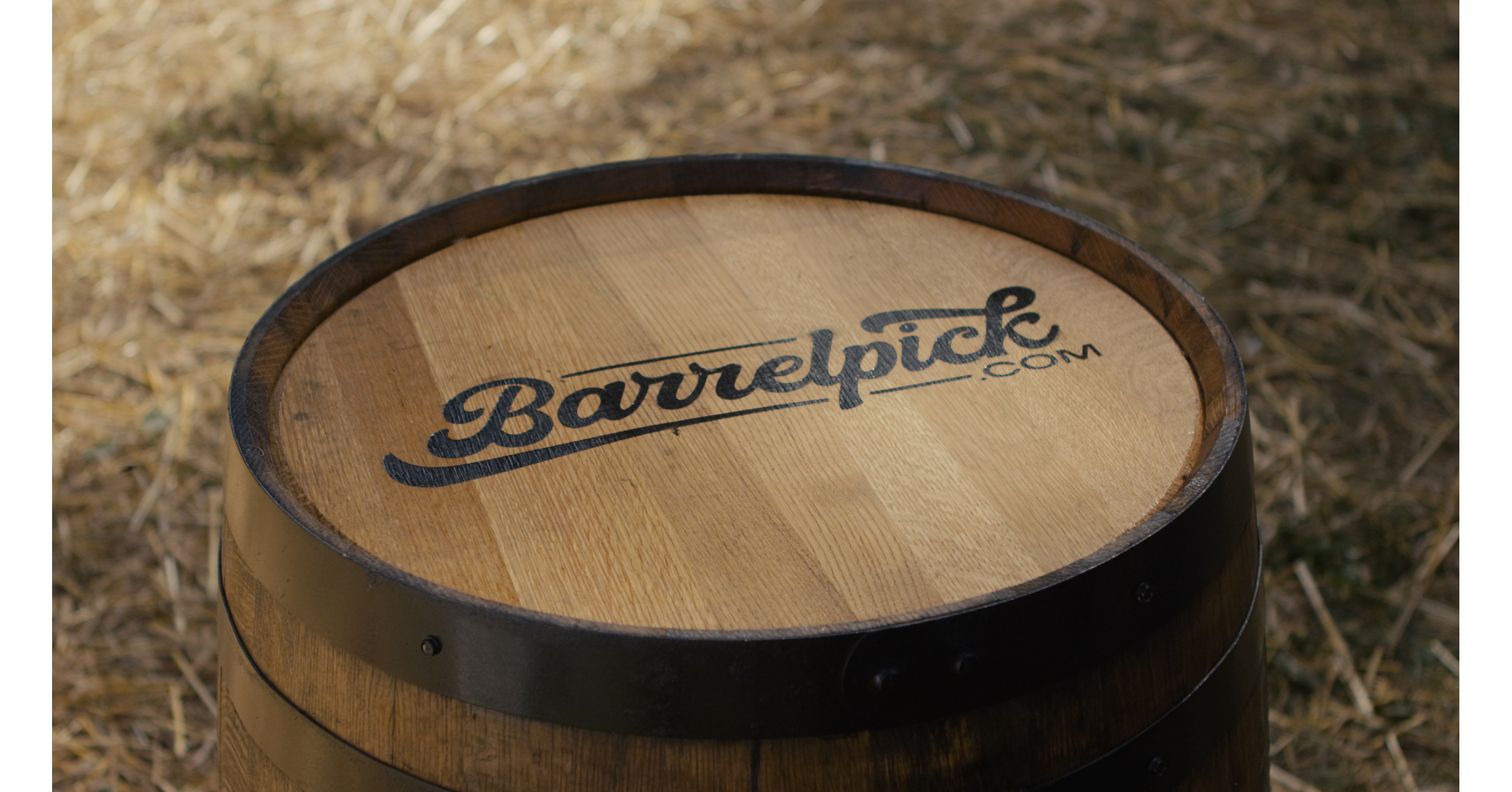
BarrelPick.com launched a direct-to-consumer platform enabling buyers to purchase, age, sample and privately bottle full bourbon barrels. The platform lists more than 1,000 new-fill and aged barrels from over 20 producers and uses Kentucky Artisan Distillery for storage and bottling. The launch targets sustained bourbon tourism demand, with Kentucky Bourbon Trail experiences drawing approximately 2.7 million visitors in 2025, but is unlikely to have material public-market impact.
Analysis
This is not yet a public-markets catalyst, but it is a useful demand-channel signal for premium American whiskey. A direct barrel-ownership model monetizes enthusiasts earlier in the production cycle and can smooth distillery working capital by converting aging inventory into customer-committed stock; the economic value accrues principally to private distillers, bottlers, warehouses and compliance providers rather than listed spirits companies.
The second-order effect is potentially negative for secondary-market scarcity premiums and for conventional private-barrel programs: a larger supply of customized releases broadens consumer access while reducing the exclusivity that supports allocation-driven pricing. It also creates an adverse-selection risk for buyers if marketplace inventory skews toward barrels producers prefer not to bottle under their own brands; quality dispersion, evaporation losses and eventual bottle-distribution restrictions will determine repeat purchase behavior over the next 12-24 months.
For listed proxies, Brown-Forman (BF.B) and Diageo (DEO) are unlikely to see measurable near-term revenue impact. The more relevant read-through is whether experiential, high-ticket bourbon spending is holding up despite discretionary-consumption pressure; evidence of sustained sell-through, repeat barrel purchases and rising storage commitments would be modestly supportive for premiumization narratives, while discounting or elevated customer cancellation rates would signal that demand is being pulled forward rather than expanded.
The contrarian point is that consumer ownership does not eliminate inventory risk—it transfers it. Long aging duration leaves buyers exposed to changing tastes, proof-point preferences, insurance/storage costs and the possibility that an eventual private release has limited resale or gifting utility, which may constrain the addressable market to affluent enthusiasts and corporate buyers rather than create broad category demand.
AllMind Terminal
AI-powered research, real-time alerts, and portfolio analytics for institutional investors.
Request TrialMarket Sentiment
Overall Sentiment
mildly positive
Sentiment Score
0.28
Key Decisions for Investors
- No directional trade at launch; impact is too small and the company is private. Treat as a 6-12 month alternative-data watch item rather than a catalyst for BF.B or DEO.
- Monitor BF.B quarterly commentary on Woodford Reserve/JD premium-price realization and US depletion trends. A return to positive premium mix alongside stable promotional intensity would support a long BF.B versus short STZ consumer-discretionary spirits exposure; falsify if US whiskey depletions weaken or gross-margin guidance is cut.
- Track private-market indicators: barrel sell-through, proportion of new-fill versus mature inventory, storage duration, repeat purchase rates and bottling conversion. Strong mature-barrel turnover without discounting would indicate genuine high-end demand; weak conversion after 12 months would argue the model is primarily a novelty purchase.
- Watch Kentucky distillery capacity and warehouse pricing over 12-24 months. If customer-owned barrel programs absorb meaningful aging capacity, private distillers may gain pricing power in storage/bottling while branded producers face less flexibility to manage inventory; there is no clean liquid public pure-play, so avoid forcing a trade.
More News
- Flames, smoke seen near Riyadh airport; Houthis claim attacks on Saudi capital
- Polish prime minister warns Russia is planning drone or rocket strikes on European countries supporting Ukraine as ‘Carpathian Eight’ meet
- JPMorgan Sees No Clear Endgame for Oil Markets
- Central Command says U.S. military has aided the transit of 1 billion barrels of oil through Hormuz in past two months while Iran has ‘exported zero’
- Smoke visible near Riyadh airport after Saudi Arabia issues all-clear
- Mark Ruffalo leads Hollywood revolt against Paramount-Warner merger deal
From AllMind Research
- Anthropic IPO Preview: Valuation, Timing, and What to Watch
- Shein After the IPO: Venue, Valuation, and What Must Be Proved
- What AI Research Tools Should a Small Hedge Fund Buy First?
- Run Cost-Controlled Financial Research in AllMind Agent Studio
- State of Public Markets, June 2026: Higher for Longer Meets the AI Supercycle