
Interest rates will continue rising until brakes are put on the economy: Ray Dalio
Source: youtube.com
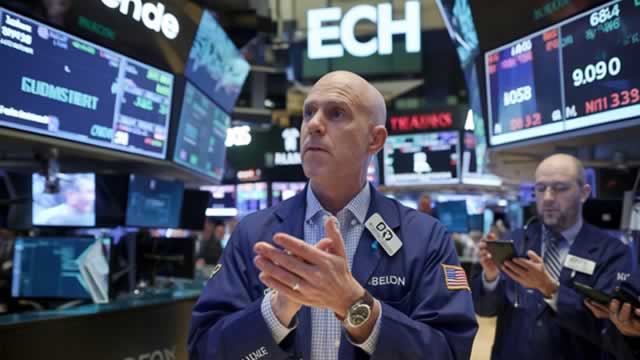
Ray Dalio says yields may rise further before economic conditions are sufficiently restrained, with tighter policy a classic response to inflationary or overheating pressures. He also warns that conflating promising AI technologies with attractive investments could encourage excessive investment and borrowing.
Analysis
The actionable signal is not simply “higher rates”: it is a higher hurdle rate for long-duration cash flows and for projects whose returns depend on continued cheap financing. If yields rise because real rates or term premium are repriced, richly valued growth assets face multiple pressure before any earnings downgrade. In AI, the key second-order risk is that infrastructure demand is mistaken for durable end-customer returns: financing costs can expose projects that are technologically compelling but economically weak, eventually feeding through to delayed orders and excess capacity across data-center and semiconductor supply chains. This is a conditional risk, not evidence that AI demand has already rolled over.
Over days, rate-sensitive equities may react more to real yields and term premium than to the policy-rate narrative. Over 1–3 months, watch credit spreads, capex plans, and evidence that AI customers are converting spending into monetizable productivity. Over 6–18 months, sustained financing pressure could separate cash-generative adopters from leveraged builders and suppliers reliant on uninterrupted buildout. The countercase: productivity gains could validate investment returns, while weaker activity or inflation could cap yields before policy becomes sufficiently restrictive. With no market levels, valuation data, or company-specific evidence supplied, this is a relative-risk framework—not a directional call on yields or a claim that any issuer is overinvesting.
AllMind Terminal
AI-powered research, real-time alerts, and portfolio analytics for institutional investors.
Request TrialMarket Sentiment
Overall Sentiment
neutral
Sentiment Score
-0.10
Key Decisions for Investors
- Consider a conditional relative-value position: underweight QQQ versus a broad equal-weight equity exposure such as RSP if real yields continue higher and mega-cap duration leadership weakens. Reassess if real yields stabilize and earnings revisions broaden positively; avoid treating a rate move alone as confirmation.
- Prefer balance-sheet strength and demonstrated cash generation over highly financing-dependent AI infrastructure exposure. Before shorting any individual name, verify debt maturities, committed versus discretionary capex, customer concentration, and whether orders are binding; those data are absent here.
- Track 10-year real yields and credit spreads as near-term risk triggers, and AI capex guidance plus customer returns on investment as the 1–3 month confirmation set. A sustained decline in real yields, tightening spreads, or credible evidence of productivity-driven returns would weaken the cautious thesis.
- No outright duration or broad-market trade is warranted from this article alone: it provides no yield levels, valuation context, or evidence that markets have underpriced the path of policy.
More News
- RBI Announces Special Oil Window, Regulatory Steps for Rupee
- French yields are near levels not seen since 2002. Why that could give U.S. Treasurys a boost
- What's behind the recovery rally in tech stocks — plus, Elon Musk's very good week
- Wall Street Week | Michigan Manufacturing, AI Debt Investments, Baby Bonds, Canadian Coal Fight
- OpenAI's revenue scare, Delta earnings, what investors think of a Starbucks-Chipotle deal and more in Morning Squawk
- Trump created a committee to dig into the Fed's Lisa Cook. What is it and what comes next?
From AllMind Research
- Anthropic IPO Preview: Valuation, Timing, and What to Watch
- Shein After the IPO: Venue, Valuation, and What Must Be Proved
- What AI Research Tools Should a Small Hedge Fund Buy First?
- State of M&A and Private Markets, June 2026: A $4.9 Trillion Rebound, Underwritten on Money That Never Got Cheaper
- Run Cost-Controlled Financial Research in AllMind Agent Studio