
CHINT a présenté ses solutions énergétiques de pointe lors de CIGRE 2026
Source: PR Newswire
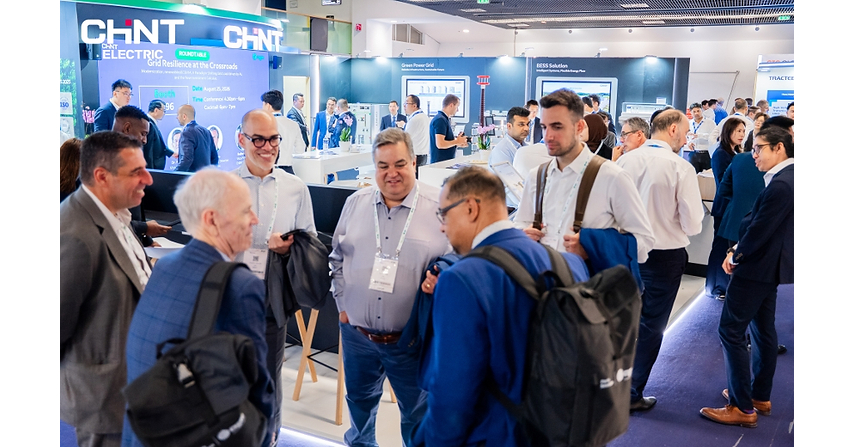
CHINT a présenté à CIGRE 2026 une gamme de solutions pour la modernisation du réseau européen, incluant des transformateurs haute tension jusqu’à 1 000 kV (faibles pertes/faible bruit), des appareillages moyenne/haute tension sans SF₆, et une sous-station intégrée PCS de 13,8 MW « plug-and-play » pour le stockage d’énergie. L’article met aussi en avant des technologies de semi-conducteurs (SST/SSCB) et des modules d’alimentation pour centres de données (« Power Pods »), visant fiabilité, déploiement rapide et intégration des renouvelables. Impact attendu limité sur les marchés à court terme, s’apparentant à une communication produit/positionnement plutôt qu’à un changement financier immédiat.
Analysis
This is not a CHINT catalyst so much as a confirmation that the next leg of European power capex is moving from “more renewables” to “more grid hardware.” The winners are the firms that can sell certified, installed, service-heavy solutions into utilities and large data-center projects: ABB, Schneider Electric, Eaton, and, on the high-voltage side, Siemens Energy-linked exposure. The second-order effect is that local qualification and delivery speed matter more than unit cost, which should compress the share opportunity for low-cost Asian entrants in higher-spec equipment while leaving commoditized subcomponents exposed to price pressure.
The market should treat this as a months-long backlog story, not a days-long headline trade. Grid orders are lumpy, and the real swing factor is conversion of quoted projects into shipped revenue; if that slips, the thesis stalls even if demand rhetoric stays strong. The main reversals are a slowdown in hyperscaler capex, deferral of utility projects, or a broad de-rating of industrial multiples if Europe growth rolls over.
Contrarian view: consensus likely overweights the “AI infrastructure” label and underweights the dull but sticky utility modernization spend embedded in this theme. That favors electrification names with real European service footprints over pure-play data-center power proxies, where expectations are already rich and execution risk is higher. The market may also be underappreciating that SF6-free and modular substation demand raises switching costs and procurement complexity, which is structurally favorable to incumbents rather than disruptive entrants.
AllMind Terminal
AI-powered research, real-time alerts, and portfolio analytics for institutional investors.
Request TrialMarket Sentiment
Overall Sentiment
mildly positive
Sentiment Score
0.12
Key Decisions for Investors
- Buy ABB (ABBN SW / ABBNY) on 3-6% pullbacks over the next 1-3 months; target 10-15% upside as utility order intake and backlog conversion support multiple expansion. Falsify if book-to-bill falls below 1.0 for two quarters.
- Add Schneider Electric (SU FP) as the cleanest European electrification beneficiary for 6-12 months; prefer a call spread if you want defined risk, since the stock is already partially priced for AI/grid enthusiasm.
- Own Eaton (ETN) as the U.S. proxy for data-center power and distribution gear; use any slowdown in hyperscaler capex as the stop signal, but otherwise this remains a 6-18 month structural winner.
- Avoid chasing pure PR-driven China industrial exposure; if anything, use CHINT as a reminder to stay cautious on commoditized switchgear suppliers where pricing power is weakest and qualification barriers are lowest.
More News
- CoreWeave credit default swaps hit distress levels as investors sour on AI debt
- Brian Sullivan: Why the 'real' price of oil is likely $30-$40 higher than where it is now
- Treasuries Soar as Tech Slump Threatens Growth
- Penske Automotive agrees to be taken private by Penske, Mitsui
- Faraday Copper completes acquisition of BHP’s San Manuel project
- Latest Oil Market News and Analysis for Oct. 16