
A New Middle East Security Framework Takes Shape in Mecca
Source: Bloomberg
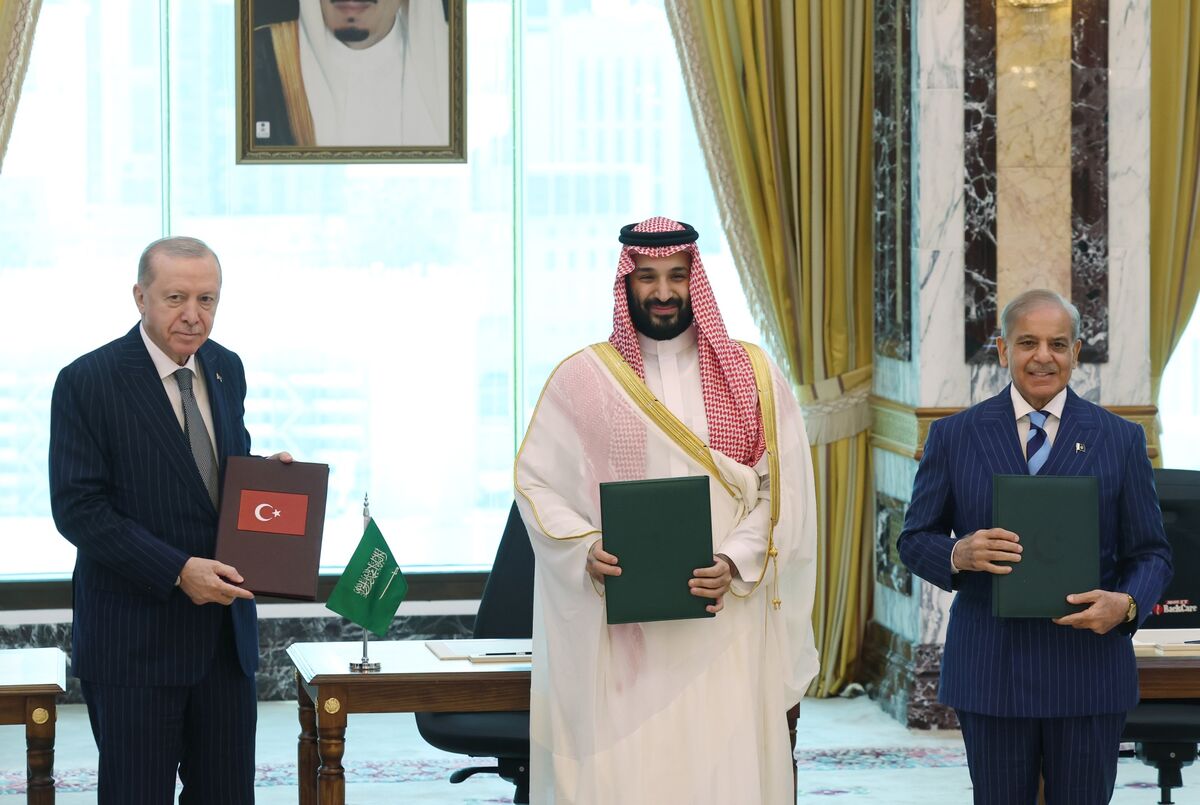
Saudi Arabia, Turkey, and Pakistan signed a trilateral security agreement in Mecca to defend each other amid the Iran conflict, signaling tighter regional military coordination. Separately, lawmakers debated a proposed Oman-related deal affecting access to the Strait of Hormuz—an oil chokepoint that previously carried about a fifth of global oil flow—and the UAE’s Adnoc said three vessels were attacked in the Strait this week. The escalation raises near-term geopolitical and energy-supply risk for oil markets and shipping flows.
Analysis
The immediate market read is not the political theater; it is the incremental probability of a logistics shock in the world’s most price-sensitive crude corridor. Even without an outright closure, higher war-risk insurance, slower routing, and precautionary inventory builds tend to lift prompt crude and diesel/jet cracks before they show up in headline supply data, which is why the first beneficiaries are upstream energy names and, to a lesser extent, tanker exposure.
The second-order losers are sectors with the worst fuel pass-through and thin pricing power: airlines, package delivery, trucking, and energy-intensive industrials. That pain can show up faster in margins than in revenue, especially if refiners and shippers reprice contracts weekly while end-demand only adjusts with a lag. If the new security framework reduces perceived escalation risk, the trade unwinds quickly; the setup is therefore more about 1-3 month tail-risk premium than a clean 12-month fundamental shift.
Contrarianly, the market may be overrating the odds of a durable Strait disruption and underestimating how much of this is deterrence signaling. The Oman-channel discussion suggests there is still diplomatic optionality, which could cap Brent after an initial spike unless actual vessel flow data deteriorates. The key falsifier is simple: if spot freight/war-risk premiums fail to widen and Brent cannot hold a higher plateau over the next several sessions, the geopolitical bid should fade rather than compound.
AllMind Terminal
AI-powered research, real-time alerts, and portfolio analytics for institutional investors.
Request TrialMarket Sentiment
Overall Sentiment
moderately negative
Sentiment Score
-0.35
Key Decisions for Investors
- Long XLE vs. short XLI for 1-3 months: best risk/reward if the market starts pricing a sustained crude risk premium; cover if Brent fails to hold a higher range or if refined product cracks normalize.
- Short JETS or buy put spreads on airline exposure for 4-8 weeks: fuel-cost convexity and booking hesitation usually hit margins before consensus EPS gets reset; thesis breaks if jet fuel prices retrace and traffic data stay resilient.
- Add a tactical long in tanker/shipping beneficiaries with heavy Middle East exposure, using a small starter size and trailing stop: the trade works if war-risk insurance and rerouting push spot rates higher, but it is vulnerable if tensions de-escalate quickly.
- Watch for a defensive-energy hedge in XOM/CVX rather than a broad commodity bet; if Brent backwardation steepens and inventories draw, use that as confirmation. Falsifier: crude back below the pre-spike range or no increase in vessel insurance quotes within 1-2 weeks.
More News
- Latest Oil Market News and Analysis for Sept. 23
- Trump Says US Team Met With Iranians at UNGA
- ‘I have a big decision to make’: Trump had a ‘good meeting’ with Iranian officials warning he may ‘annihilate the Islamic Republic’
- Bank of America says Brent crude oil could top $150 a barrel if Iran war disruptions persist
- Ashton: Trade Truce Will Be Key Test of Trump-Xi Talks
- The bond market is flashing a warning for stocks. These sectors are already wobbling.