
HiTHIUM Launches Next-Generation Integrated Sodium-Ion Energy Storage Solution to Accelerate Sodium-Ion Industrialization
Source: PR Newswire
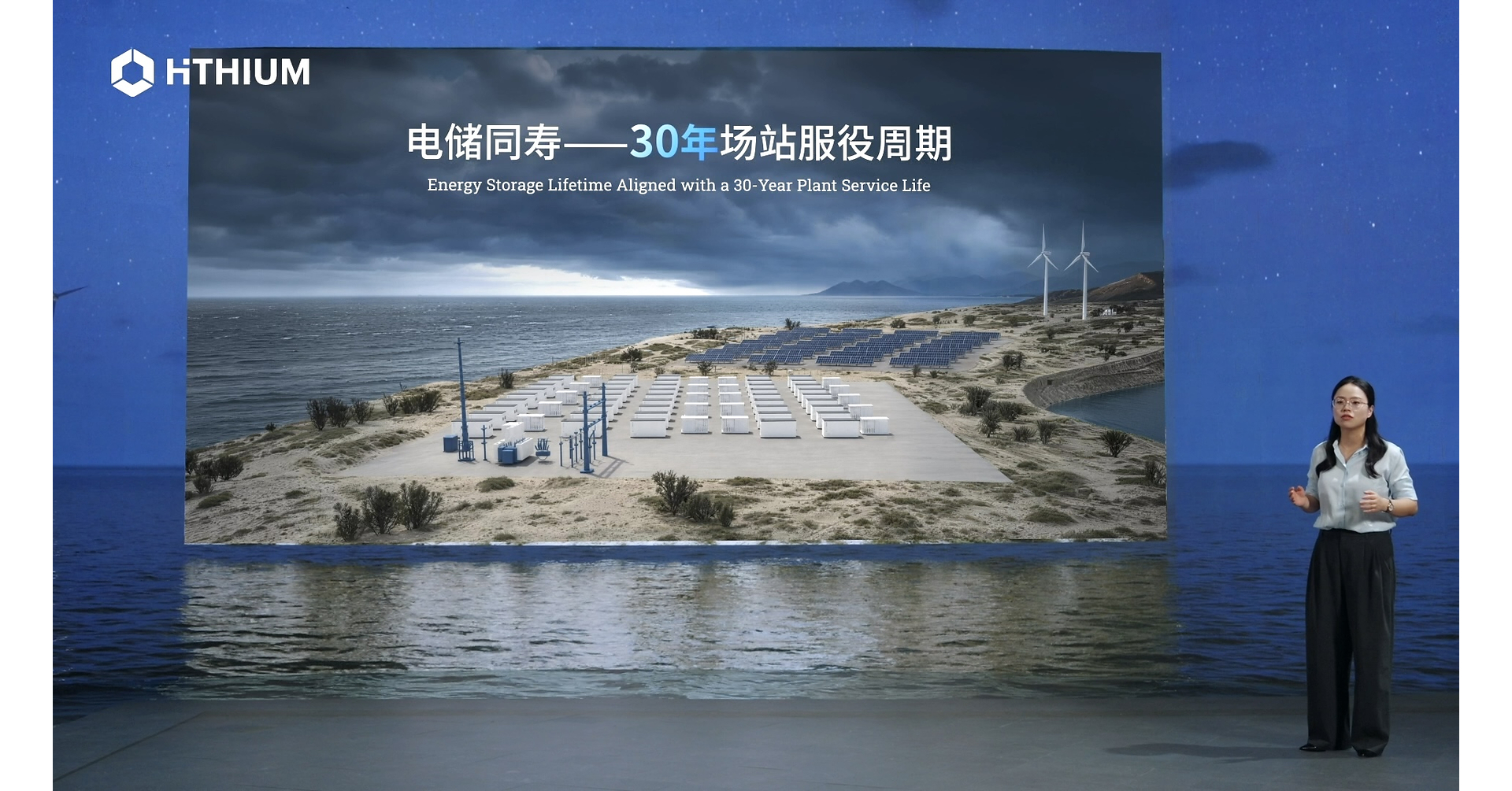
HiTHIUM launched its ∞Power N4.0MWh sodium-ion storage system, built around a 785Ah cell with a stated 20,000-cycle life and 30-year system design life, and plans full-scale production and deliveries in 2027. The company said the system achieves over 88% 24-hour comprehensive efficiency, cuts station footprint by 30%, raises PCS rated-power utilization by more than 20%, and reduces operating auxiliary power consumption by 30%. HiTHIUM is positioning sodium-ion technology for utility-scale and broader commercial, residential and energy-access deployment, targeting LCOS of RMB0.1/kWh for extreme-environment applications.
Analysis
This is strategically relevant for stationary storage but not yet investable as a standalone catalyst: a 2027 production target and manufacturer-reported performance claims leave at least 12 months before bankability, warranty reserve assumptions, and field degradation can be independently tested. The principal near-term effect is competitive pressure on lithium-ion system pricing, particularly for suppliers exposed to lower-duration, cost-sensitive grid projects rather than high-energy-density applications. CATL and BYD have the scale and manufacturing flexibility to defend share; smaller pure-play storage integrators face greater risk if sodium chemistry narrows their procurement advantage.
The key market mechanism is not sodium scarcity relief alone, but lower cell-cost volatility and potentially reduced dependence on lithium carbonate pricing. If sodium systems achieve financing acceptance, they could expand the addressable market for 4-8 hour storage in emerging markets and constrained grids, while pressuring long-run volume expectations for lithium-focused producers including ALB and SQM. That is a 6-18 month narrative risk, however, not an immediate demand shock: project developers will require independently validated round-trip efficiency, degradation curves, safety data, and lender-approved 20-30 year warranties.
Consensus may overstate the disruption because installed storage economics are increasingly driven by EPC, interconnection, PCS, augmentation, and financing costs rather than cell chemistry alone. A lower cell price does not guarantee lower LCOS unless the claimed cycle life and auxiliary-power savings survive hot-weather, high-cycling operation. The first meaningful catalyst is likely customer order disclosure and third-party field data over the next 3-9 months; absence of named projects, warranty terms, or bank financing would indicate the announcement remains a technology demonstration rather than a commercial inflection.
AllMind Terminal
AI-powered research, real-time alerts, and portfolio analytics for institutional investors.
Request TrialMarket Sentiment
Overall Sentiment
moderately positive
Sentiment Score
0.48
Key Decisions for Investors
- No direct position in NXTT: the provided data show no identifiable economic linkage or price sensitivity to the launch. Treat any NXTT move on this news as non-fundamental unless a disclosed supply, ownership, or distribution relationship emerges.
- Set a 3-9 month watch on FLNC and TSLA Energy-storage disclosures: monitor backlog conversion, gross-margin guidance, and procurement commentary for evidence that lower-cost sodium systems are changing bid pricing. A >200bp margin-guide cut attributed to competition would be a bearish confirmation for FLNC; absent that, do not force a short.
- Maintain a 6-18 month relative-value watch: short ALB or SQM versus long diversified battery leaders CATL (3750 HK) or BYD (1211 HK) only after bankable sodium project awards and independently verified deployment. The thesis is long-dated lithium-demand multiple compression, but it is falsified if sodium systems fail to win financing or if lithium prices remain low enough to preserve lithium-ion cost parity.
- For lithium exposure, use sodium commercialization milestones as a risk-management trigger rather than an immediate catalyst: reduce incremental long exposure if multiple named utility projects adopt sodium chemistry before 2027, but retain exposure if announced deployments remain pilots without lender-backed warranty structures.
More News
- US military claims Strait of Hormuz remains open amid ongoing blockade
- Oil prices extend losses as fears of Middle East supply disruptions ease
- US official says upcoming spectrum auctions could generate more than $100 billion
- 'Science fiction': Transport companies — the backbone of economy — are sounding alarm on fuel prices
- Shares tick higher as Fed hikes rates, dollar jumps with short-term yields
- Investors react to Fed hike and market sell-off: Brace for 'higher for longer' rates