
Zhou Jianjun de Huawei presenta una solución AIDC interactiva con la red para maximizar los tokens por vatio
Source: PR Newswire
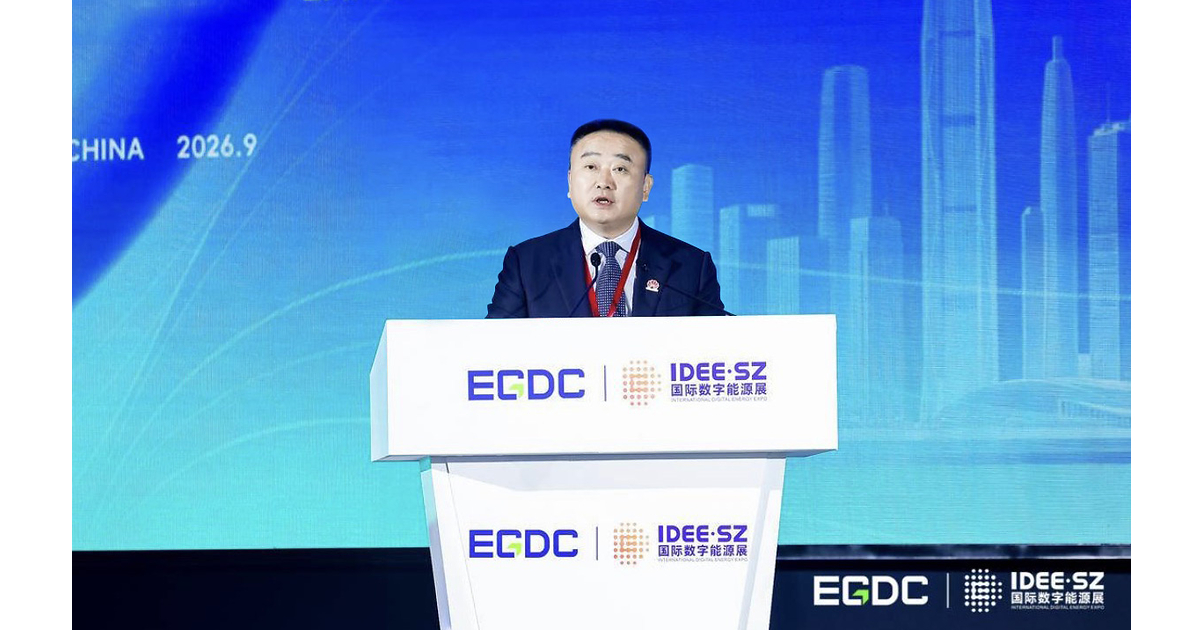
Huawei introduced a grid-interactive AI data center (AIDC) solution designed to maximize tokens per watt as AI facilities scale from megawatt capacities toward hundreds of megawatts and gigawatts. The "3+1" system integrates grid-forming power and storage, high-density liquid cooling, AI-enabled proactive operations, and modular prefabricated deployment. Huawei says the platform can improve AIDC resilience to weak and volatile grids while supporting renewable-power integration and faster compute-capacity buildouts.
Analysis
The investable implication is not Huawei-specific but a broadening of AI-infrastructure spend from GPUs and racks into power-quality, switchgear, storage and thermal-control layers. Grid interconnection delays increasingly make deployable power—not server availability—the binding constraint; vendors that can package electrical distribution, backup power and liquid cooling should gain pricing power and larger content per MW. VRT, ETN, GEV and Schneider Electric (SBGSY) are the clearest listed beneficiaries, while hyperscalers with contracted low-cost power may gain a capacity-to-revenue advantage over peers relying on merchant-grid expansion.
The non-obvious risk is that "tokens per watt" becomes a procurement metric that shifts spending away from standalone component vendors toward integrated systems providers. That pressures lower-value UPS, HVAC and cabling suppliers unless they are specified into turnkey designs; it also raises the risk that modular capacity is delivered ahead of utility interconnection, temporarily depressing returns on invested capital for data-center operators. Huawei's claims are promotional rather than evidence of a measurable revenue inflection, and its restricted access to U.S. enterprise and telecom supply chains limits direct read-through to Western vendors.
Over the next 1-3 months, the relevant catalyst is evidence in VRT/ETN/GEV order books that power and cooling attach rates are rising faster than total data-center capex. Over 6-18 months, grid-forming storage and flexible-load architectures could expand the addressable market for battery integrators and power-electronics suppliers, but only where utilities compensate data centers for demand response or interconnection support. The thesis is falsified if hyperscaler capex remains robust while electrical and thermal backlog conversion slows, indicating GPU procurement rather than facility infrastructure is absorbing the incremental budget.
AllMind Terminal
AI-powered research, real-time alerts, and portfolio analytics for institutional investors.
Request TrialMarket Sentiment
Overall Sentiment
moderately positive
Sentiment Score
0.42
Key Decisions for Investors
- Maintain a watch-list long bias in VRT and ETN rather than chase on this announcement; add only after quarterly bookings show data-center power/cooling growth exceeding company-wide growth. Target a 6-12 month 15-20% upside from backlog conversion, with thesis review if organic data-center orders decelerate for two consecutive quarters.
- Use a 6-12 month pair trade: long VRT / short a diversified industrial proxy such as XLI if AI facility power density continues to rise. The pair isolates higher data-center content per MW from general industrial-cycle exposure; exit if VRT's backlog growth premium versus industrial peers narrows materially.
- Monitor GEV and FLNC for disclosed grid-forming-storage awards tied to large-load interconnections, but do not initiate solely on vendor claims. A trade requires independently disclosed utility tariffs, contracted capacity payments or project awards; without them, storage economics remain vulnerable to permitting delays and falling equipment prices.
- Treat SBGSY as a lower-beta alternative to VRT for investors seeking exposure to integrated electrical and cooling systems; favor it if customer procurement shifts toward turnkey facility packages. Reassess on evidence that hyperscalers standardize internally designed power architectures, which would compress third-party system content.
More News
- Bank of Japan raises interest rates to 31-year high, flags concerns over inflation
- Italy to deploy warships to protect shipping through Bab al-Mandeb
- Oil prices fall as Saudi supply hopes outweigh fresh Houthi strikes
- Oil prices fall for 3rd day as supply concerns ease, diplomacy in focus
- Oil Traders Stymied by Iran War Stalemate: Evening Briefing Americas
- Saudi Pivots Oil Routes After Pipeline Attack