
Warren Buffett's Top Advice for Protecting Your Portfolio Before a Market Crash
Source: fool.com
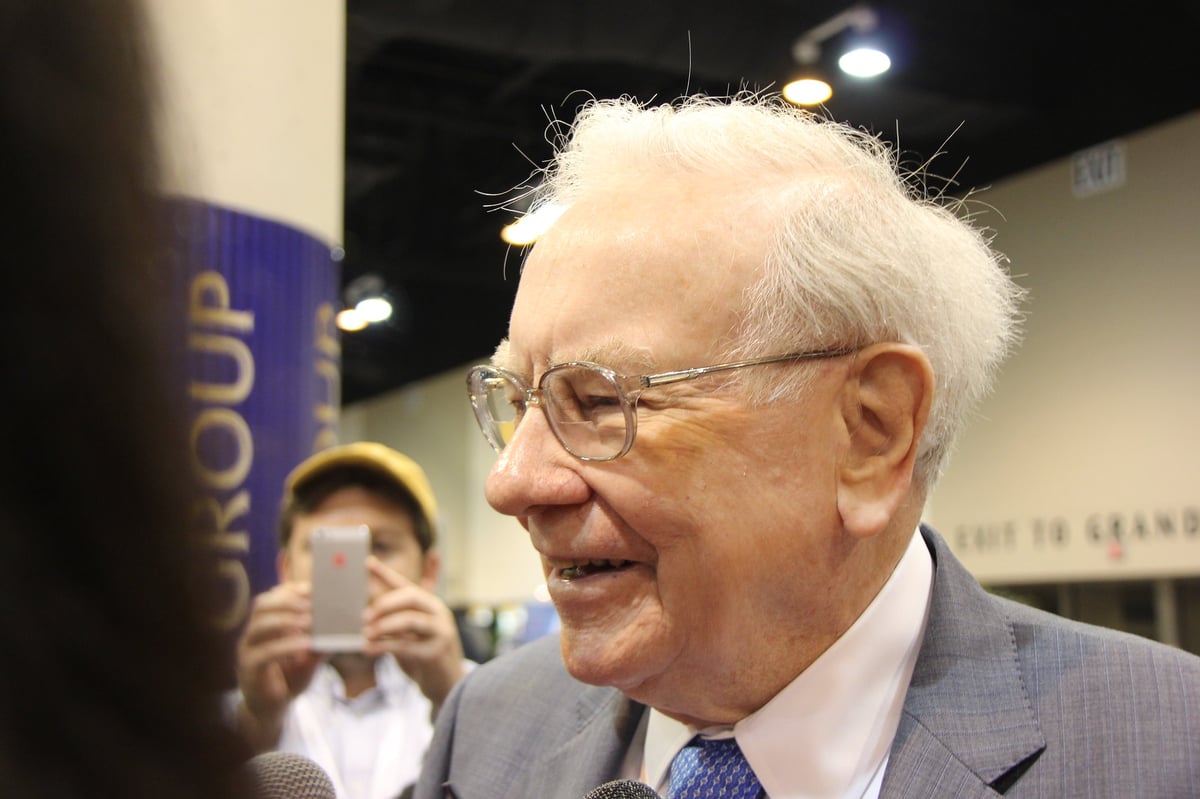
The article recommends investors follow Warren Buffett's contrarian framework by maintaining adequate cash reserves, diversifying modestly away from equities, and buying high-quality stocks during broad sell-offs. It notes the Vanguard S&P 500 ETF has generated 15% annualized returns over the past 16 years and suggests reallocating 5%-10% of a portfolio from stocks to bond ETFs or other assets for investors concerned about elevated valuations. The piece is general investment guidance rather than a company-specific or market-moving development.
Analysis
This is not a Berkshire-specific earnings or capital-allocation catalyst; near-term tradability is low. Its relevance is as a potential reinforcement of retail de-risking narratives after an extended equity rally, but a modest household shift toward cash or bonds would initially affect high-beta, retail-owned growth exposures more than BRK.A. Berkshire's diversified earnings base, insurance float and liquidity profile make it a relative safe-haven proxy if volatility rises, though the stock's valuation can still compress if broad risk appetite contracts.
The more important second-order effect is flow-driven: sustained outflows from passive U.S. equity products would disproportionately pressure the largest index constituents because of market-cap weighting, while cash-rich acquirers gain strategic optionality as financing-dependent buyers retreat. BRK.A/B could outperform the S&P 500 over a 1-3 month volatility episode without requiring a broad market decline, particularly if credit spreads widen but remain well below recessionary levels. Over 6-18 months, the thesis depends on whether Berkshire deploys capital into acquisitions, equities, or buybacks at a valuation that is accretive to per-share intrinsic value.
Contrarian view: generic calls to hold more cash often arrive after investors have already reduced beta, making them a poor standalone bearish signal. The actionable signal is not sentiment commentary but a combination of weakening earnings revisions, widening high-yield spreads, and deterioration in market breadth. A correction driven solely by positioning, absent a credit or earnings deterioration, would more likely create a selective buying window than a durable regime change.
Falsifiers for a BRK relative-defense thesis are a rapid reacceleration in mega-cap earnings revisions, narrowing credit spreads, and renewed market breadth that pulls cyclicals and small caps higher. Conversely, HY option-adjusted spreads moving above roughly 450 bps, coupled with negative S&P 500 forward-EPS revisions, would support increasing the defensive tilt.
AllMind Terminal
AI-powered research, real-time alerts, and portfolio analytics for institutional investors.
Request TrialMarket Sentiment
Overall Sentiment
neutral
Sentiment Score
0.05
Ticker Sentiment
Key Decisions for Investors
- No standalone trade based on this article; treat it as a sentiment watch item rather than a fundamental catalyst for BRK.A.
- If HY spreads widen by 75+ bps from current levels or the S&P 500 breaks below its 200-day moving average, initiate a 1-3 month relative-value position: long BRK.B / short SPY, sized market-neutral. Target 5-8% relative outperformance; stop if SPY recovers the 200-day average and credit spreads retrace below the trigger level.
- For portfolios with concentrated mega-cap exposure, use a 5-10% beta reduction through trimming QQQ or buying 2-3 month SPY put spreads rather than raising broad cash immediately. This preserves upside if the rally persists while capping a positioning-driven drawdown.
- Maintain a buy-list for high-quality cyclicals and financials rather than deploying into an indiscriminate dip. Activate only after forward earnings estimates stabilize; a 10% index decline without downward EPS revisions is a more attractive entry signal than a sentiment-driven liquidation.
More News
- Warren Buffett stepping down as chairman of Berkshire Hathaway: 'Father Time always wins'
- Buffett Steps Down at Berkshire
- Meet Warren Buffett’s son Howard, a former sheriff, war photographer, and now, Berkshire’s new chairman
- Warren Buffett steps down as Berkshire Hathaway chairman
- Warren Buffett abruptly steps down as Berkshire chair as ‘Father Time’ wins, handing role to son Howard who will ‘guard its culture and values’
- Buffett Steps Down as Berkshire Chair, Ending Six-Decade Run