
Revisiting 2 Outperform Microcaps
Source: zacks.com
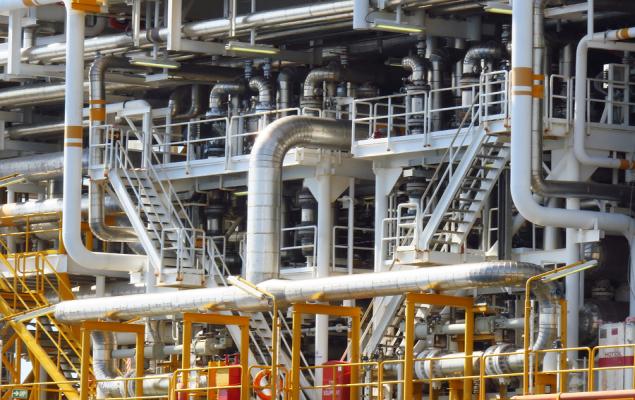
Perma-Pipe shares have returned about 250% since its May 2024 Outperform rating, though gross margin contracted 400 bps to 29% in the first half amid Ohio and Qatar ramp costs, commodity inflation, and Middle East supply-chain issues; the analyst views the pressure as short term and maintains the rating. Friedman Industries is up about 120% since its December upgrade, with Q1 volume up 28% year over year to 206,000 tons and latest-quarter EBITDA more than doubling to $19.3 million from $8.2 million. Its 6.4x trailing EV/EBITDA is below the cited sub-industry, sector, and S&P 500 multiples, while steel cyclicality remains a risk.
Analysis
The key question is whether recent operating leverage converts into durable cash earnings, not whether the reported growth rates look impressive. For FRD, acquisition volume and organic throughput both contribute, but steel spreads and inventory timing can reverse EBITDA gains quickly; the 6.4x EV/EBITDA comparison is not a clean floor for a microcap with pronounced cycle exposure. Its five-year median multiple is a more relevant anchor, and is below the current multiple. Sustained volume growth without margin erosion would support further earnings revisions; a steel downturn could compress both earnings and the multiple.
PPIH has a different asymmetry: current margin pressure may ease as Ohio and Qatar ramp, but the Ohio capacity milestone is not near-term earnings proof. Data-center-related demand is a plausible incremental driver, not yet enough evidence to capitalize as a durable growth stream. Project timing, commodity costs, and Middle East logistics can keep margins depressed even with healthy orders. After the sharp rerating, investors may be pricing in execution before utilization and margin recovery are demonstrated.
Near term, both names are vulnerable to profit-taking and thin microcap liquidity. Over 1–3 months, watch FRD volume/EBITDA conversion and PPIH gross margin, backlog conversion, and evidence that new capacity is absorbing ramp costs. Over 6–18 months, successful PPIH utilization could improve margins; steel cyclicality remains the larger structural risk for FRD. The promotional quantum-computing copy provides no investable evidence for the named hyperscalers and should not be conflated with either microcap thesis.
AllMind Terminal
AI-powered research, real-time alerts, and portfolio analytics for institutional investors.
Request TrialMarket Sentiment
Overall Sentiment
mildly positive
Sentiment Score
0.32
Ticker Sentiment
Key Decisions for Investors
- Do not chase PPIH solely on the data-center narrative. Consider only a small, staged position on weakness; add only if gross margin stabilizes or improves and backlog converts to revenue. A further margin decline or weaker order conversion falsifies the recovery thesis.
- FRD is the cleaner near-term operating-momentum setup, but treat it as a cyclical trade rather than a stable compounder. A limited long is conditional on the next quarter sustaining volume growth and EBITDA conversion; reduce exposure if EBITDA falls despite continued volume, signaling spread or mix deterioration.
- Avoid using broad sector valuation multiples as justification for either microcap. Reassess FRD against steel-cycle conditions and its own normalized earnings, and PPIH against project backlog quality, utilization, and gross-margin trend.
- Monitor liquidity and position sizing: after large share-price advances, modest disappointments can trigger outsized moves in microcaps. No quantum-computing trade follows from the article's promotional claims.
More News
- SpaceX stock climbs to highest since June, returning Musk to trillionaire status
- Security researcher claims they found KVM guest-host escape flaw
- Schneider Electric drops $22.6B on PTC as datacenter boom rains money on infra companies
- The case for Nvidia’s stock to march even higher after clinching its first record high in months
- Wall Street rewards Microsoft's AI pivot. A longtime skeptic says it's just the beginning
- U.S. stock futures steady after Nasdaq hits record on reduced Fed hike bets