
Fundamental and Technicals Signals Align for Costco: Is the Stock Finally Breaking Out?
Source: marketbeat.com
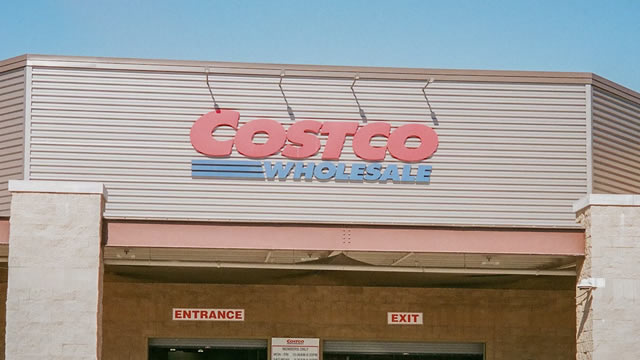
Americans continue to spend despite soaring gas prices, high interest rates and weak consumer sentiment. Costco shares were shown at $987.94, up $9.93 (1.02%) as of 11:26 a.m. Eastern; the article provides no further context for the move.
Analysis
The useful signal is not that consumers are spending, but where spending may be going. If households are trading down, Costco could gain share from traditional grocers and discretionary retailers; however, higher fuel costs can lift nominal receipts without improving unit volumes, while also squeezing household budgets and raising distribution costs. Gas-related traffic is not automatically attractive earnings: verify traffic, comparable sales excluding fuel and inflation, and merchandise margins before treating higher sales as stronger demand.
This is a relative-resilience thesis, not yet a clear estimate revision. The supplied valuation makes a broad demand narrative a weak basis for chasing COST: durable traffic may support the premium, but any disappointment in comps or membership economics could expose multiple risk. In the next 1–3 months, earnings disclosures on traffic, ticket, renewal behavior, and gross margin are more informative than sentiment headlines. Over 6–18 months, sustained trade-down could benefit Costco and pressure weaker conventional retailers; a consumer rebound would reduce that relative advantage.
Contrarian risk: resilient nominal spending may mask a mix shift toward essentials and lower-priced baskets. The thesis weakens if Costco’s inflation-adjusted traffic or merchandise margins deteriorate, or if comparable-sales strength is predominantly fuel and price rather than units.
AllMind Terminal
AI-powered research, real-time alerts, and portfolio analytics for institutional investors.
Request TrialMarket Sentiment
Overall Sentiment
neutral
Sentiment Score
0.10
Key Decisions for Investors
- Do not add COST solely on the broad spending signal. Treat it as a watch item pending the next comparable-sales and earnings disclosures.
- If data confirm resilient traffic and stable merchandise margins, consider a modest relative-value long COST versus a basket of traditional grocery and discretionary retailers; define the short basket by exposure rather than assuming every peer loses share.
- For the next 1–3 months, track fuel-excluded comparable sales, transaction counts, average ticket, and membership renewal metrics. A reported sales beat driven mainly by fuel or inflation would not validate the thesis.
- Falsify the relative-resilience view if Costco reports weakening traffic or merchandise-margin pressure, or if household spending broadens back into discretionary categories; reassess rather than averaging down.
More News
- U.S. budget deficit swells to almost $2 trillion for fiscal 2026, up 12% in a single year
- All the news about the iPhone Duo
- Apple’s $1,999 iPhone Duo puts the company's status-symbol power to the test
- Major earnings reports are due next week, but strong results may not be enough to quell market fears
- Kimberly-Clark is having its best week in four years. Here's what is propelling shares higher
- Why is SPDR S&P 500 ETF Trust sliding today?