
Geotab presenta Geotab Investigations, una solución para reducir los costes asociados a la responsabilidad civil de las flotas
Source: PR Newswire
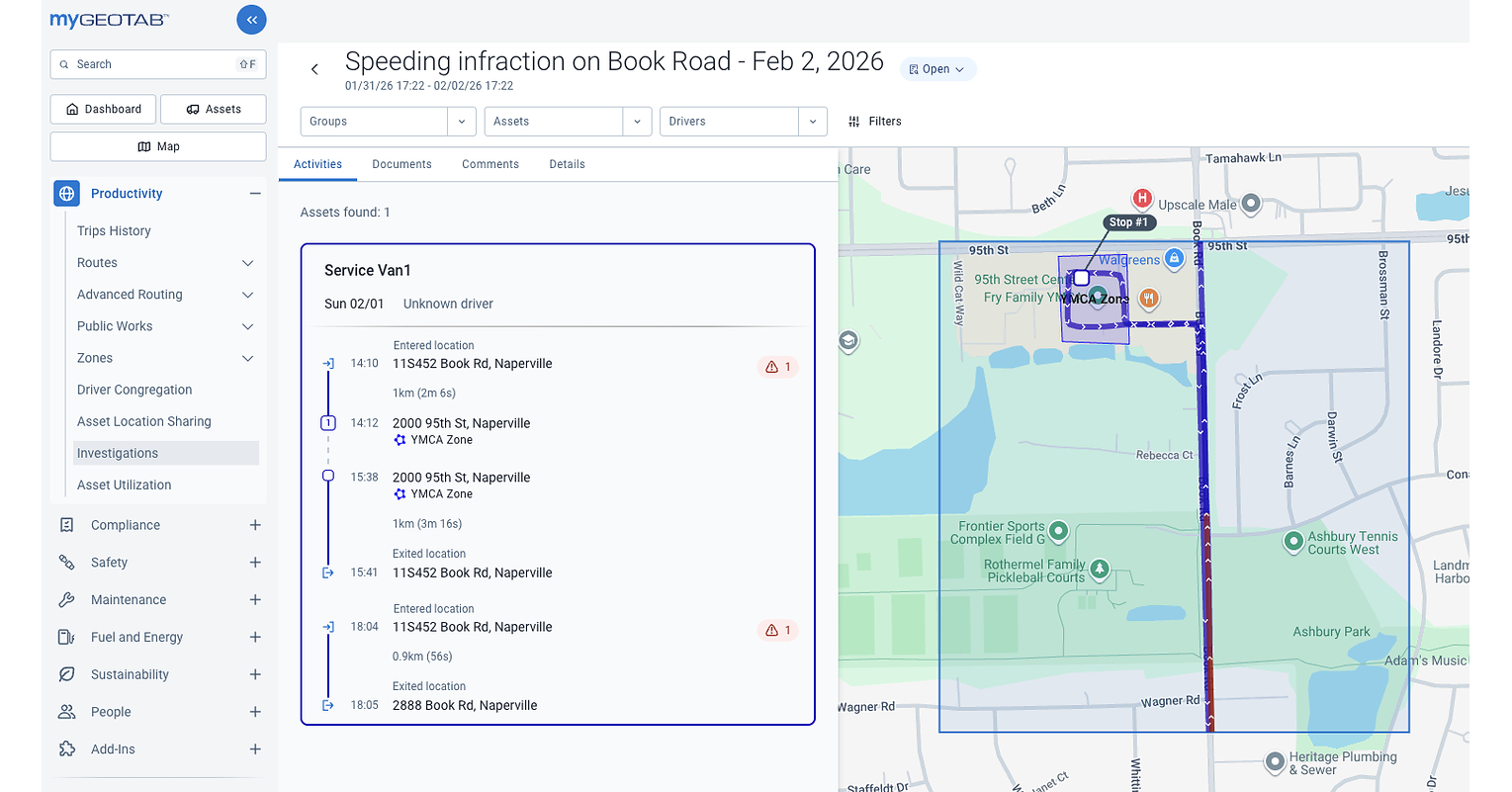
Geotab launched Geotab Investigations, a unified fleet-incident management solution that combines telematics, video, driver behavior, location and supporting documents to reduce manual work, liability risk and incident-resolution time. The launch also adds video-based driver coaching, a 0-100 fleet safety scorecard and red-light violation detection for compatible cameras. Customer case studies cited a 22% reduction in collision risk, a 59% improvement in safe-driving behaviors and a 411% ROI at Richfords, while Barhale reported an 8.8% reduction in avoidable collisions and a 2.7% insurance-premium reduction.
Analysis
This is strategically more meaningful as a platform-retention feature than as a near-term revenue catalyst. By embedding incident workflow, video review and driver coaching into the telemetry system of record, Geotab raises switching costs for fleets that otherwise could mix hardware, cameras and claims-management software. The likely pressure falls on point-solution vendors in fleet video and safety analytics—especially Lytx (private), Samsara (IOT), Motive (private) and Solera’s fleet/claims products—where standalone functionality faces greater bundling risk.
For IOT, the relevant issue is whether customers treat integrated investigations as table stakes or as a reason to consolidate vendors. Samsara has a broader cloud-operating-system narrative and public-market liquidity, but a Geotab-led push to make third-party camera integrations usable within one workflow can reduce camera attach-rate and seat-expansion opportunities at premium pricing. The company’s explicit limitation around evidentiary preservation is important: sophisticated fleets with material litigation exposure may still require specialist legal-hold, chain-of-custody and claims platforms, limiting displacement of providers such as Verisk (VRSK) and CCC Intelligent Solutions (CCCS).
Near term, there is no clean public-equity trade from a private-company product announcement. Over 1-3 months, monitor IOT’s net retention, camera/device attach rates and competitive commentary rather than assuming immediate share loss. Over 6-18 months, the more consequential outcome is margin pressure if fleet-software vendors increasingly bundle safety modules at low incremental cost to protect installed bases; that would favor diversified data franchises over pure-play workflow vendors.
Contrarian view: the product may strengthen, rather than weaken, IOT’s positioning if it validates that fleet buyers are prioritizing unified safety workflows and accelerates category adoption. The decisive datapoint is procurement behavior: multi-vendor fleet consolidation wins, not reported customer safety-improvement claims, would establish a share-transfer thesis.
AllMind Terminal
AI-powered research, real-time alerts, and portfolio analytics for institutional investors.
Request TrialMarket Sentiment
Overall Sentiment
mildly positive
Sentiment Score
0.38
Key Decisions for Investors
- No immediate directional trade: Geotab is private and the announcement lacks disclosed pricing, paid adoption, contract wins or financial contribution; set an alert for IOT’s next earnings call on camera attach rates, net retention and named competitive losses.
- Watch-list pair for a 6-12 month catalyst: long VRSK / short IOT only if IOT reports slowing subscription growth or lower expansion attributable to bundled fleet-safety offerings. Thesis targets relative multiple resilience in VRSK’s regulated insurance-data franchise; invalidate if IOT sustains >30% growth with stable or improving operating margin.
- Avoid shorting CCCS solely on this development. Geotab’s stated absence of legal-hold and custody assurances leaves claims and litigation workflows materially differentiated; reconsider only if CCCS discloses fleet-specific volume or pricing pressure.
- For transportation operators, monitor public fleets and logistics names with meaningful self-insurance exposure—ODFL, SAIA and R—at earnings for evidence that telematics-enabled loss-control is reducing claims ratios. A sustained improvement in insurance expense as a percentage of revenue would be a more investable downstream signal than vendor case studies.
More News
- China's AI leaders keep quiet despite U.S. 'publicity' on tech risks
- U.S. stock futures drift higher with Fed rate hike in focus
- Exclusive-Malaysia talks to rival airlines as it monitors AirAsia’s financial health, sources say
- MBS and Saudi Arabia Face Crisis With Key Oil Pipeline Shut for Weeks
- AWS says it can't restore service to Bahrain, UAE facilities 6 months after Iran strikes
- Chinese investors rush into US stocks as Beijing opens wider path overseas