
Arasan furthers MIPI I3C® compliance with its participation at the I3C® interop in Taipei
Source: PR Newswire
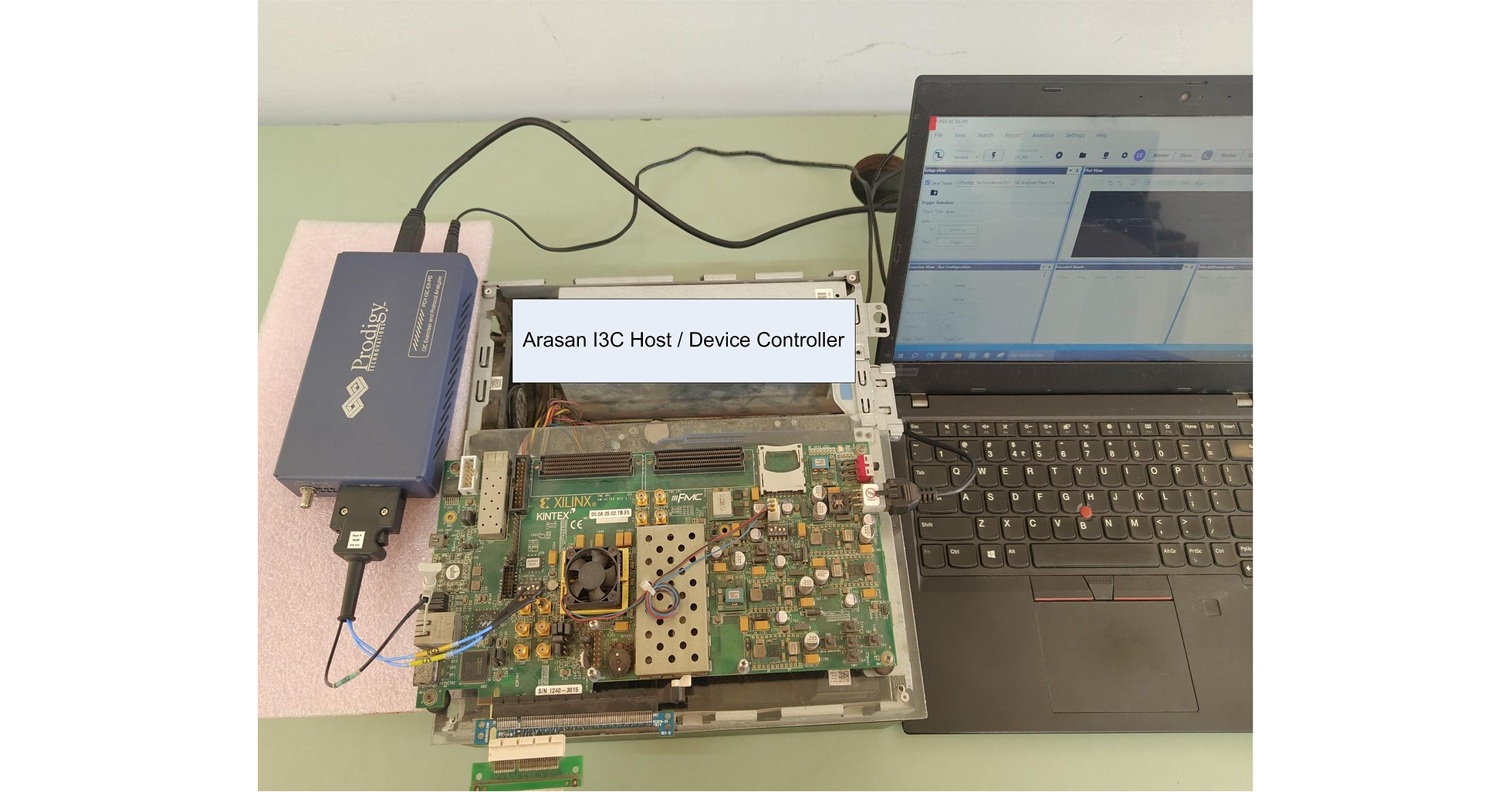
Arasan Chip Systems will participate in the MIPI I3C interoperability session in Taipei on Oct. 19-20, 2026, testing its I3C Host, Dual Mode and Device IP along with its proprietary software stack. The company said its Host IP supports the latest I3C HCI v1.2 specification and that its I3C IP has been licensed by more than 25 companies, is silicon-proven, and is in production across multiple SoCs. The announcement reinforces standards-compliance credentials but provides no new financial guidance or material commercial contract details.
Analysis
This is a low-information validation event rather than a revenue catalyst. Interoperability participation can marginally reduce design-win friction for Arasan’s private IP business, but it does not establish incremental licensing volume, royalty economics, or a customer tape-out. Public semiconductor names should not re-rate on this alone; the relevant read-through is only meaningful if I3C adoption begins displacing legacy sensor-control interfaces in higher-value camera and edge-AI SoCs.
The second-order beneficiary, if I3C/HCI standardization gains traction over the next 6-18 months, is the mobile/automotive camera supply chain: interface standardization lowers software integration cost and can speed multi-sensor architectures. That is incrementally supportive of complex image-sensor and application-processor platforms at Sony (SONY), Qualcomm (QCOM), and MediaTek (2454.TW), but their exposure is too diluted for this event to matter. Synopsys (SNPS) and Cadence (CDNS) are better public proxies for rising interface-IP and verification complexity, although neither has enough disclosed I3C exposure to justify a direct trade.
Contrarian view: standards-compliance announcements are frequently used as credibility marketing in fragmented IP markets, and interoperability is necessary but not sufficient for commercial share gains. The key falsifier for any constructive thesis is evidence within 1-3 quarters of new named licensees, material design wins in camera-centric SoCs, or disclosed royalty-bearing production ramps; absent that, this remains operationally positive but financially immaterial.
AllMind Terminal
AI-powered research, real-time alerts, and portfolio analytics for institutional investors.
Request TrialMarket Sentiment
Overall Sentiment
mildly positive
Sentiment Score
0.18
Key Decisions for Investors
- No directional trade on the announcement; Arasan is private and no public peer has sufficiently concentrated, disclosed I3C revenue exposure.
- Create a 1-3 quarter monitor for SNPS and CDNS: investigate only if earnings calls disclose stronger interface-IP licensing, verification demand, or mobile/edge-camera design activity. A trade requires segment-level evidence, not standards-event participation.
- For semiconductor hardware exposure, treat any future confirmed migration toward richer multi-camera/edge sensing as a thematic tailwind for QCOM and SONY, but require corroboration from handset camera-content trends and design-win disclosures before positioning.
- Watch Taiwan mobile-SoC and sensor ecosystem commentary around the October event for evidence of production adoption; without customer tape-out or volume indicators, avoid extrapolating compliance claims into revenue forecasts.
More News
- Here’s the ‘core economic flaw’ in the AI bull case as stock and bond trades unravel, according to a top economist
- Biotech stocks are surging. How investors can play the new drug innovation boom
- Ukraine says Starlink and Starshield high speed restrictions have been lifted
- Goldman says these top tech stocks have plenty of upside ahead of earnings
- Ukraine says Starlink restored as attacks continue in Russia and Ukraine
- Starlink seems to be working normally again in Ukraine