
Strategic Roadmaps for Lab Leadership: 2027 Executive War College Brings Real-World Case Studies to New Orleans
Source: PRWeb
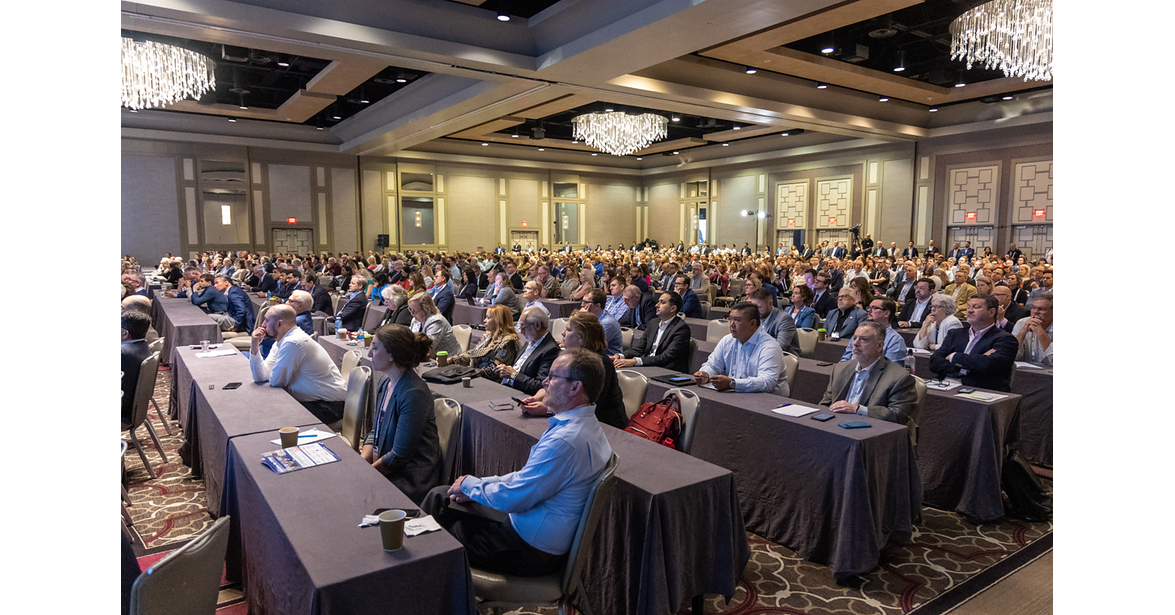
Executive War College announced its April 26-28, 2027 clinical laboratory and pathology management conference in New Orleans, expecting more than 1,100 leaders and over 146 subject-matter experts. The agenda will address laboratory automation and AI, reimbursement and payer scrutiny, staffing shortages, regulatory compliance, and potential partnerships and M&A. The announcement is promotional and provides no material financial results, guidance, or industry-policy change.
Analysis
This is not a tradable catalyst; it is promotional material that flags already well-understood pressure points rather than providing evidence of a reimbursement, regulatory, utilization, or technology-adoption inflection. The relevant public-market read-through is therefore limited to a monitoring framework: labs facing higher labor intensity and payer denials will have greater incentive to consolidate testing volumes, automate accessioning/analysis, and outsource pathology workflows.
Over 6-18 months, scaled operators and workflow vendors should gain share if reimbursement discipline persists. Quest Diagnostics (DGX) and Labcorp (LH) have purchasing scale, payer-contracting infrastructure, and density benefits that smaller independent laboratories lack; fragmented regional labs are the likely margin donors in any consolidation cycle. Digital-pathology adoption would be more consequential for Danaher (DHR), Roche (ROG.SW), Agilent (A), and Philips (PHG) only once health-system capital budgets translate pilots into recurring scanner, software, service, and consumables revenue.
The non-obvious constraint is that AI may initially compress vendor economics rather than expand them: hospital laboratories can seek productivity gains through software overlays while deferring high-cost hardware refreshes. For DGX/LH, the key falsifier is not conference activity but evidence that commercial reimbursement yields stabilize and labor expense per requisition declines; without both, automation investment can become a capex drag rather than a margin catalyst.
Near term, there is no reason to alter positioning. The actionable catalysts are 1-3 month earnings disclosures on organic test-volume growth, revenue-per-requisition, wage trends, and payer-denial rates, followed by 6-18 month evidence of laboratory closures, acquisition multiples, and digital-pathology orders.
AllMind Terminal
AI-powered research, real-time alerts, and portfolio analytics for institutional investors.
Request TrialMarket Sentiment
Overall Sentiment
neutral
Sentiment Score
0.00
Key Decisions for Investors
- No new directional trade from this item; treat it as a sector watch signal rather than an investable event.
- Maintain a relative-quality bias: long DGX versus short a broad healthcare-services proxy only if DGX reports sequential improvement in revenue per requisition and labor expense leverage; reassess if commercial pricing or core volume guidance falls.
- Monitor LH and DGX for tuck-in laboratory acquisitions or regional-lab closures over the next 6-18 months. A consolidation-driven margin thesis requires transaction multiples below the acquirer's synergy-adjusted value; otherwise avoid chasing perceived scale benefits.
- Set an earnings alert for DHR, A, ROG.SW, and PHG: consider exposure only after management identifies incremental recurring digital-pathology revenue or order growth, not pilot counts. Falsify on continued capital-equipment order weakness or delayed hospital capital budgets.
More News
- Grab aims for 'next level' in financial services with purchase of buy-now pay-later platform Atome
- China's AI leaders keep quiet despite U.S. 'publicity' on tech risks
- US Senate crypto bill collapses in blow to industry
- BlackRock’s Fink, Blackstone’s Gray Back Carney’s Canada Investment Push
- U.S. stock futures drift higher with Fed rate hike in focus
- Exclusive-Malaysia talks to rival airlines as it monitors AirAsia’s financial health, sources say
From AllMind Research
- Anthropic IPO Preview: Valuation, Timing, and What to Watch
- Shein After the IPO: Venue, Valuation, and What Must Be Proved
- What AI Research Tools Should a Small Hedge Fund Buy First?
- What Exactly Does Post-Training in LLMs and Finance-Focused AI Actually Mean for Asset Managers?
- What Is a Financial Ontology?