
LIPSIA-STRATEGY trial demonstrates non-inferiority of CAAS vFFR guided revascularization against pressure wire-based FFR revascularization
Source: PR Newswire
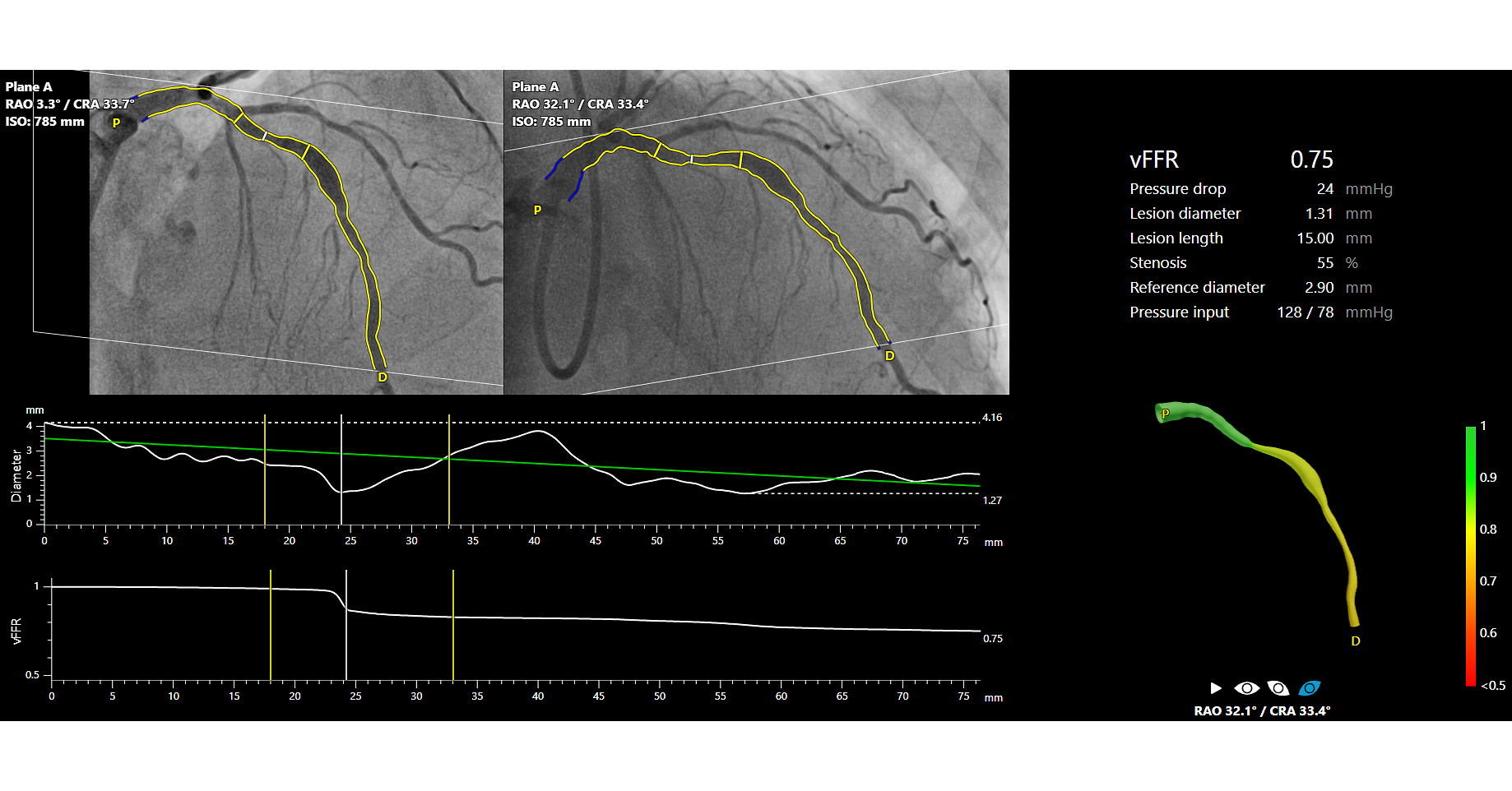
The randomized LIPSIA-STRATEGY trial, involving 1,053 patients with intermediate coronary artery stenoses, met its primary endpoint: CAAS vFFR-guided revascularization was non-inferior to pressure wire-based FFR-guided treatment on 1-year major adverse cardiovascular events. The findings add randomized clinical evidence for the angiography-based approach; Pie Medical Imaging also cited a less invasive workflow and shorter procedure and fluoroscopy times.
Analysis
The result strengthens the category case for angiography-derived physiology, but it does not yet establish a near-term earnings catalyst for Pie Medical Imaging or its parent, Esaote. The commercial question is whether cath labs change protocols and pay for software—not whether one-year non-inferiority is statistically persuasive. Adoption depends on regulatory status by market, reimbursement, integration with imaging systems, reproducibility across operators and lesion types, and whether workflow savings translate into higher lab throughput.
Competitive read-through is broader than a single product: independent randomized evidence can lower clinicians’ perceived risk of wire-free assessment and intensify competition among angiography-derived physiology platforms. It may pressure demand for some pressure-wire procedures over time, but does not imply displacement of pressure wires across complex cases or the broader coronary market. The trial’s investigator-initiated design and company-reported workflow advantages merit scrutiny against the full paper and independent implementation data.
Days: likely a modest sentiment signal, with limited direct public-equity expression given no supplied ticker and no disclosed revenue contribution. Over 1–3 months, watch for guideline commentary, regulatory or reimbursement developments, and competitor responses. Over 6–18 months, adoption evidence—not another efficacy headline—would determine whether this becomes a material software-growth driver. The contrarian risk is treating non-inferiority as proof of broad standard-of-care conversion; the upside case is that reduced procedural friction expands physiology use, including in labs that currently underuse it.
AllMind Terminal
AI-powered research, real-time alerts, and portfolio analytics for institutional investors.
Request TrialMarket Sentiment
Overall Sentiment
moderately positive
Sentiment Score
0.35
Key Decisions for Investors
- No immediate directional trade: the article provides no product revenue, installed-base, pricing, or adoption data to underwrite an earnings revision for Pie Medical Imaging or Esaote.
- Set an adoption watch item for the next 1–3 months: verify regulatory clearance and reimbursement by major markets, plus evidence of new-site installations, utilization, and integration with cath-lab imaging systems.
- Review the full JACC publication for the non-inferiority margin, confidence intervals, event composition, follow-up completeness, and subgroup results; materially weaker performance in complex lesions would limit the addressable shift away from pressure-wire assessment.
- Over 6–18 months, reassess pressure-wire suppliers and angiography-derived physiology competitors only if utilization or procedure-mix data show sustained substitution. Falsification of the bullish category thesis: no guideline or protocol uptake, workflow benefits failing to appear in real-world studies, or safety concerns in broader populations.
More News
- Binance co-CEO Richard Teng says hackers used fake job interviews, AI tool to steal $6.3 billion in crypto 108511116
- AMD stock jumps 7% on earnings as data center revenue nearly doubles
- Marvell-Lumentum Deal Puts Optical Networking at the Center of the AI Boom
- Marvell Technology could plunge on latest multibillion-dollar acquisition
- Disney Plans Thousands of Layoffs Companywide
- AI Inference Startup Fal Raises Capital at $16 Billion Valuation