
AMD: The Biggest Winner Of Intel's Price Hike
Source: seekingalpha.com
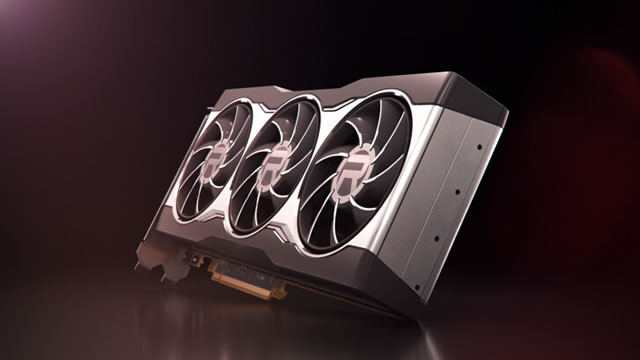
AMD is benefiting from Intel's repeated PC CPU price increases, improving AMD's competitive pricing environment. Management estimates the server CPU total addressable market could reach $220B by 2030 and is targeting more than 50% share, implying a potential $100B server business. Demand appears robust, while supply constraints remain the primary limiter; AMD is expanding ecosystem investment and advanced-packaging capacity to address the bottleneck.
Analysis
AMD's near-term upside is less about unit share alone than a widening monetization gap: higher industry pricing can lift EPYC ASPs and gross margin without requiring a proportional increase in shipments. The key read-through is whether AMD can hold price on mainstream server SKUs while extending mix into Turin and AI-adjacent platforms; that would drive estimates higher faster than a conventional share-gain model. Intel's pricing actions may also weaken OEM willingness to maintain Intel-heavy configurations, lowering the switching hurdle for Dell (DELL), HPE (HPE), and hyperscale buyers over the next two refresh cycles.
The bottleneck thesis creates an important distinction between demand and revenue. If advanced packaging, substrate, or leading-edge foundry allocation remains constrained, AMD may sacrifice lower-margin client volume to protect high-value data-center mix; that is margin-positive but caps upside to reported revenue relative to the addressable-market narrative. Supply normalization is therefore a two-sided catalyst over 6-18 months: it enables shipments, but may also expose whether elevated pricing reflects durable performance leadership or temporarily constrained alternatives.
Consensus risk is extrapolating a large long-dated server opportunity into a linear earnings path. A 50%+ server share outcome would require sustained execution across product cadence, OEM qualification, software support, and supply allocation, while Intel can use rebates, bundled platform economics, and foundry/customer incentives to defend strategic accounts. The cleaner near-term signal is not TAM commentary but AMD data-center revenue growth versus Intel DCAI trends, AMD gross-margin progression, and evidence that EPYC ASPs rise despite broader enterprise IT budget pressure.
AllMind Terminal
AI-powered research, real-time alerts, and portfolio analytics for institutional investors.
Request TrialMarket Sentiment
Overall Sentiment
moderately positive
Sentiment Score
0.62
Ticker Sentiment
Key Decisions for Investors
- Initiate a 3-6 month long AMD / short INTC pair, sized beta-neutral: the thesis is AMD captures both mix and pricing while INTC faces weaker DCAI operating leverage. Reassess if AMD data-center growth decelerates materially or INTC demonstrates sequential DCAI revenue stabilization with improving gross margin.
- Add to AMD only on confirmation from the next earnings cycle that data-center gross margin and supply availability improve together; absent disclosed capacity visibility, treat management's supply commentary as an alert rather than a revenue-estimate upgrade.
- For a defined-risk expression, consider AMD 6-9 month call spreads rather than outright calls, targeting upside from a data-center guide raise while limiting exposure to semiconductor multiple compression. The trade is invalidated by a broad hyperscaler capex reset or evidence of EPYC discounting.
- Monitor DELL and HPE server order commentary as a second-order validation signal. Improving AMD-configured backlog or mix would support the share thesis before it is fully visible in AMD reported revenue; weak enterprise server demand would argue against adding exposure even if Intel pricing remains elevated.
More News
- Huawei's next-gen Ascend NPUs could become China's best option
- Labor crisis in U.S. chip manufacturing leaves Samsung, TSMC desperate for talent
- Nvidia, AMD, Intel stocks rise after Fed hike: why obvious bearish case is failing
- Intel and Micron lead our portfolio higher, and J&J's strengthens our case for owning it
- Why Intel Stock Jumped 7.6% Today
- Market Indexes Bounce Back From the Fed's Rate Hike
From AllMind Research
- Anthropic IPO Preview: Valuation, Timing, and What to Watch
- Shein After the IPO: Venue, Valuation, and What Must Be Proved
- What AI Research Tools Should a Small Hedge Fund Buy First?
- AI Tools for Independent Research Firms: A Publishing System
- Weekly Update: Options, Earnings Call Transcripts, AI Chat, Bookmarks & More