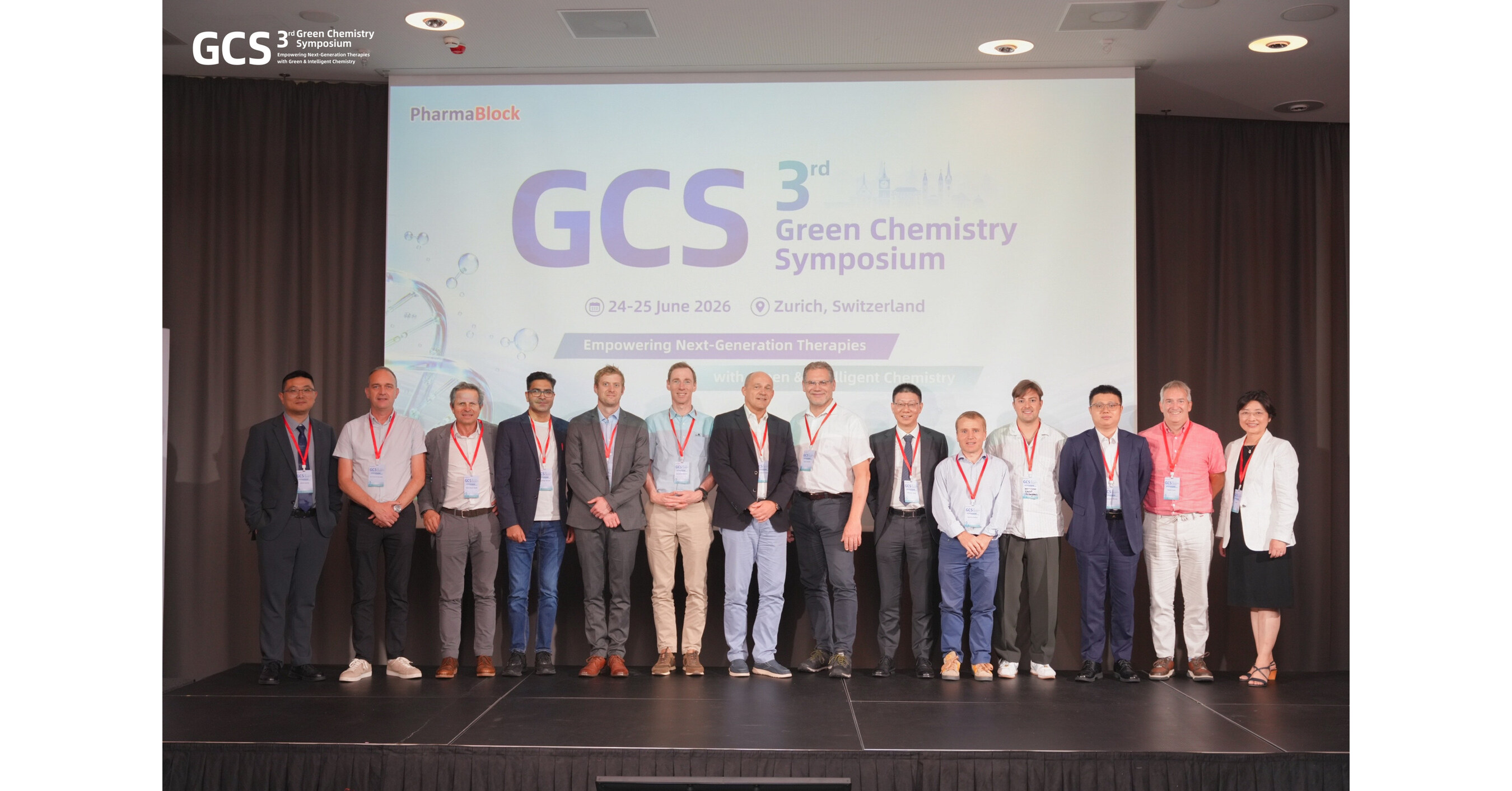
PharmaBlock held its 3rd Green Chemistry Symposium in Zürich, convening leaders from Novartis, Pfizer, Sanofi, AstraZeneca, ETH Zurich, and others to discuss decarbonizing pharmaceutical manufacturing via green process innovations. The company highlighted technologies including continuous-flow manufacturing, photo/electrochemistry, AI-assisted process development, and eco-friendly peptide synthesis, alongside its integrated flow manufacturing platform and CF-LPPS peptide platform. PharmaBlock also officially inaugurated its Swiss Innovation Center for Green Technologies to accelerate industrialization and collaboration on lower-carbon process technologies.
This reads more like a capability-signaling event than a near-term earnings driver. The economic benefit, if real, accrues first to firms that can industrialize complex molecules faster and with less waste; the P&L lift comes through lower COGS, fewer batch failures, and quicker tech transfer, not headline ESG spend. That makes the more important beneficiaries the platforms and suppliers that sell process optimization, continuous-flow equipment, and enabling chemistry into pharma manufacturing, with the branded drug companies mainly capturing a longer-dated operating leverage story.
For the named large-cap pharmas, the second-order effect is competitive rather than immediate financial. Firms that can redesign processes around peptides, biologics-adjacent intermediates, and continuous manufacturing could improve gross margin on select franchises over 6-18 months, but only if validation and regulatory comparability packages move smoothly. The key loser is the legacy API/campaign-manufacturing model that cannot adapt; those players risk share loss in new process awards as procurement teams increasingly price carbon, energy intensity, and supply-chain resilience into vendor selection.
The market is likely to overread this in the short run. Green-chemistry rhetoric is cheap; what matters is whether it changes filed chemistry, approved routes, or capex budgets, and that usually shows up with a long lag. Near term, the catalyst set is limited unless one of these companies announces a concrete manufacturing conversion program, a disclosed alliance, or an FDA/EMA filing that references a new process route; absent that, the signal is more about strategic optionality than estimate revision.
Contrarianly, the bigger upside may sit outside the obvious large-cap pharma names: CDMOs, process-automation vendors, and specialty suppliers that monetize the tooling and validation burden of these transitions. The consensus is probably underestimating how much of the value accrues to suppliers of enabling technology rather than the drug makers themselves, but it is probably overestimating how quickly this becomes visible in reported margins.
AI-powered research, real-time alerts, and portfolio analytics for institutional investors.
Request TrialOverall Sentiment
mildly positive
Sentiment Score
0.15
Ticker Sentiment
