
Three Scalp Conditions May Point to a Single Syndrome, New Study Finds
Source: PR Newswire
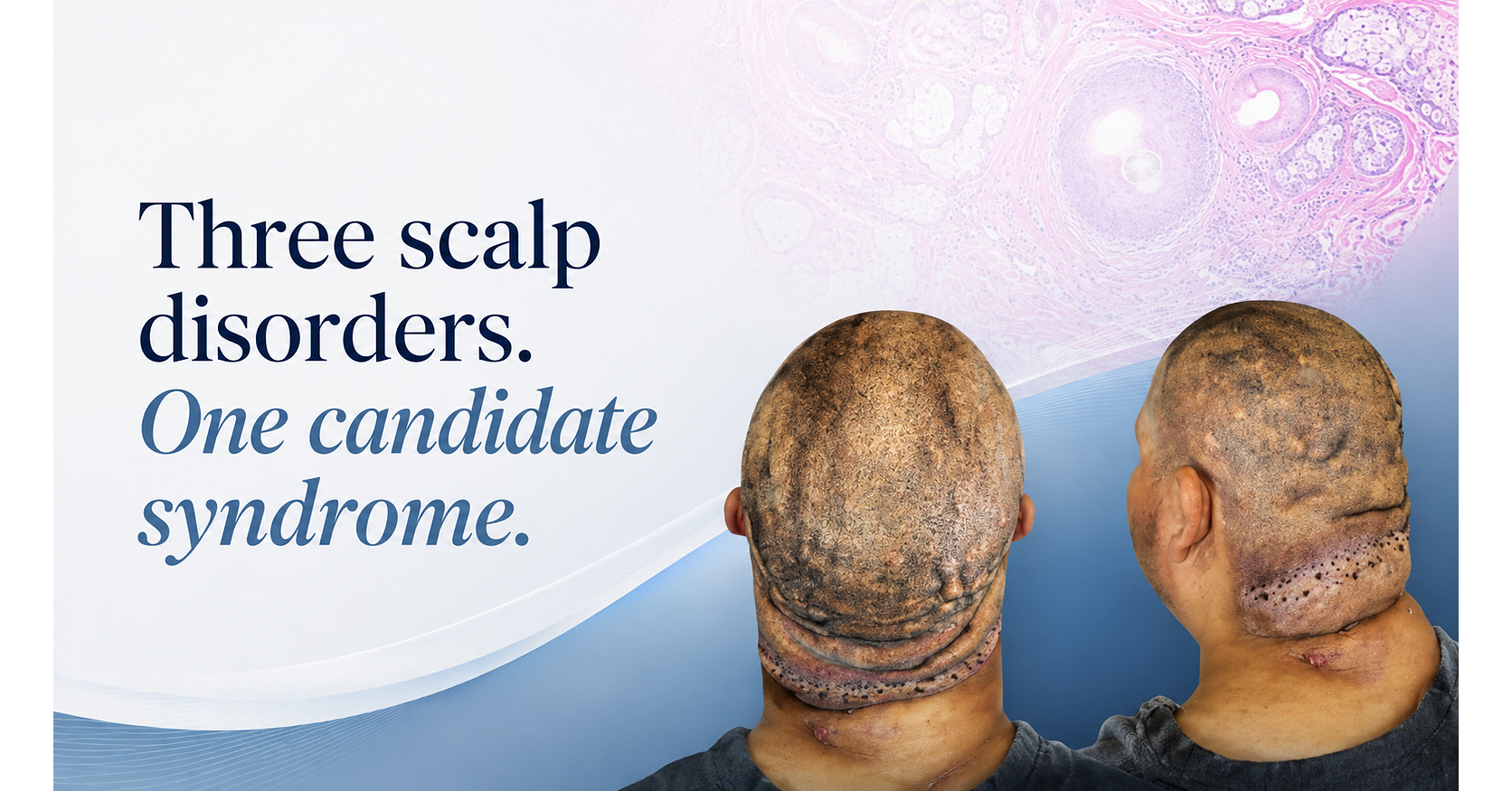
Dermatology researchers at Dr. U Hair and Skin Clinic propose a “syndromic triad” linking acne keloidalis nuchae (AKN), scalp-wide dissecting cellulitis (DCS), and secondary cutis verticis gyrata (CVG), based on 3 matching cases out of 12 men with suspected/confirmed DCS (Dec 2022–Nov 2024). The paper reports a shared biopsy/inflammatory pattern including lymphocytic inflammation with early fibrosis around upper hair follicles (PIILIF) and a shared immune profile. The authors argue recognizing the pattern could prompt earlier specialist evaluation to reduce risk of permanent scarring and scalp remodeling.
Analysis
This is a scientific signal, not an investable earnings event. The main market implication is a potential reclassification of a subset of scarring scalp disease from isolated dermatology problems into a more holistic specialty-workup pathway, which could incrementally support demand for trichoscopy, biopsy, and referral-heavy dermatology practices over a multi-year horizon. There is no direct read-through to PPRG from the data provided; any impact would be indirect and likely too small to matter unless the concept is validated in larger cohorts and adopted into clinical algorithms.
The second-order effect, if real, is earlier escalation to specialty care for patients who otherwise bounce between primary care and general dermatology. That can marginally favor academic centers and specialty clinics with diagnostic capability, while increasing utilization of office procedures but not necessarily high-margin therapeutics. The flip side is that most such syndromic hypotheses die in replication: this is a small, single-clinic dataset, so the probability-weighted outcome is continued academic interest rather than near-term commercial adoption.
The contrarian read is that the market should not extrapolate any treatment-market expansion from a new label alone. The relevant catalyst is not publication but guideline uptake or multicenter validation over 6-18 months; absent that, this remains a niche diagnostic refinement. What would falsify even the modest long-term thesis is a larger prospective study showing the overlap is inconsistent, or dermatology societies declining to operationalize the concept into biopsy/referral pathways.
AllMind Terminal
AI-powered research, real-time alerts, and portfolio analytics for institutional investors.
Request TrialMarket Sentiment
Overall Sentiment
neutral
Sentiment Score
0.05
Key Decisions for Investors
- No actionable trade in PPRG on this item; treat as non-event for fundamentals unless the company has an undisclosed dermatology diagnostics exposure.
- Set a 6-18 month watchlist alert for multicenter validation or guideline inclusion around AKN/DCS/CVG; only then revisit any thesis on dermatology service utilization.
- If seeking indirect exposure, prefer a basket of specialty dermatology service names or tele-derm platforms only after evidence shows increased referral/biopsy volumes; do not front-run on a 3-patient study.
- Falsifier to the thesis: if follow-up studies fail to reproduce scalp-wide overlap or clinicians do not change workup behavior, assume zero commercial impact and no rerating.
More News
- Trump administration advances plan for peptide drugs favored by RFK Jr.
- Eight states sue OpenAI saying ChatGPT hurt kids and lied to adults
- Anduril CEO defends Trump administration contracts: 'We've done incredibly well under Biden'
- AI, Deal Pipelines and BofA’s Punishment Dominate Earnings Week Chatter
- Why are eight US states suing OpenAI?
- The CEO of supply chain giant Flex says infrastructure and the grid needs to scale with AI—or else ‘Forget all the frontier models’
From AllMind Research
- Anthropic IPO Preview: Valuation, Timing, and What to Watch
- Shein After the IPO: Venue, Valuation, and What Must Be Proved
- What AI Research Tools Should a Small Hedge Fund Buy First?
- AllMind's Data Standardization Methodology: Our Approach to Fundamentals
- What Makes Financial Data Ready for AI Research?