
Pickleball Kingdom Continues Global Expansion into Australia and New Zealand
Source: PR Newswire
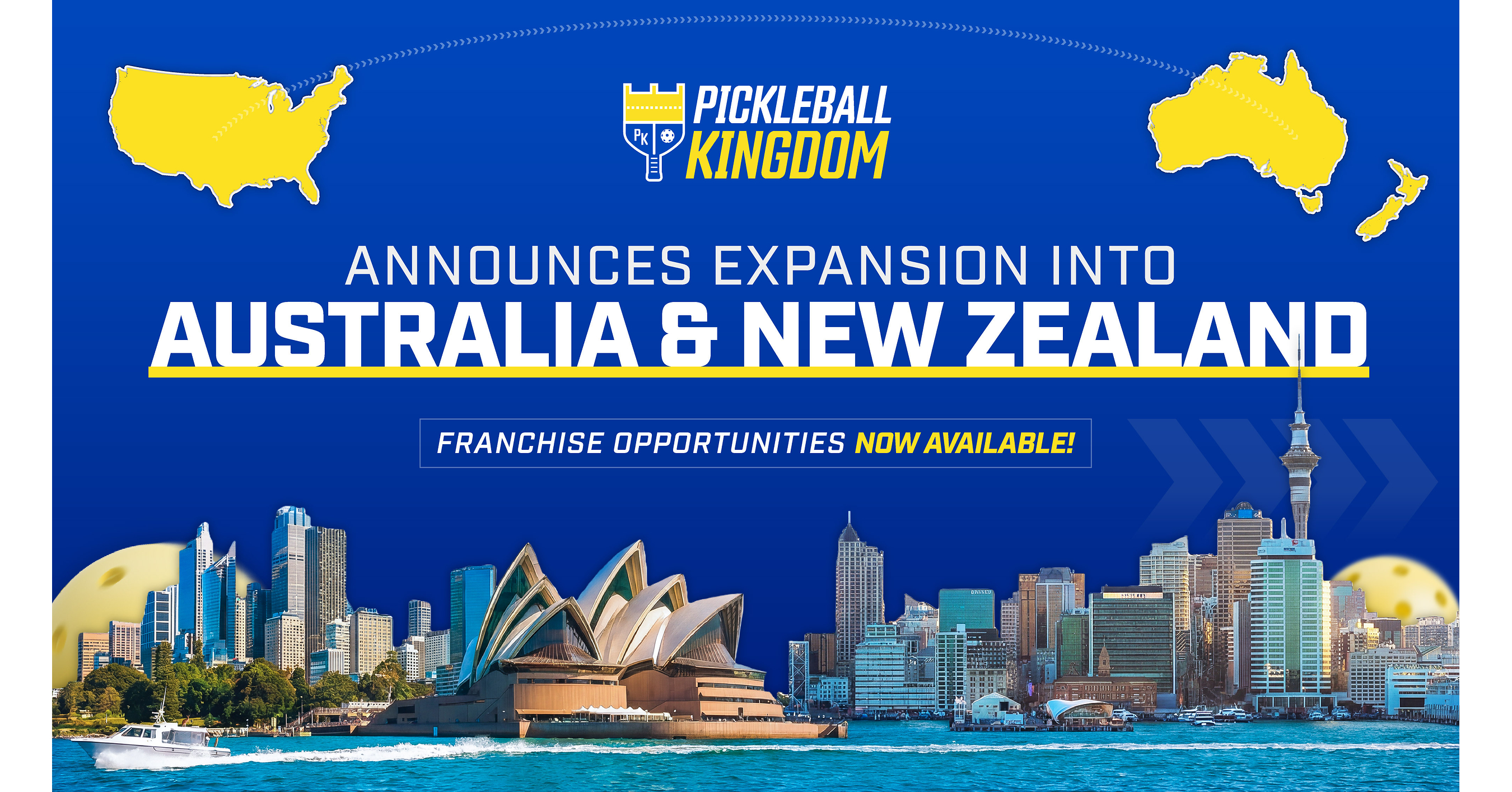
Pickleball Kingdom signed a master franchise agreement with Cameron Bloomfield to develop indoor clubs across Australia and New Zealand, expanding its international presence to four countries: the U.S., India, Australia and New Zealand. Bloomfield will oversee site selection, market development and franchise rollout across both markets. The expansion supports the private company's global growth strategy but provides no financial targets, investment amounts or expected club-opening timeline.
Analysis
This is not directly investable, but it modestly reinforces a broader experiential-leisure demand signal in ANZ: consumers are allocating discretionary spend toward recurring, community-based activities rather than one-off fitness purchases. The economically relevant bottleneck is commercial real estate, where indoor-court operators can absorb large-format secondary space; that creates a small incremental demand tailwind for suburban landlords and fit-out providers, but only after signed leases and funded openings emerge.
The more important second-order effect is competitive substitution within the fitness and racquet-sport budget. Established gym operators and leisure-center owners with underutilized floor space can add courts at lower incremental capex than a greenfield franchisee, limiting the newcomer's unit economics and potentially pressuring standalone boutique fitness concepts. In Australia, stronger pickleball participation would most plausibly benefit diversified leisure operators such as Belgravia Leisure's private-market peers rather than listed consumer names.
Consensus-style franchise expansion announcements often overstate addressable market by conflating master-franchise rights with committed unit openings. Over the next 1-3 months, the relevant verification points are disclosed site pipeline, lease terms, court-level utilization, membership pricing and franchisee capital commitments; absent these, no material read-through to public equities is warranted. Over 6-18 months, a sustained rollout could modestly improve demand for large-format retail space, but high occupancy costs, competing sports infrastructure and a potentially narrow core demographic are the principal unit-economics risks.
AllMind Terminal
AI-powered research, real-time alerts, and portfolio analytics for institutional investors.
Request TrialMarket Sentiment
Overall Sentiment
moderately positive
Sentiment Score
0.45
Key Decisions for Investors
- No standalone trade: the announcement lacks public-market exposure, committed opening targets, capex disclosure and independently verifiable demand data.
- Set an ANZ commercial-property watch alert for announced court openings and lease commitments. If a multi-site pipeline develops in secondary retail/industrial assets, examine listed landlords including Goodman Group (GMG.AX) only where venue leasing becomes material relative to portfolio vacancy; current evidence is insufficient for a position.
- Monitor listed fitness and leisure proxies for competitive response rather than chase the theme. A bearish read-through would require evidence that pickleball venues are taking members from incumbent gyms or leisure centers, demonstrated by membership churn or reduced same-store revenue over two reporting periods.
- For consumer-discretionary exposure, treat this as a low-signal confirmation of experiential spending, not a catalyst. Reassess only if ANZ consumer confidence and discretionary-services spending improve concurrently; weakening household consumption or rising retail rents would invalidate the expansion thesis.
More News
- Meta announces new lightweight virtual reality glasses to one-up Apple’s Vision Pro
- Here's what happens to the economy when Treasury yields soar like they are now
- Oil industry warns a diesel export ban will raise fuel prices as Trump weighs restrictions
- Meta's standoff with Amazon over Muse could be a sign of things to come
- Oil's losing streak, Trump at the UN, Royal Caribbean's Sandals stake and more in Morning Squawk
- How a Diesel Export Ban Could Impact US Fuel Prices
From AllMind Research
- Anthropic IPO Preview: Valuation, Timing, and What to Watch
- Shein After the IPO: Venue, Valuation, and What Must Be Proved
- What AI Research Tools Should a Small Hedge Fund Buy First?
- Bitcoin's 52% Crash Proves It's a Tech Stock: Here's What That Means for Portfolio Construction
- What Is an AI Investment Research Platform?