
Huawei Digital Power presenteert op IDEE 2026 multiscenario-oplossingen met netvorming en AI
Source: PR Newswire
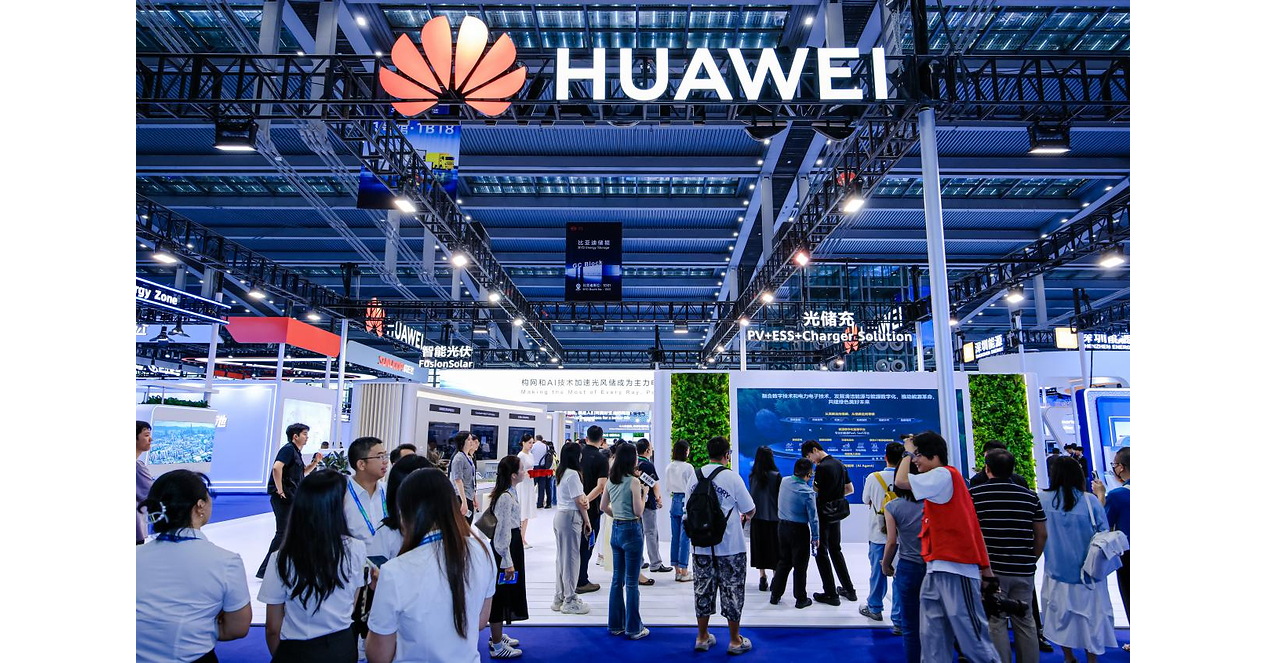
Huawei Digital Power unveiled grid-forming and AI-enabled renewable-energy, storage, microgrid, EV-charging and AI-data-center solutions at IDEE 2026. Key claims include a 1,000 VAC grid-forming ESS configuration of 12.5 MW/50 MWh, a 241 kWh C&I storage system with 91.8% round-trip efficiency and 100% depth of discharge, and FusionCharge technology projected to raise charging-station revenue by more than 15%. The announcements strengthen Huawei's positioning in integrated solar, storage and digital-energy infrastructure, although they are product claims rather than disclosed financial results.
Analysis
The investable implication is less Huawei-specific than a signal that grid-forming functionality is moving from a premium demonstration feature toward a procurement requirement in solar-plus-storage and weak-grid markets. This favors suppliers with certified, bankable power-conversion systems and global service networks—Fluence (FLNC), Tesla Energy (TSLA), Wärtsilä (WRT1V.HE), Siemens Energy (ENR.DE), and Hitachi Energy parent ABBN.SW—while pressuring commoditized inverter vendors that compete primarily on upfront price. The larger second-order beneficiary is utility-scale storage deployment: grid-forming requirements raise system complexity and increase storage content per renewable project, but may shift value away from cells toward controls, inverters, transformers, and long-term O&M.
Near term, this is not sufficient to underwrite a trade because the claims are vendor-provided and lack disclosed orders, pricing, project economics, or independent uptime data. Over the next 1-3 months, watch tenders in China, the Middle East, Australia, and Europe for explicit grid-forming, black-start, and inertia specifications; a rise in such requirements would support earnings visibility for FLNC and ABB/Siemens Energy power-grid businesses. Over 6-18 months, AI data-center load growth could create a separate demand channel for behind-the-meter storage and grid-interactive UPS, benefiting Eaton (ETN), Vertiv (VRT), Schneider Electric (SU.PA), and ABB, although hyperscaler capex moderation or delayed grid interconnection reform would defer the revenue opportunity.
Consensus may overstate the near-term hardware displacement risk to Western suppliers. Utility buyers generally prioritize financing eligibility, local-content compliance, cybersecurity, warranty recourse, and interoperability over claimed conversion efficiency; these constraints can preserve Western incumbents' margins in OECD markets even as Chinese equipment resets price points elsewhere. Conversely, the underappreciated risk for storage integrators is that greater grid-forming sophistication raises commissioning and performance-guarantee liability, potentially worsening project-margin volatility rather than simply expanding TAM.
AllMind Terminal
AI-powered research, real-time alerts, and portfolio analytics for institutional investors.
Request TrialMarket Sentiment
Overall Sentiment
moderately positive
Sentiment Score
0.48
Key Decisions for Investors
- No directional Huawei read-through trade today; treat this as a tender-specification watch item until third-party contract wins, project sizes, and pricing are disclosed.
- Build a 6-12 month basket long ETN / VRT / ABBN.SW on pullbacks rather than chasing AI-data-center headlines. These names capture electrical-distribution, power-quality, cooling, and service content with lower battery-price exposure; invalidate if hyperscaler capex guidance falls materially or order backlog conversion weakens for two consecutive quarters.
- Prefer ABBN.SW or ENR.DE over pure-play inverter exposure for a 12-18 month grid-modernization allocation: grid-forming adoption increases demand for grid automation and transmission equipment, where installed-base service and qualification barriers are stronger. Key risk is European renewable permitting slowdown and project deferrals from high rates.
- Use FLNC only as a catalyst-driven long, not a core holding: initiate after evidence of improved gross-margin guidance and contracted backlog with grid-forming performance guarantees. Upside comes from higher-value software/control content; stop thesis if project-margin losses recur or operating cash flow remains negative through the next reporting cycle.
- For EV-charging exposure, favor ETN over standalone charger operators such as CHPT: storage-integrated fast charging can improve site economics, but utilization—not charger technology—is still the dominant driver of charger returns. Reassess if charging-network utilization data improves sustainably or if subsidy-driven procurement materially accelerates.
More News
- All Iranian airlines to be 'shut down' from Wednesday, Bessent tells CNBC
- Taiwan benchmark Taiex rises to record intraday high as tech stocks advance
- AMD joins the $1 trillion club as chip rally surges - our AI Strategy saw it early
- Jamie Dimon says hyperscaler AI spending could hit $1 trillion next year
- Factbox-Key issues for this week’s Trump-Xi summit in Washington
- Latest Oil Market News and Analysis for Sept. 22