
Pfizer: The Earnings Test That Matters
Source: seekingalpha.com
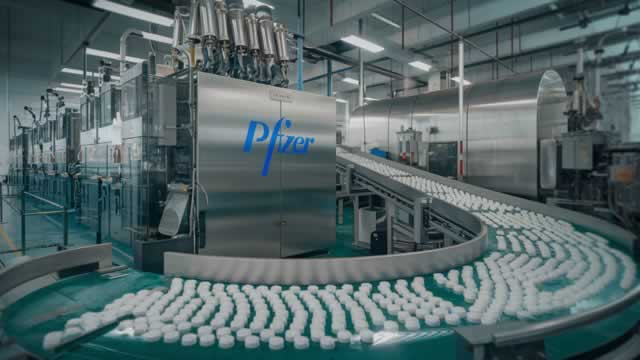
Pfizer's new and acquired products generated $3.2 billion in Q2, up 18% year over year and nearing a $13 billion annualized run-rate; the company has also removed $7.2 billion from its cost base and beaten EPS estimates in each of its last 10 quarters. COVID revenue is expected to decline to $4 billion in 2026, easing a source of post-pandemic earnings pressure.
Analysis
The investable question is whether recently launched and acquired products can replace shrinking COVID earnings on a durable, profitable basis—not whether the annualized sales pace looks large. A quarterly run-rate is not a full-year forecast: launch uptake, acquired-product contribution, seasonality, and any cannibalization need to be separated before treating it as organic growth. Cost removal can support near-term EPS, but that lever is finite; if it masks weak underlying demand or requires reinvestment to sustain launches, the earnings quality is lower than the beat streak implies.
Over the next 1–3 months, the key catalyst is evidence in reported results that non-COVID product growth is translating into revenue and operating profit, rather than merely offsetting COVID declines or acquisition costs. Over 6–18 months, the broader patent and pipeline cycle, launch durability, and competitive responses will matter more than further cost cuts. Pfizer’s rivals can pressure both pricing and share, so headline portfolio growth alone is not enough to establish durable market power.
The contrarian risk is that investors may capitalize a transition before the replacement earnings are proven; the counterpoint is that expectations may remain anchored to COVID-era earnings pressure even if the new-product base compounds. The article provides no valuation, product-level mix, or margin data, so it does not establish that PFE is mispriced. Falsify the constructive view if subsequent reports show slowing ex-COVID growth, weaker launch contribution, or guidance that relies increasingly on cost savings rather than sales and operating profit.
AllMind Terminal
AI-powered research, real-time alerts, and portfolio analytics for institutional investors.
Request TrialMarket Sentiment
Overall Sentiment
moderately positive
Sentiment Score
0.55
Ticker Sentiment
Key Decisions for Investors
- Treat PFE as a conditional long/watch, not a momentum buy on the reported run-rate alone. Reassess after the next earnings release for product-level sales, organic versus acquired growth, and operating-profit contribution.
- For a 1–3 month catalyst trade, consider a modest long only if guidance and reported ex-COVID growth confirm the replacement-earnings thesis; define the thesis as broken by a slowdown in those measures or a downward guidance revision. No price target is supportable from the supplied information.
- Avoid using the sequence of adjusted EPS beats as a standalone quality signal. Verify how much came from cost actions, acquisition accounting, and revenue growth, and monitor whether further savings are being reinvested or are reaching earnings.
- Before sizing a 6–18 month position, verify product-level launch durability, patent-expiry exposure, and valuation versus relevant large-cap pharmaceutical peers. Without those data, the risk/reward is insufficiently specified for a high-conviction pair trade or options position.
More News
- Nurix Therapeutics Reports Third Quarter 2026 Financial Results and Provides Corporate Update
- The SpaceX threat to telecom is real. How it could play out
- AI companion startup Character.ai files for Chapter 11 bankruptcy, citing costs and litigation
- JPMorgan, Goldman Sachs, Citigroup and Wells Fargo post strong profits, but warn rising interest rates and ‘sticky inflation’ will bite
- Huge profits at tech and energy companies are masking this key trend
- Apple releases HomeView smart home hub with screen as showcase for Siri AI